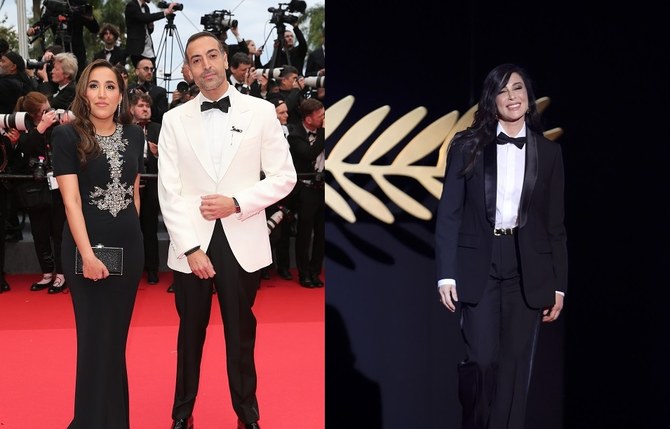
Saudi Arabia’s Red Sea Film Fest CEO, Lebanon’s Nadine Labaki attend Cannes opening night

R-L: SRMG CEO Jomana Al-Rashid, Red Sea Film Festival CEO Mohammed Al-Turki and Nadine Labaki were all spotted on the red carpet. (Getty Images/ composite photo)
Short Url
Updated 15 May 2024
Follow

Saudi Arabia’s Red Sea Film Fest CEO, Lebanon’s Nadine Labaki attend Cannes opening night

DUBAI: Mohammed Al-Turki, the CEO of Saudi Arabia’s Red Sea Film Festival, attended the opening ceremony of 77th edition of the Cannes Film Festival as Lebanese actress-director Nadine Labaki posed on the red carpet alongside her fellow Cannes jury members.

Al-Turki took to social media to post pictures from the red carpet, where he posed alongside Jomana Al-Rashid, CEO of the Saudi Research and Media Group. He captioned the post, “Beautiful and inspiring opening night @festivaldecannes repping @redseafilm with @jomanaalrashid! Congratulations Thiery and Iris for a great start for what I’m sure will be an edition that exceeds all expectations,” referring to artistic director Thierry Fremaux and festival president Iris Knobloch.


Mohammed Al-Turki posed alongside Jomana Al-Rashid, CEO of the Saudi Research and Media Group. (Getty Images)

The opening night film was “The Second Act,” a comedy starring Léa Seydoux and Louis Garrel.

However, before “The Second Act” was screened for the audience, Cannes presented its jury, which includes Omar Sy, Lily Gladstone, Nadine Labaki, Ebru Ceylan, Hirokazu Kore-eda, J.A. Bayona and Greta Gerwig.


The Cannes Film Festival jury features Lebanese director-actress Nadine Labaki (fourth from the left). (Getty Images)

The star of the night was US veteran actress Meryl Streep, on hand to receive an honorary Palme d’Or. Taking the stage to receive her honor, the Oscar-winner was greeted with a two-minute standing ovation. Addressing the crowd, Streep remembered words from her mother: “Darling, you’ll see, it all goes so fast.” 

Meanwhile, a film from Saudi Arabia will be screened at the film festival for the very first time.

“Norah,” Saudi director Tawfik Alzaidi's feature debut, has been selected in the Un Certain Regard section and will screen with 19 other entries from around the world.


How young chefs and creators are transforming Arab street food across the Gulf

Updated 44 min 5 sec ago
Follow

How young chefs and creators are transforming Arab street food across the Gulf

  • Pop-ups, concept kitchens, and fusion cafes in Riyadh, Dubai, and Manama are reshaping the region’s street-food scene
  • A new generation are merging traditional dishes with innovation, creating hybrid flavors for local and international audiences

DUBAI: What was once a landscape dominated by shawarma, manakish and other classics is now expanding into a hybrid space, shaped by multicultural influences, social media trends and a generation that grew up with global tastes but strong regional identities.

From Dubai’s weekend food trucks to Riyadh’s concept kitchens and Bahrain’s fusion cafes, Arab street food 2.0 is emerging as a movement where comfort dishes, global mashups and creator-driven recipes coexist.

Among the clearest examples of this shift is SmokinBarrel, founded by Abu Dhabi-based chef Marwan Charaf, whose slow-smoked meats and regionally inspired tacos have become a Gulf pop-up staple.

“SmokinBarrel started out of pure curiosity. I had a steel barrel in my garden and wanted to experiment with wood-fire cooking, and the rest is history,” he told Arab News.

SmokinBarrel, founded by Abu Dhabi-based chef Marwan Charaf, has won awards for its slow-smoked meats and regionally inspired tacos. (Supplied photos)

His cooking style remains instinctive. “I just tend to cook by feel, which lets me create flavors you won’t find anywhere else.”

Charaf’s upbringing in the UAE shaped his culinary identity, exposing him to a wide mix of cuisines and friendships that helped train his palate from an early age.

“Growing up in Abu Dhabi and being surrounded by an incredible mix of cuisines has also inspired me to blend my passion for slow-smoked meats with local tastes,” he said.

That same multicultural environment, he adds, “showed me how beautifully different spices (from) all over the world and cuisines can come together.”

SmokinBarrel is not strictly American or Mexican-style BBQ: “It’s a fusion of flavors inspired by my passion for food and my love for showcasing regional and local ingredients.”

A Saudi woman prepares a local sweet dish called Maseela at a Cultural and Heritage Festival in downtown Abha, Saudi Arabia, August 19, 2025. (REUTERS/File)

Over years of events and experimentation, SmokinBarrel became known for dishes that merge tradition with innovation — a style refined through continuous customer interaction.

Charaf says pop-ups have served as a creative testing ground for the brand over the past four years.

“They’ve let us experiment with regional flavors, from Aleppo-pepper honey to pickled Indian red onions with Lebanese grape vinegar and UAE date sugar, all showcased in our award-winning taco,” he said.

The pop-up model has built momentum across the region, with social media further amplifying the Arab street food movement.

One of the most popular attractions was the Heritage and Culinary Arts Zone, which quickly stood out for its dynamic setup showcasing the depth, character, and regional diversity of Saudi cuisine. (SPA)

Dozens of Gulf-based creators have turned home kitchens into micro-brands, producing fast-paced recipe videos that inspire everything from weeknight meals to viral food trends.

Platforms now function as culinary discovery engines, where creator-chefs shape tastes as directly as restaurants.

Palestinian cook Abu Julia — whose rise began during the 2020 pandemic lockdowns — has built one of the most recognizable Arab cooking platforms online, attracting millions with concise, comforting home-style recipes.

His content has introduced traditional Palestinian and Levantine dishes to global audiences, inspiring thousands to recreate the dishes at home.

The Saudi Feast Food Festival returned for its fifth edition at King Saud University in Riyadh, running from November 27 to December 6, 2025, and opened with strong momentum and a high turnout. (SPA)

Another example is Baraa El-Sabbagh, a registered dietitian and certified personal trainer, who has built a large following through practical nutrition guidance and simple, healthier recipe videos.

Based in the UAE, she focuses on helping women improve their relationship with food, train consistently and navigate nutrition during different life stages, including pregnancy and postpartum.

Her short, accessible cooking clips — often built around balanced meals, quick snacks and pantry-friendly ingredients — have made healthy eating feel achievable for everyday viewers, earning her a solid following.

Pastry chef Khulood Al-Ali has also gained recognition for modernizing Khaleeji desserts, reinterpreting staples like chebab and khabeesa with contemporary techniques and cafe-style presentation.

Saudi Arabia has its own leading voices, too. Dalia’s Kitchen, a widely followed home-cook creator, is known for easy recipe videos and modern takes on classic Saudi dishes.

Her content reflects the everyday flavors that Saudis crave, making her one of the most recognizable digital cooks shaping home-style food trends in the Kingdom today.

Saudi chef Hala Ayash is a Dubai-based cook known for her quick, family-friendly recipes that modernize Levantine and Gulf comfort dishes. 

Her daily meal videos have become a go-to resource for home cooks across the UAE and Saudi Arabia, making her a reliable source for easy, everyday recipes.

In Bahrain, a new generation of chefs and food creators is also shaping the region’s evolving street-food landscape.

One of the country’s most recognized voices is Tala Bashmi, the award-winning chef behind Fusions by Tala, known for reinterpreting Gulf dishes with modern techniques while preserving their traditional essence.

Alongside her, Foodie BH has become a widely followed guide to the country’s dining scene, regularly highlighting local street-food spots, fusion cafes and home-grown concepts contributing to Bahrain’s evolving food culture.

Boutique brands such as Cocoa Core also continue to introduce inventive sweets inspired by Khaleeji flavors, reflecting the Kingdom’s growing appetite for culinary experimentation.

As a result, many young diners now discover a dish online before ever encountering it in a restaurant, allowing digital platforms to influence the evolution of Arab street food as strongly as physical kitchens.

Beyond the Gulf, creators with Arab roots are also shaping food conversations for audiences across the region.

One example is Akram Cooks, a second-generation Yemeni-American based in New York City. He has more than 440,000 followers and has built a strong fan base in the Arab world by preserving Yemeni cuisine through short, engaging videos that highlight both traditional dishes and modern interpretations.

A similar impact comes from Ahmad Alzahabi, better known as The Golden Balance, a Syrian-American creator whose content blends Middle Eastern flavors with global cooking techniques.

His cross-cultural background — growing up in a Syrian household in Michigan — shapes videos that range from traditional staples to modern fusion dishes, appealing to young viewers who see their identities reflected in his style.

For UAE-based SmokinBarrel, Instagram and TikTok are also essential tools.

As Charaf explains: “Social media, especially Instagram, has been our main bridge to the community. It’s where we share new launches, pop-up announcements, and behind-the-scenes moments, but it’s also where we listen.

“The feedback, the comments, the DMs, they all help shape what we create next,” he said, adding that social media platforms help them stay connected to customers even between pop-ups and play an important role in how they continue to evolve dishes.

For Dubai-based restaurateur Salam El-Baba, founder of Dukkan El-Baba, Tacosita and Mashawi by Dukhan, social media is less central to how her restaurants evolve. While it plays a role in communicating with customers, it does not influence how she develops her food.

She describes Dukkan as: “Simply an extension of our home, our mum’s warmth … centered around the kitchen and memorable days with loving, filling dishes.”

Her second brand, Tacosita, emerged from “a passion project, an obsession, which was executed in every way it could be,” while Mashawi by Dukhan was “a commercial decision to give the UAE market what it wants — fresh, juicy Arabic grills and saucy sauces.”

However, launching and managing these concepts came with challenges.

“Coming into the industry with a blatant lack of operational experience and financial knowledge … was the biggest challenge,” she told Arab News. “Learning as we go, over three years, we now know how to deal.”

Across her brands, she adjusts the balance between tradition and creativity depending on the concept. At Dukkan, authenticity is central, while Mashawi requires more experimentation to build on the flavors and traditions it draws from.

For El-Baba, this new wave of Arab street food closely reflects the values behind her own concepts. She sees it as a generational shift led by young restaurateurs expressing their identity through food. 

“We are in the restaurant business because we enjoy providing warm hospitality and memorable experiences around food. This itself is rooted in Arabic culture, street food, and where we come from.”

As multiple voices across the region redefine what Arab street food can be, El-Baba describes her contribution to the movement as rooted in consistency and presence.

“This movement is simply a result of this generation doing things a little differently while honoring to the very end traditions, roots, and flavors we took from our parents,” she said.

“Exercising this, daily, coming to work, showing up and maintaining our operations, that is our contribution.”

Charaf sees this evolution as part of a larger shift.

“Arab street food is entering an exciting new era, one defined by creativity, quality, and a willingness to experiment,” he said. “It’s no longer just about quick bites; it’s becoming a platform for full-flavored, culturally grounded experiences.”