- The development comes amid days of protests over wheat flour, electricity prices in Azad Kashmir
- Both India and Pakistan rule part of Kashmir since their independence but claim the valley in full
ISLAMABAD: The Azad Jammu and Kashmir (AJK) government has reduced the prices of wheat flour and electricity in the region, AJK Prime Minister Anwar-ul-Haq announced on Monday, thanking Pakistan PM Shehbaz Sharif for Rs23 billion (approx. $83 million) subsidies to make it possible.
The development came amid protests in the portion of the disputed Himalayan valley administered by Pakistan over the prices of wheat and power. The Jammu Kashmir Joint Awami Action Committee (JAAC) was leading the protests and demanding subsidized wheat flour and that electricity prices be set as per the hydropower generation cost in Azad Kashmir.
On Saturday, a policeman was killed in clashes between police and demonstrators as authorities blocked a rally from moving toward Azad Kashmir’s capital, Muzaffarabad, from the region’s Poonch and Kotli districts. Weekend talks between the JAAC core committee and AJK Chief Secretary Dawood Bareach in Rawalakot ended in a stalemate and a planned march by protesters to the capital resumed on Monday.
Speaking at a press conference, PM Haq said the AJK government had notified reduced prices of wheat flour and electricity after Pakistan Premier Sharif okayed subsidies at a meeting he presided over on Monday.
“He issued instructions and the things that had been pending for a long time with regard to subsidy, electricity prices, resources have been provided to the Azad Kashmir government for both notifications and the Azad Kashmir government has issued both notifications,” Haq said.
The new price of electricity in Azad Kashmir will be Rs3 per unit for 1-100 units, Rs5 per unit for 100-300 units and Rs6 per unit for a consumption of above 300 units. Commercial unit price will be Rs10 for 1-300 units, and Rs15 for above 300 units, according to Haq.
A 40kg bag of wheat flour, which was previously priced at Rs3,100, was now fixed at Rs2,000.
“This would cost more than Rs23 billion to the national exchequer, which the government and the prime minister of Pakistan gladly accepted,” he added.
The Himalayan territory of Kashmir has been divided between India and Pakistan since their independence from Britain in 1947, with both countries ruling part of the territory, but claiming it in full. The western portion of the larger Kashmir region is administered by Pakistan as a nominally self-governing entity while India rules the southern portion of the larger Kashmir region as a union territory.
While the Indian portion has been witnessing an ongoing insurgency and multiple armed attempts by the state to quell it, the Pakistani side has remained relatively calm through the decades, though it is also highly militarized.
Sharif’s office earlier confirmed the Pakistan premier had approved a grant of Rs23 billion ($82,685,321) to “solve the problems” of the people of Azad Kashmir.
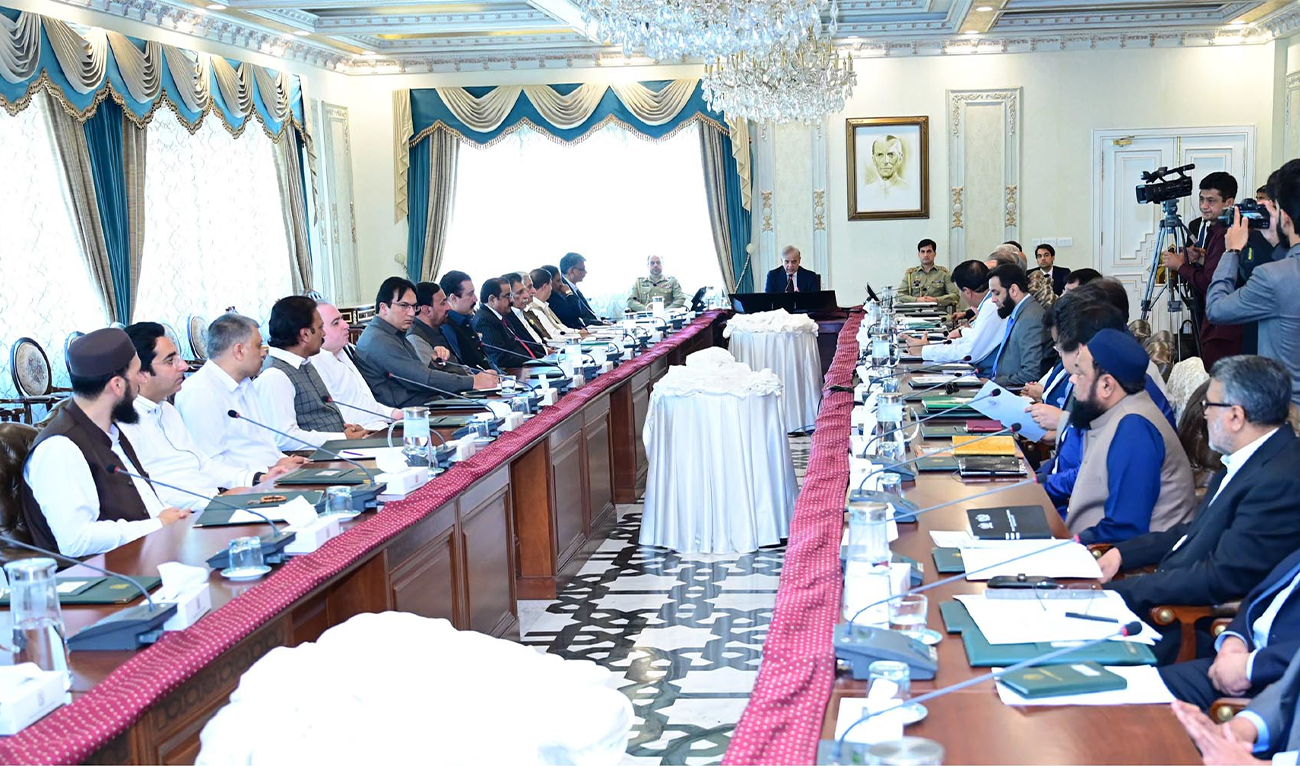
“After a detailed review of the current situation, Prime Minister Sharif has approved the immediate provision of 23 billion rupees for solving the problems of the Kashmiri people,” the Prime Minister’s Office (PMO) said in a statement.
The decision was taken after Sharif chaired a high-level meeting on the ongoing protests in Azad Kashmir, which was attended by the prime minister of Azad Kashmir, his cabinet and other officials.
Meanwhile, JAAC core committee member Amjad Ali Khan said the long march would reach Azad Kashmir’s capital Muzaffarabad today, Monday, and that protesters will stage a sit-in until their demands are not met.
“We are proceeding with our long march from Dhirkot and will reach Muzaffarabad today regardless of obstacles,” Khan told Arab News. “After arriving in Azad Kashmir’s capital city, we will stage a sit-in in front of the assembly building until our demands are met.”
He said talks with the government on Sunday remained unsuccessful as Islamabad wanted to gain time to disperse protesters.
“Our immediate stress is on three main demands, electricity tariff reduction, subsidized wheat, and removal of incentives of the elite class,” Khan said, adding that the government should fulfill its commitments with the JAAC which it had agreed to in February.
He said the government had backtracked on the agreement, saying that the caretaker setup in February was a party to it. He said the people of Azad Kashmir would not accept this excuse.
Meanwhile, Abdul Majid Khan, a spokesperson and finance minister of the Azad Kashmir government, urged the JAAC to refrain from disrupting public life and continue negotiations with Islamabad to resolve all issues.
“The government is engaged in dialogue with the action committee but will not allow anyone to disrupt public life,” he told Arab News.
President Asif Ali Zardari has also urged restraint and called on stakeholders to resolve the price hike issue in Azad Kashmir through “dialogue and mutual consultation,” Pakistani state media said, reporting on a meeting between the president and a delegation of members of the Azad Jammu and Kashmir Legislative Assembly who called on him in Islamabad.
“The President said political parties, state institutions and the people of AJK should act responsibly so that hostile elements could not exploit the situation to their benefit,” the Radio Pakistan broadcaster reported.
“The President highlighted that the demands of the people of AJK should be addressed as per law. He said that he would take up the grievances of the people of AJK with Prime Minister Shehbaz Sharif to find a way out of the current situation.”