


TOKYO: As Japan embarks on a major military build-up, it’s struggling to fill its ranks with the women that its forces need and its policymakers have pledged to recruit. Following a wave of sexual harassment cases, the number of women applying to join the Self-Defense Forces (SDF) decreased by 12 percent in the year ending March 2023, after several years of steady growth. Some victims have said an entrenched culture of harassment could deter women from signing up.
But nine months after the defense ministry pledged to take drastic measures, it has no plans to take action on a key recommendation issued by an independent panel of experts — implementing a national system for reviewing anti-harassment training standards — according to two ministry officials responsible for training.
The government-appointed panel had identified in a report published in August that the military’s superficial harassment education — which made only limited mention of sexual harassment — and a lack of centralized oversight of such training were contributing factors to cultural problems within the institution.
The head of the panel, Makoto Tadaki, said some training sessions — one of which Reuters attended — were at odds with the gravity of the situation.
A servicewoman who is suing the government over an alleged sexual harassment incident also said in an interview that the education she received over the past 10 years was ineffective.
Calls to root out harassment and increase the number of servicewomen come as aging Japan faces rising threats from China, North Korea and Russia and navigates the burdensome legacy of its wartime past.
Women make up just 9 percent of military personnel in Japan, compared to 17 percent in the United States, Tokyo’s key security ally.
The SDF referred Reuters’ questions to the defense ministry, which said in an emailed response that harassment “must never be allowed, as it destroys mutual trust between service members and undermines their strength.”
The ministry said it had hosted harassment prevention lectures by external experts since 2023, made sessions more discussion-based and planned to invite specialists to review its training this year.
It did not respond to questions on whether it would implement the panel’s recommendation to centralize oversight of training. After ex-soldier Rina Gonoi went public with allegations of sexual assault in 2022, the defense ministry conducted a survey that year that uncovered more than 170 alleged sexual harassment incidents in the SDF. Another alleged victim was an Okinawa-based servicewoman who accused a senior of making lewd remarks toward her in 2013. She was then publicly named in harassment training materials distributed to her colleagues in 2014, she told Reuters. The alleged perpetrator was not identified in the materials.
Reuters does not name alleged victims of sexual harassment. Her allegations were corroborated with documents in the lawsuit she filed last year, after she said she exhausted an internal complaints process.
HAPHAZARD TRAINING
The defense ministry offers an annual online module on general harassment. It also provides training materials to officers for in-person sessions, but doesn’t offer training on delivering harassment education and doesn’t track how or when the officers carry out harassment training, the two defense officials said.
The officials, who spoke on condition of anonymity due to the sensitivity of the matter, justified the existing system as offering flexibility to commanders.
The six experts concluded in their review that existing training amounted to “generic, superficial statements” that were “not effective in helping people apply the training in the real world.”
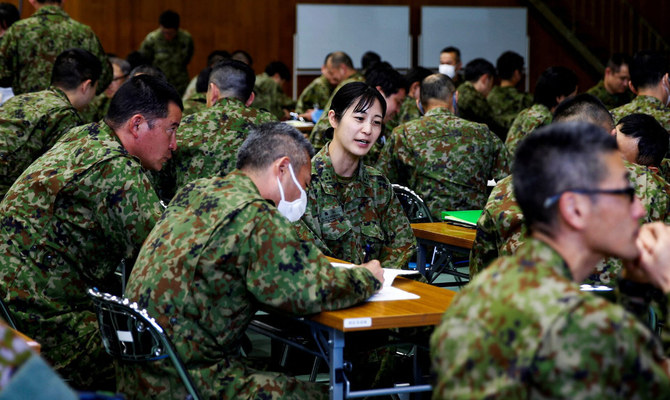
In April, Reuters attended a harassment prevention course delivered by an external instructor to over 100 mid-ranking military officers at a base on the outskirts of Tokyo.
Instructor Keiko Yoshimoto presented harassment as a communication issue and focused discussions on generational differences and how they played out in preferences for types of cars and flavours of crisps.
“Generational differences make it hard for people to communicate,” she said, adding that people should understand the basics of communication before they could deal with specifics around sexual harassment.
Law professor Tadaki, who separately witnessed part of Yoshimoto’s session, said it “did not feel like the sort of training you would expect against a backdrop of there being so many cases of harassment surfacing.”
He added that it would likely take more time to increase oversight over the quality of training.
Two months after the panel issued its report, local media reported that a sailor had in 2022 been ordered against her will to meet a superior that she had accused of sexual harassment. She later quit the SDF.
Gonoi and the Okinawa-based servicewoman have criticized the system as inadequate.
“People would say ‘everyone put up with that kind of behavior, it was normal back in our time,’ – but these issues are being passed down to my generation because nothing was done to stop it,” the servicewoman told Reuters in March.
She added that the harassment training she has since received was often poorly conducted and that more centralized oversight was needed: “Rather than trying to make a point about sexual harassment, (officers) pick materials that are easy to teach, something that will fit into the time they have.”
FEAR OF COMPLAINTS
The defense ministry officials said that training on sexual harassment largely takes place within a broader anti-harassment curriculum. At the two-hour training session attended by Reuters, about two minutes were dedicated to sexual harassment.
When Reuters asked about sexual harassment incidents during interviews with the officials, as well as two senior uniformed officers, they responded by speaking about general harassment.
The officials said it was challenging to give standardised training on harassment because service members in high-stress environments may give orders in a direct way that is unusual in other circumstances.
The two officers said there were concerns within the military that too much focus on harassment could create operational issues and one suggested it might lead to unfair complaints.
The defense ministry said in a statement that it does not tolerate abuse and that its training aims to ensure commanders do not “hesitate to give necessary guidance on the job because they are concerned about harassment.”
Tadaki, the professor, said Japan could learn from other militaries.
“The US, UK, and France have a much clearer focus on preventing harassment from its root causes so its prevention program is structured around improving the internal climate and culture of its organization,” he said.


