

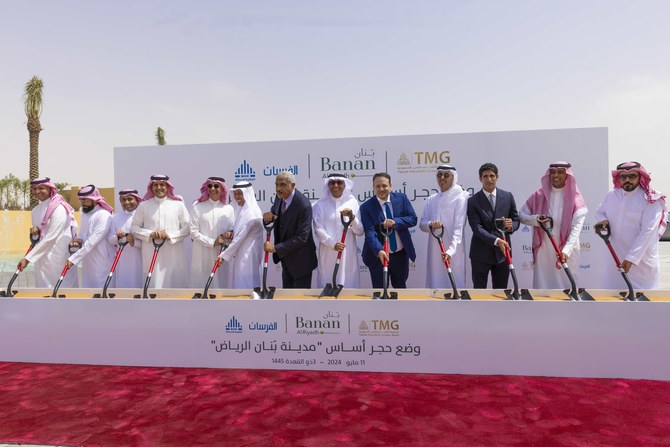
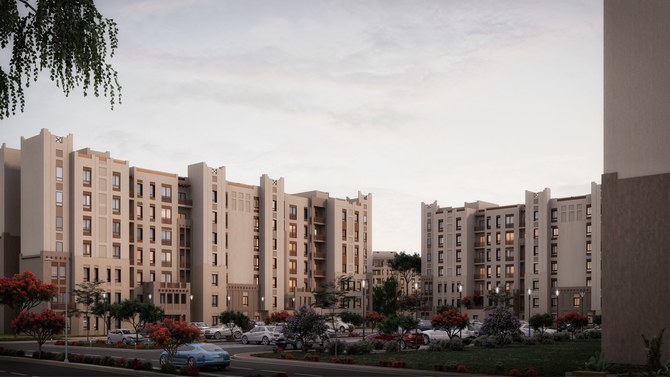
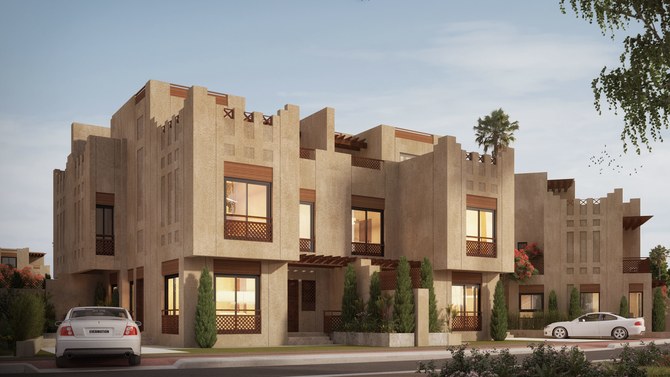

Saudi Arabia’s National Housing Company and Talaat Moustafa Group, a renowned urban developer in Egypt, have announced the laying of the foundation stone for the Banan City project, located northeast of Riyadh. Sales for the project will open on May 15.
Hisham Talaat Moustafa, chairman of the board of directors of the Talaat Moustafa Group, said that Banan is a smart city that will be built on an area of 10 million square meters in Riyadh. He said it will provide an unprecedented quality of life for more than 120,000 residents in the gated community, through the use of the latest smart city technologies and ensuring residential privacy, while applying the highest sustainability standards.
Moustafa said the project revenue is estimated at SR40 billion ($12 billion), and the total investment cost of the project is SR31.4 billion. “The Banan project will be an integrated city that will be developed similar to the cities that the Talaat Moustafa Group has developed in Egypt such as Madinaty, which is built on an area of 33 million square meters and is considered the most comprehensive model of global cities with integrated services,” he said.
Moustafa explained that the Banan City project will be multi-use, as it includes integrated services such as health, education, and commercial, in addition to a social sports club, to ensure a vibrant community and a new model of integrated life, in line with the comprehensive renaissance witnessed by the Kingdom under Vision 2030.
A unique experience
Banan City will offer a unique experience in upscale housing as it combines the long-standing experience of the Talaat Moustafa Group in urban development, spanning over more than 50 years, with authentic Saudi heritage, courtesy the National Housing Company, the leading Saudi company in the real estate development sector, and the largest major developer of suburbs and residential communities in the Kingdom.
Strategic location
Banan City enjoys a distinguished strategic location, as it is located near the most important landmarks of the Saudi capital, such as King Khalid International Airport, King Abdulaziz Equestrian Square, Princess Nourah Bint Abdul Rahman University, and Granada Mall. The much awaited Expo Riyadh 2030 will be held within the northeastern urban extension of Riyadh. The project is located at the intersection of Al-Janadriyah Road and Al-Thumama Road, allowing residents to quickly travel to the city center and the Riyadh Boulevard area, within 30 minutes, thanks to the smooth traffic axes linking Banan City and main roads such as King Fahd Road and Olaya via Al-Thumama axis or linking it to eastern Riyadh through the Janadriyah axis.
Affordable prices
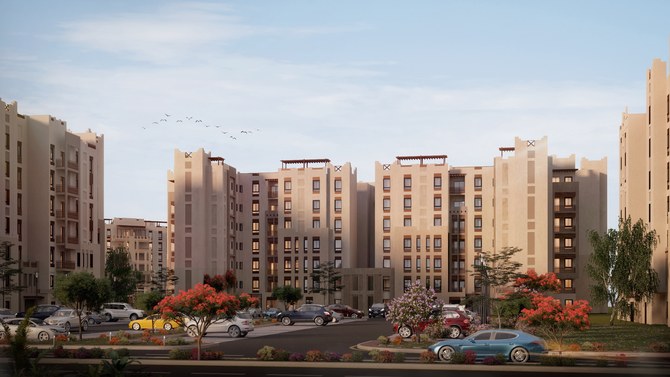
Banan City comprises 27,000 residential units of various sizes and designs that suit a wide segment of customers. It represents a new product in the Saudi market, with prices commensurate with purchasing capabilities that make owning units better and more economical than renting, with installments of up to 30 years.
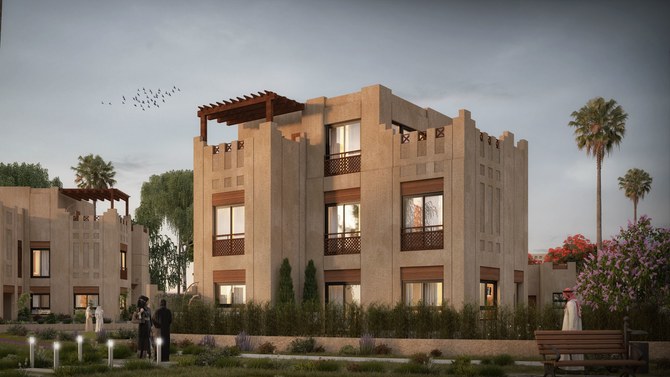
The project includes residential apartments ranging in sizes from 60 to 170 square meters, and upscale villas of various designs — quattro villas, twin villas and independent villas — with area ranging from 216 to 412 square meters. The project also provides plots of land in varying sizes — from 500 to 600 square meters — to build family housing buildings that can accommodate multiple families.
Vast green spaces
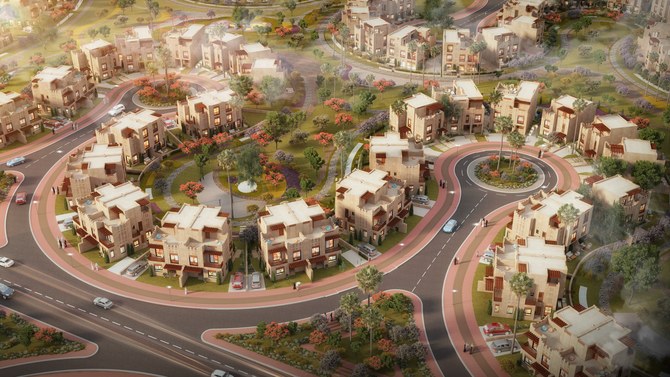
Banan City represents a new and integrated model for modern, sustainable and environmentally-friendly housing. The project was planned in a way that enhances this concept through the availability of vast green spaces, which amount to 40 percent of the total project area. Special care has been taken to separate residential and service areas to achieve the highest standards of privacy. A green strip ranging in width from 50 to 150 meters separates villa and building areas. The distance between each building is about 30 meters and that between the villas is 16 meters, ensuring that each residential unit is allowed to enjoy the vast green spaces while maintaining complete privacy.
The city of Banan is characterized by an organic planning style, which provides the greatest amount of privacy for both the units and villas as well as the most beautiful views.
The project supports the “Green Riyadh” project, which is one of the most ambitious afforestation projects in the world and one of the goals of the Kingdom’s Vision 2030. “Green Valleys” is one of the aesthetic elements that the Talaat Moustafa Group incorporates in its projects.
Banan City will have three main gates, two gates opening on Al-Janadriyah Road, and one on Al-Thumama Road, in addition to seven other entrances to serve the various areas of the project.
Safe traffic movement
All traffic axes in the city have been designed intelligently, capable of accommodating traffic and overcoming any bottlenecks through axes and wide roads surrounded by green spaces on both sides. The road and the central island, reaching a width of 10 meters, provide designated paths for both pedestrians and bicycles to separate pedestrian traffic from cars, achieving the highest standards of safety and security.
Integrated services
Banan City will provide an exceptional life experience in an integrated community whose residents do not need to leave it to obtain any service. The project provides a service center in the middle of each residential area, steps away from any apartment within the area to achieve self-sufficiency for the residents. Public services in Banan have been carefully distributed, ensuring all services for daily needs are available in the middle of the green axis that separates the residential buildings from the villas.
Banan City includes central areas offering the most comprehensive services and activities, including 22 small mosques covering all parts of the city, six large university mosques, medical centers and clinics for all specialties, in addition to educational services through four educational complexes comprising four schools each for boys and girls. Commercial services will be provided through shopping and entertainment centers, which include the finest international brands, restaurants and cafes to enrich the standard of living of the population. This will also ensure that Banan City is an attractive destination for not only its residents, but also for visitors from other areas.
The city will also include a sports club built on an area of 313,000 square meters, offering various sports facilities suitable for all members of the family and promoting public health. This is in addition to business areas, administrative offices, banking areas, as well as dedicated areas for government services such as defense, civil, police, post, and two emergency medical centers equipped with ambulances.
Smart services
Talaat Moustafa Group is responsible for managing the project and providing all after-sales services that include security through control rooms and a 24-hour monitoring system incorporating smart cameras.
The group pays special attention to smart city services and using the latest smart technologies to manage various facilities and achieve sustainability. Some of the smart and sustainable systems include integrated solar panels and smart grids for renewable energy, smart irrigation services, garbage collection and separation services, traffic flow control, and smart transportation. These systems will ensure sustaining the project and preserving its value, identity and the integrated quality of life it offers.
Banan City also allows residents to benefit from smart home services, which are an integral part of the project design aimed at facilitating life, raising the level of home comfort, and achieving well-being for residents.
Talaat Moustafa Group is one of the largest integrated companies in Egypt and the Middle East. Over its more than 50 years’ experience, it has established various cities and urban communities with integrated, self-contained services, such as Al-Rehab City, built on an area of 10 million square meters. It is the first integrated city developed by the private sector in Egypt. Other projects include Madinaty and Noor City in Capital Gardens, which is built on an area of 21 million square meters.


