


ISLAMABAD: The Pakistan government said on Tuesday it was vital to reform the country’s pension system, including by raising the retirement age, to mitigate expenditure as Islamabad aims to save the system billions of dollars per year, with a committee formed to propose recommendations.
The belt tightening moves come as Islamabad — which is facing a balance of payment crisis — is in talks with the International Monetary Fund (IMF) to secure a new long-term bailout deal. In the past, Pakistan has faced the challenges of revenue generation and government expenditure and struggled with high levels of debt, a large fiscal deficit and an ongoing need for structural reforms to improve its fiscal sustainability.
Under the last $3 billion bailout, Pakistan implemented several IMF-mandated reforms, such as budget adjustments, increasing interest rates, and higher energy prices. Among expected reforms under a new program are strengthening public finances through gradual fiscal consolidation, broadening the existing tax base and improving tax administration, and debt sustainability, all while protecting the vulnerable.
An IMF mission is expected in Pakistan in the next ten days to discuss a new loan program that the finance minister has said would be “larger and longer.”
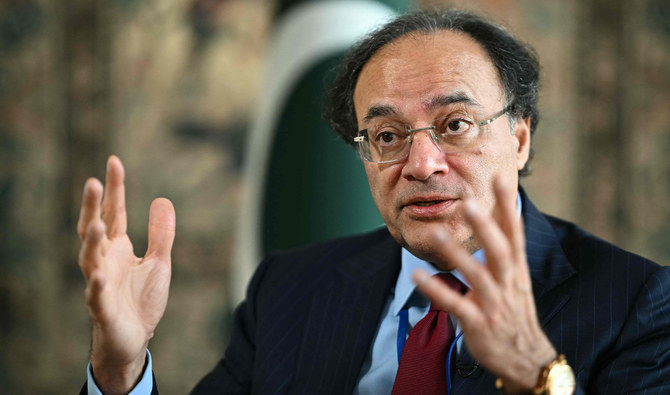
“Age is just a number,” Finance Minister Muhammad Aurangzeb said at a press conference in Islamabad, calling for reforms in the pension system and saying pension payments were a “huge liability.”
“Sixty is the new 40. In the [private sector] institution I left before coming here [as finance minister], we raised the retirement age from 60 to 65. These are your most productive years when you have maximum experience.”
He recognized that changes to the service structure could not be carried out overnight but said Pakistan would need to move in this direction to control the pension costs.
Law Minister Azam Nazir Tarar said pension reforms would be held across the board, for which legislation was required.
“A large chunk of yearly revenue is utilized on paying retirement benefits and pensions,” Tarar said at the press conference with Aurangzeb. “Legislation is required for this as civil servants, armed forces, judicial organs, and executive organs are included.”
The law minister said a committee had been formed under the chair of the finance minister to propose recommendations pertaining to pension reforms.
In March this year, Pakistan’s media widely reported that the finance ministry had shared a pension reform program with the IMF to contain growing pension liabilities, with the consolidated federal and provincial pension expenditure projected to increase by over 20 percent from Rs1.252 trillion last year to Rs1.513tn this year.
The reforms scheme shared with the lender reportedly seeks to cut the annual federal pension expense on existing employees by changing the formula for pension calculation, slashing the commutation rate, discouraging early retirement through the imposition of a penalty, restricting the list of beneficiaries of the deceased employees, and ending the current practice of multiple pensions.
In a 2021 report, the State Bank of Pakistan said the federal pension expenditure was increasingly becoming unsustainable:
“When we look at the federal pension bill, there has been a significant rise. Pension bill has increased at a Compounded Annual Growth Rate (CAGR) of almost 14pc during 2012-23.”
According to the bank, overall pension spending as a percentage of total budgeted expenditure for FY20 exceeded the federal and provincial health and education spending and was almost half the level of consolidated development expenditures.
The World Bank in 2020 warned that salary and pension costs in Pakistan would persistently grow and crowd out other public expenditures in the coming years.


