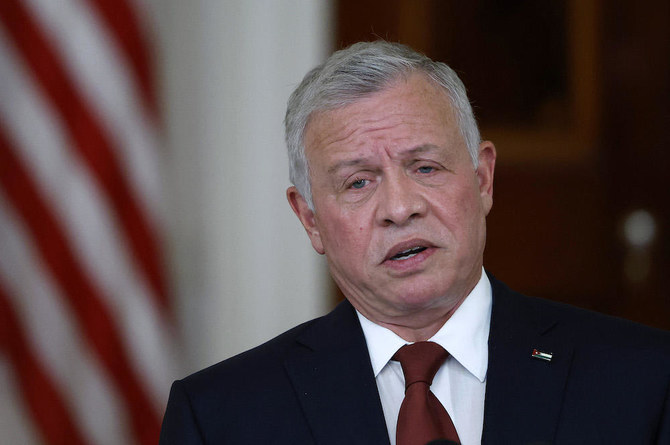
WASHINGTON: President Joe Biden will meet Middle East ally, Jordan’s King Abdullah II, at the White House on Monday with prospects for a Gaza ceasefire appearing slim and Palestinian Islamist group Hamas and Israeli officials blaming each other for the impasse.
On Sunday, Hamas reiterated its demand for an end to the war in exchange for the freeing of hostages, and Israeli Prime Minister Benjamin Netanyahu flatly ruled that out. Hamas also attacked the Kerem Shalom crossing into Gaza that Israel said killed three of its soldiers.
A Jordanian diplomat said Monday’s meeting between Biden and King Abdullah is not a formal bilateral meeting but an informal private meeting. It comes as the Biden administration and Israeli officials remain at odds over Israel’s planned military incursion in Rafah.
Biden last met King Abdullah at the White House in February and the two longtime allies discussed a daunting list of challenges, including a looming Israeli ground offensive in southern Gaza and the threat of a humanitarian calamity among Palestinian civilians. Jordan and other Arab states have been highly critical of Israel’s actions and have been demanding a ceasefire since mid-October as civilian casualties began to skyrocket. The war began after Hamas stunned Israel with a cross-border raid on Oct. 7 in which 1,200 people were killed and 252 hostages taken, according to Israeli tallies.
Biden last spoke to Netanyahu on April 28 and “reiterated his clear position” on a possible invasion of the Gaza border city of Rafah, the White House said. The US president has been vocal in his demand that Israel not undertake a ground offensive in Rafah without a plan to protect Palestinian civilians.
With pro-Palestinian protests erupting across US college campuses, Biden faces increasing pressure politically to convince Israel to hold off on an invasion. Biden addressed the campus unrest over the war in Gaza last week but said the campus protests had not forced him to reconsider his policies in the Middle East.


![]()

Biden meets Jordan’s King Abdullah as Gaza ceasefire hopes dim
Short Url
https://arab.news/baswa
Biden meets Jordan’s King Abdullah as Gaza ceasefire hopes dim
- Monday’s meeting between two leaders is not a formal bilateral meeting but an informal private meeting
- US president Biden faces increasing pressure politically to convince Israel to hold off on an invasion


Latest updates


Recommended


© 2026 SAUDI RESEARCH & PUBLISHING COMPANY, All Rights Reserved And subject to Terms of Use Agreement.