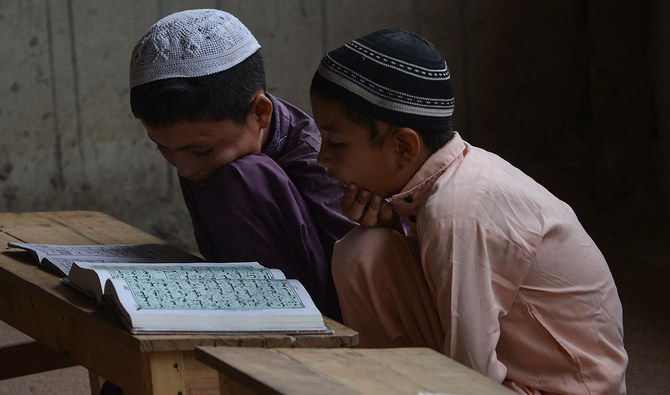
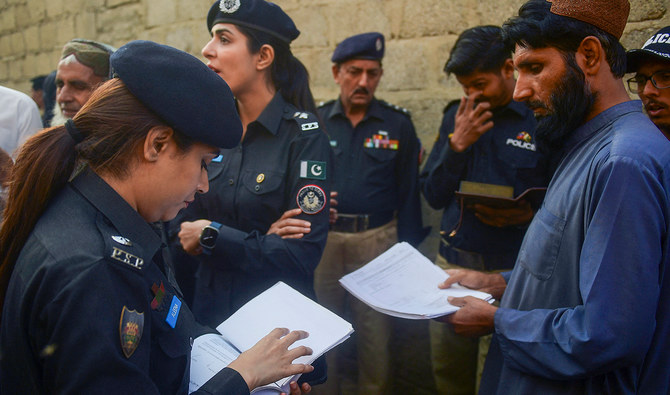
KARACHI: Pakistani seminaries have stopped giving admission to Afghan nationals except for those who approach them with the interior ministry’s approval, a top seminary board official informed Saturday, after the country’s southern Sindh province announced to deport illegally enrolled foreigners in seminaries and other educational institutions.
The decision was taken after the province’s apex committee, the top security forum, was briefed earlier this week that one of the individuals involved in the 2023 Karachi Police Office (KPO) attack was a madrasah or seminary teacher. It was also pointed out during the meeting that a number of unregistered foreigners were studying in such institutions in different parts of Sindh.
The 2023 attack was launched by militants, armed with guns and grenades, who stormed the building, leading to a prolonged gunfight with security forces. This confrontation resulted in casualties among both police officers and civilians, along with substantial damage to the police facility. The KPO attack was claimed by the banned militant network Tehreek-e-Taliban Pakistan (TTP), whose leadership is reportedly based in neighboring Afghanistan.
Speaking to Arab News, Maulana Talha Rehmani, spokesperson of Wafaq ul Madaris Al-Arabia Pakistan, said local seminaries had stopping enrolling Afghan nationals almost a year ago.
“Our madrasah used to offer admission to Afghan refugees who possessed proof of registration cards,” he said. “But that also stopped a year ago.”
“Different Pakistani intelligence agencies frequent seminaries for information,” he continued. “Nothing is hidden. The madrasas have a proper system of registration. We are ready to cooperate.”
Rehmani said the authorities had not shared any details with them about the identity of the seminary teacher involved in the KPO attack.
However, Dr. Aamir Tuaseen, former chairman of Pakistan Madrasah Education Board, noted seminaries lacked any coherent policy to develop “a monitoring system” for students.
“Admissions are granted to students without proper background checks,” he told Arab News. “The admission authorities also overlook which province or country does a student belong to, especially in case of Afghanistan.”
He added that boards of religious seminaries should take it upon themselves to grant admission only to students from the city where the seminary is located.
“This will help gather information about the background of every student,” he said, noting the current directorate of religious education did not seem to be fully functional.
The provincial information minister, Sharjeel Inaam Memon, did not respond to a request for comment, but a police official told Arab News on condition of anonymity the madrasah teacher involved in the KPO attack was a Pakistani national.
“The madrasah teacher was identified as Aryadullah who worked with a Karachi-based seminary,” the official said. “He was Pakistani citizen.”
Ihsanullah Tipu Mehsud, a security expert who manages an online publication, The Khorasan Diary, said the Afghan nationals involved in militant violence in Pakistan mostly arrived from the neighboring state and were not residents of Pakistan.
“The involvement of Afghan nationals in acts of terrorism cannot be ignored, but in my opinion, the government’s assertion is overstated,” he said. “The individuals involved in recent acts of terrorism are primarily those who have arrived directly from Afghanistan to carry out attacks rather than Afghan refugees.”
He emphasized any measures related to the expulsion of Afghan students from seminaries should not be driven by a reactionary approach.
“It is critical to implement gradual [seminary] reforms in accordance with the national action plan,” Mehsud said.


![]()
![]()

‘No illegal Afghan nationals,’ seminary board declares as Pakistan’s Sindh plans crackdown
Short Url
https://arab.news/bvhaz
‘No illegal Afghan nationals,’ seminary board declares as Pakistan’s Sindh plans crackdown
- The province took the decision after a security meeting was told a madrasah teacher was involved in 2023 KPO attack
- Independent analysts say Afghans involve in militant violence arrive from their country and are not residents of Pakistan
Latest updates


Recommended


© 2026 SAUDI RESEARCH & PUBLISHING COMPANY, All Rights Reserved And subject to Terms of Use Agreement.