$1.07bn EU ‘bribe’ over Syrian refugees stirs anger in Lebanon

European Commission President Ursula von der Leyen and Lebanon's caretaker Prime Minister Najib Mikati attend a press conference at the government palace in Beirut. (Reuters)
Short Url
Updated 04 May 2024
Follow

$1.07bn EU ‘bribe’ over Syrian refugees stirs anger in Lebanon

BEIRUT: Lebanon’s Prime Minister Najib Mikati on Friday vowed to step up deportations as part of a crackdown on illegal residents in the country.

“This matter is not up for debate, and orders have been given to the relevant authorities to implement what is necessary,” he said.

Mikati’s comments came after the EU on Thursday announced a €1 billion ($1.07 billion) aid package for Lebanon, mostly to boost border control in a bid to curb refugee flows across the Mediterranean Sea to Cyprus and Italy.

Lebanon hosts more than 1.5 million Syrian refugees.

In a television interview, Mikati said: “Any Syrian residing in Lebanon illegally will be deported, and a different approach will be taken toward all registered individuals compared to unregistered ones.”

While Mikati welcomed the announcement of increased European aid, some political and religious figures described the package as a “bribe” to resettle Syrian refugees in Lebanon, and warned that Lebanon is “not for sale.”

Local newspaper headlines highlighted the objections, which follow increasing numbers of murders, thefts, and kidnappings in recent months carried out by Syrians who entered Lebanon illegally.

Syrian inmates now make up 35 percent of Lebanon’s prison population, according to Interior Minister Bassam Mawlawi.

Cyprus recently complained about the increasing number of boats arriving on its shores carrying Syrians who traveled via Lebanon. Dozens remain stranded on the island, which refuses to accept them as refugees, and wants to return them to Lebanon.

Mikati said that there is “a European division” on the issue of safe areas in Syria for the return of refugees.

“We will undertake a campaign in this context to push the EU to take a decision that there are safe areas in Syria,” he added.

The announcement of the EU package was made as European Commission President Ursula von der Leyen visited Lebanon on Thursday with Cypriot President Nikos Christodoulides.

However, Nicolas Sehnaoui, a member of the Strong Lebanon parliamentary bloc, said: “Keep the billion euros, and take an additional billion in exchange for taking all the Syrian refugees to European countries.”

Razi Al-Hajj, a member of the Strong Republic bloc, described the presence of Syrian refugees in the country as a “ticking time bomb.”

He said: “If Mikati wants to dispel the doubts of the Lebanese about the EU’s agenda in Lebanon, and the government’s true intention, he must begin implementing what he promised, which (means) deporting anyone residing illegally on Lebanese territory.”

Change party MP Waddah Sadek said: “Those who are residing illegally in Lebanon — the number of whom is significant — should be deported. An appropriate solution should then be reached regarding those who sought refuge in Lebanon for fear of getting killed or persecuted.”

Jaafari Grand Mufti Sheikh Ahmad Kabalan said in his Friday sermon: “We don’t want to slaughter Lebanon with 1 billion poisoned euros.

“Europe is Washington’s partner in the devastation in Syria and the siege on Lebanon. I warn those in charge against assuming the role of Europe’s security and political guard. The Syrian refugees’ case requires an urgent resolution. We ran out of time, and our country’s demography, stability, security, economy and livelihood are threatened.”

Maroun Al-Khawli from the National Campaign for the Return of Syrian Refugees, said: “Lebanon will not be for sale under any circumstances.”

He said the aid package “is a humiliating deal for Lebanon’s dignity and sovereignty, and a dark spot in the history of the caretaker government.”

Shiite cleric Ali Mohammed Hussein Fadlallah said in his Friday sermon: “The European Union resorts to the financial aspect to persuade the Lebanese when it comes to the Syrian refugees’ file.

“However, this matter is not limited to the financial dimension. It requires us to address its root causes and organize the Syrian presence in a way that doesn’t cause any internal repercussions, concerns and tensions that might affect the relationship between Lebanese and Syrian refugees.”

In a statement, the Progress Party said: “The European countries’ policy ensures that the Syrian refugees’ boats don’t reach their shores. This is what made them offer Lebanon €1 billion to make up for their presence in the country.

“The governing system accepted the bribe to recycle itself at the expense of the accumulating crises without organizing this file.”

The party proposed setting up camps for Syrian refugees on the border, and securing their needs through international support.
Oman and Lebanon call for full Israeli withdrawal, urge end to attacks

Updated 6 sec ago
Follow

Oman and Lebanon call for full Israeli withdrawal, urge end to attacks

  • Joseph Aoun and Sultan Haitham bin Tariq make a joint call for an immediate halt to Israeli attacks on Lebanese territory
  • Reaffirmation of the unified Arab position on ending the Israeli occupation and establishing an independent Palestinian state based on the 1967 borders

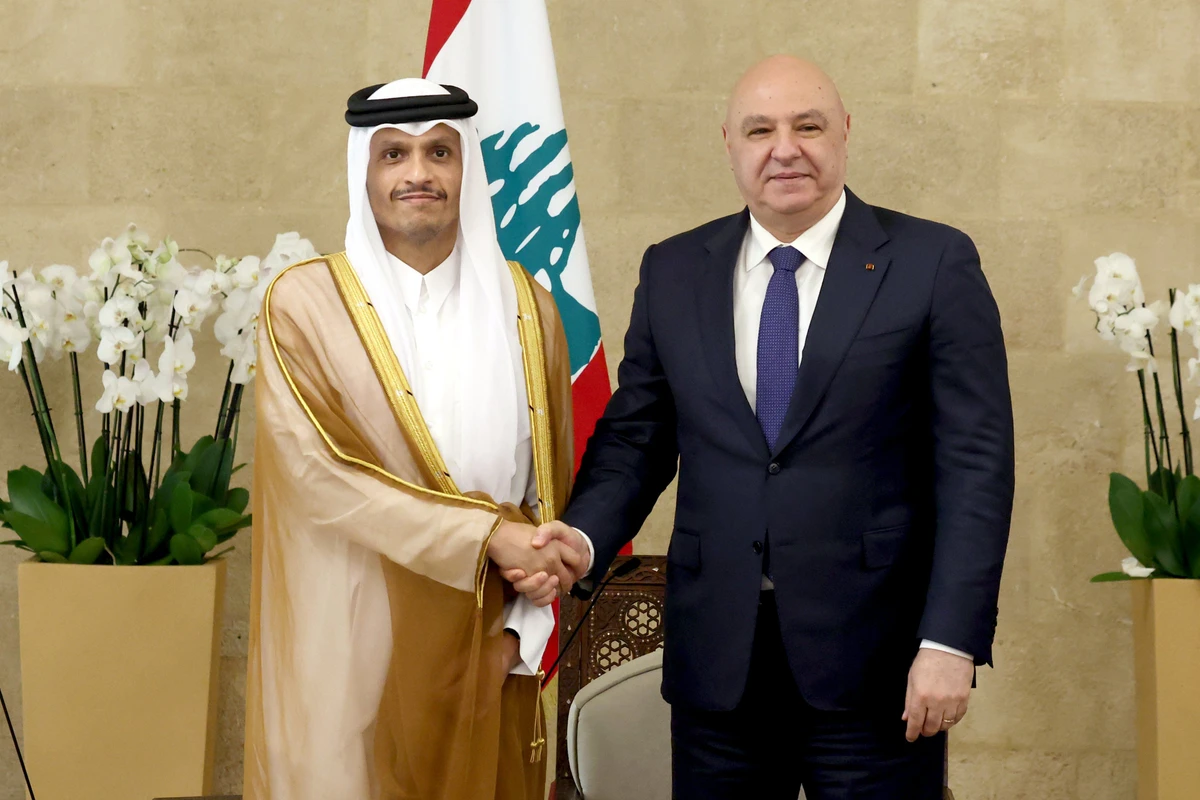
BEIRUT: Lebanese President Joseph Aoun and his Omani counterpart Sultan Haitham bin Tariq on Wednesday made a joint call for an immediate halt to Israeli attacks on Lebanese territory and a full withdrawal from all occupied Arab lands, warning that continued violations pose a direct threat to regional stability.

The statement came during a high-level summit in Muscat, where both leaders voiced “serious concern over the ongoing Israeli aggression” and described the occupation as a “clear violation” of UN Security Council Resolution 1701 and other international resolutions.

The two sides also expressed support for international efforts to de-escalate tensions, stabilize the situation on the ground, facilitate the return of displaced persons, and advance post-conflict reconstruction.

Aoun led a Lebanese ministerial delegation to Oman that included Lebanon’s ministers of foreign affairs, interior, defense, health, and agriculture for talks with Omani officials.

The joint statement emphasized the strengthening of bilateral ties and expanding cooperation in key sectors including politics, the economy, investment, banking, tourism, transport, and logistics.

Both sides called for early preparations to hold the first session of the Omani-Lebanese Joint Committee, chaired by the two foreign ministers in Muscat, and to pursue new agreements and memorandums of understanding intended to enhance collaboration in trade, culture, and science. The statement also highlighted the need to boost private sector engagement in shared development opportunities.

The Omani side reaffirmed its full support for Lebanon’s sovereignty, independence, and territorial integrity, as well as for strengthening Lebanese state institutions, particularly the army and legitimate security forces, and backing the country’s ongoing economic, financial, and administrative reforms.

The two sides reaffirmed the unified Arab position on ending the Israeli occupation and establishing an independent Palestinian state based on the 1967 borders, with East Jerusalem as its capital. They also underscored the importance of strengthening Arab solidarity, respecting the sovereignty of states, and upholding the principles of good neighborliness and international law.

Aoun’s official visit to Oman took place within the context of Muscat’s established role as a regional and international mediator. During his meetings, Aoun praised Oman’s diplomatic standing and approach, describing it as “wise and responsible.”

He commended Oman’s foreign policy, grounded in dialogue, mediation, balance, and good neighborliness, saying it had earned the sultanate a “distinguished status and a pivotal role in promoting stability and resolving conflicts through peaceful means.”

Aoun said that, in Lebanon, “we hold this wise approach in high regard and deeply value the sultanate’s steadfast support for Lebanon in various international forums, as well as its support as we confront the challenges before us.”

For his part, Sultan Haitham bin Tariq reaffirmed Oman’s continued commitment to Lebanon’s stability and its close monitoring of the latest developments in the country.

He emphasized the deep-rooted relations between the two countries and the importance of strengthening bilateral cooperation and coordination. The sultan also praised the positive contributions of the Lebanese community in Oman.

On the sidelines of the visit, Lebanese Interior Minister Ahmed Al-Hajjar held a meeting with his Omani counterpart Hamoud bin Faisal Al-Busaidi at Al-Alam Palace in Muscat. They underlined the enhancement of joint cooperation, particularly in security and policing.

According to a joint statement, the discussions also covered Lebanon’s efforts to consolidate internal security and maintain stability.

Participating on the Omani side in the expanded talks were Al-Busaidi; Shihab bin Tarik Al-Said, deputy prime minister for defense affairs; Badr bin Hamad Al-Busaidi, foreign minister of Oman; Hamad bin Said Al-Aufi, head of the private office; Mahad bin Said Ba’owain, minister of labor and head of the honorary mission; Saud bin Hamoud Al-Habsi, minister of agricultural, fisheries and water resources; and Hilal bin Ali Al-Sabti, minister of health.