

Saudi imports, exports increase despite regional tensions

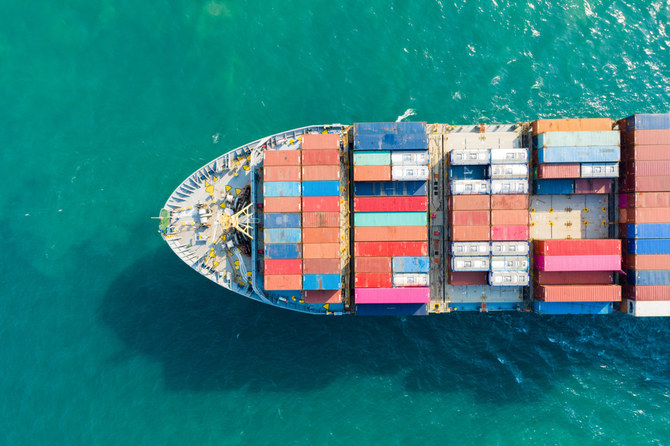
Minister of Transport and Logistic Services Saleh Al-Jasser noted that this growth stemmed from collaborative efforts between the public and private sectors. Shutterstock
Short Url
Updated 12 May 2024
Follow

Saudi imports, exports increase despite regional tensions

RIYADH: Saudi Arabia’s imports and exports increased 5 percent in the first quarter of 2024 despite the tension in the region, according to a senior official.

In November 2023, the Saudi Ports Authority, known as Mawani, announced a 5.31 percent increase in container handling across all seaports in October. A total of 741,905 twenty-foot equivalent units were processed, compared to 704,486 a year before.

In an interview with Al-Ekhbariya TV channel on the sidelines of the Logistic Integration Forum 2024, held on April 29 in the Eastern Province, Minister of Transport and Logistic Services Saleh Al-Jasser noted that this growth stemmed from collaborative efforts between the public and private sectors.

Al-Jasser emphasized that the Saudi logistics sector has witnessed significant advancements since the launch of the National Strategy for Transport and Logistics Services by Crown Prince Mohammed bin Salman, which aims to transform the nation into a global logistics hub.

“This strategy entails ambitious objectives for all modes of transportation and logistics in general. The Kingdom is making significant strides in the logistics sector, with Saudi Arabia ascending 17 positions in the World Bank’s Logistics Performance Index in its report for 2023,” he said.

He additionally stated that Saudi Arabia has demonstrated noteworthy improvement and enhanced connectivity between its ports as per the UN Conference on Trade and Development shipping index report.

As for global air connectivity, the minister noted that the number of international destinations connected to the Kingdom has reached 150, compared to the pre-COVID figure of 100.

“We are experiencing significant growth in the maritime, air, and railway sectors, with rapid developments underway,” he said.

Al-Jasser further noted substantial progress in the Eastern Province, highlighting that King Abdulaziz Port saw growth exceeding 35 percent in the first quarter of this year. 

“Additionally, the region witnessed the inaugural train journey from Jubail Port to Riyadh on Monday,” he said.

The minister also disclosed ongoing efforts to establish free logistic zones, mirroring the successful model at Riyadh’s King Khalid International Airport, the ports of Dammam and Jeddah, and King Salman City in the Eastern Province.

Discussing land connectivity with Gulf countries, Al-Jasser emphasized that Saudi leaders and their counterparts in the Gulf states support and pay attention to this matter.

“The King Fahd Causeway stands as a monumental project and holds immense global significance as one of the vital causeways linking nations. The road infrastructure is currently experiencing growth and enhancements,” he said.

He added: “We are actively collaborating with our counterparts in Bahrain to explore future partnership opportunities.” 

Regarding rail connectivity, the minister noted that all ports in the Eastern Province are interconnected as part of the national strategy, which also includes plans to connect several ports in the western region and integrate all railway networks across the country.


Saudi Arabia opens 3rd round of Exploration Empowerment Program

Updated 01 February 2026
Follow

Saudi Arabia opens 3rd round of Exploration Empowerment Program

RIYADH: Saudi Arabia’s Ministry of Industry and Mineral Resources, in collaboration with the Ministry of Investment, has opened applications for the third round of the Exploration Empowerment Program, part of ongoing efforts to accelerate mineral exploration in the Kingdom, reduce early-stage investment risks, and attract high-quality investment from local and international mining companies.

The third round of the Exploration Empowerment Program offers a comprehensive support package targeting exploration companies and mineral prospecting license holders.

The initiative aims to lower investment risks for projects and support a faster transition from prospecting to development.

"The program provides coverage of up to 70 percent of the total salaries of Saudi technical staff, such as geologists, during the first two years, increasing to 100 percent thereafter, in line with program requirements.

This support aims to develop talent, build national capabilities in mineral exploration, promote job localization, and facilitate the transfer of geological knowledge.

The application for the third round opened on Jan. 14, allowing participants to benefit from the Kingdom’s attractive investment environment, its stable legal framework, and streamlined regulatory structures, as well as integrated infrastructure that supports the transition from mineral resources to operational mines.

The ministry has set the timeline for the third round, with the application period running from Jan. 14 to March 31.

This will be followed by the evaluation, approval, and signing of agreements from April 1 to May 31, with the eligible projects set to be announced between June 1 and July 31 of the same year.

The program stages include submitting exploration data during the reimbursement and payment phase from Sept. 1 to Nov. 30, followed by technical and financial verification of work programs and approval of the disbursement of support funds in January 2027.

The exploration data will then be published on the National Geological Database in April 2027.

The ministry emphasized that the EEP focuses on supporting the exploration of strategically important minerals with national priority. It also contributes to enhancing geological knowledge by providing up-to-date data that meets international standards, helping investors make informed decisions and supporting the growth of national companies and local supply chains.

The ministry urged companies to apply early to benefit from the program’s third round, which coincided with the fifth edition of the International Mining Conference, which was held from Jan. 13 to 15.