


JERUSALEM: Israel is determined to launch a ground offensive against Hamas in Rafah, Gaza’s southernmost town, a plan that has raised global alarm because of the potential for harm to more than a million Palestinian civilians sheltering there.
Even as the US, Egypt and Qatar pushed for a ceasefire deal they hope would avert an assault on Rafah, Prime Minister Benjamin Netanyahu repeated on Tuesday that the military would move on the town “with or without a deal” to achieve its goal of destroying the Hamas militant group.
“We will enter Rafah because we have no other choice. We will destroy the Hamas battalions there, we will complete all the objectives of the war, including the return of all our hostages,” he said.
Israel has approved military plans for its offensive and has moved troops and tanks to southern Israel in apparent preparation — though it’s still unknown when or if it will happen.
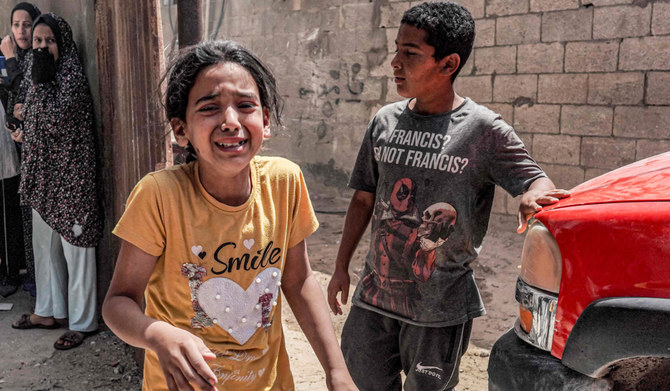
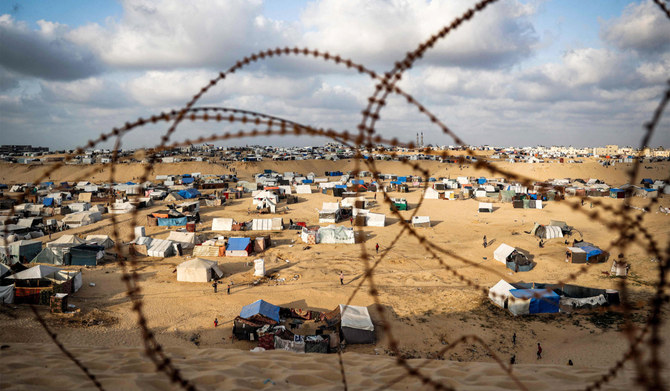
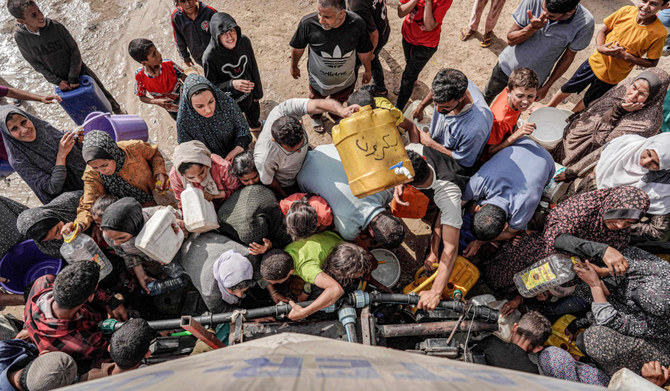
About 1.4 million Palestinians — more than half of Gaza’s population — are jammed into the town and its surroundings. Most of them fled their homes elsewhere in the territory to escape Israel’s onslaught and now face another wrenching move, or the danger of facing the brunt of a new assault. They live in densely packed tent camps, overflowing UN shelters or crowded apartments, and are dependent on international aid for food, with sanitation systems and medical facilities infrastructure crippled.
WHY RAFAH IS SO CRITICAL
Since Israel declared war in response to Hamas’ deadly cross-border attack on Oct. 7, Netanyahu has said a central goal is to destroy its military capabilities.
Israel says Rafah is Hamas’ last major stronghold in the Gaza Strip, after operations elsewhere dismantled 18 out of the militant group’s 24 battalions, according to the military. But even in northern Gaza, the first target of the offensive, Hamas has regrouped in some areas and continued to launch attacks.
Israel says Hamas has four battalions in Rafah and that it must send in ground forces to topple them. Some senior militants could also be hiding in the city.
WHY THERE IS SO MUCH OPPOSITION TO ISRAEL’S PLAN
The US has urged Israel not to carry out the operation without a “credible” plan to evacuate civilians. Egypt, a strategic partner of Israel, has said that an Israeli military seizure of the Gaza-Egypt border — which is supposed to be demilitarized — or any move to push Palestinians into Egypt would threaten its four-decade-old peace agreement with Israel.
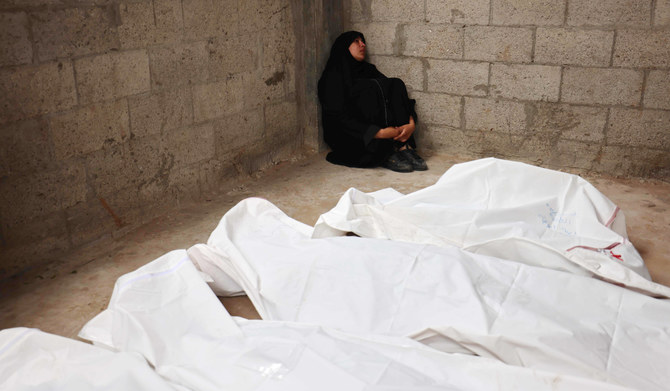
Israel’s previous ground assaults, backed by devastating bombardment since October, leveled huge parts of northern Gaza and the southern city of Khan Younis and caused widespread civilian deaths, even after evacuation orders were given for those areas.
Israel’s military says it plans to direct the civilians in Rafah to “humanitarian islands” in central Gaza before the planned offensive. It says it has ordered thousands of tents to shelter people. But it hasn’t given details on its plan. It’s unclear if it’s logistically possible to move such a large population all at once without widespread suffering among a population already exhausted by multiple moves and months of bombardment.
Moreover, UN officials say an attack on Rafah will collapse the aid operation that is keeping the population across the Gaza Strip alive,. and potentially push Palestinians into greater starvation and mass death.
Some entry points have been opened in the north, and the US has promised that a port to bring in supplies by sea will be ready in weeks. But the majority of food, medicine and other material enters Gaza from Egypt through Rafah or the nearby Kerem Shalom crossing — traffic that is likely to be impossible during an invasion.
The US has said that Israel should use pinpoint operations against Hamas inside Rafah without a major ground assault.
After Netanyahu’s latest comments, US National Security spokesperson John Kirby said, “We don’t want to see a major ground operation in Rafah. Certainly, we don’t want to see operations that haven’t factored in the safety, security of” those taking refuge in the town.
POLITICAL CALCULATIONS
The question of attacking Rafah has heavy political repercussions for Netanyahu. His government could be threatened with collapse if he doesn’t go through with it. Some of his ultranationalist and conservative religious governing partners could pull out of the coalition, if he signs onto a ceasefire deal that prevents an assault.
Critics of Netanyahu say that he’s more concerned with keeping his government intact and staying in power than national interest, an accusation he denies.
One of his coalition members, Finance Minister Bezalel Smotrich, said Tuesday that accepting a ceasefire deal and not carrying out a Rafah operation would amount to Israel “raising a white flag” and giving victory to Hamas.
On the other hand, Netanyahu risks increasing Israel’s international isolation — and alienating its top ally, the United States — if it does attack Rafah. His vocal refusals to be swayed by world pressure and his promises to launch the operation could be aimed at placating his political allies even as he considers a deal.
Or he could bet that international anger will remain largely rhetorical if he goes ahead with the attack. The Biden administration has used progressively tougher language to express concerns over Netanyahu’s conduct of the war, but it has also continued to provide weapons to Israel’s military and diplomatic support.


