

US says five Israeli military units committed abuses in West Bank

1 / 2
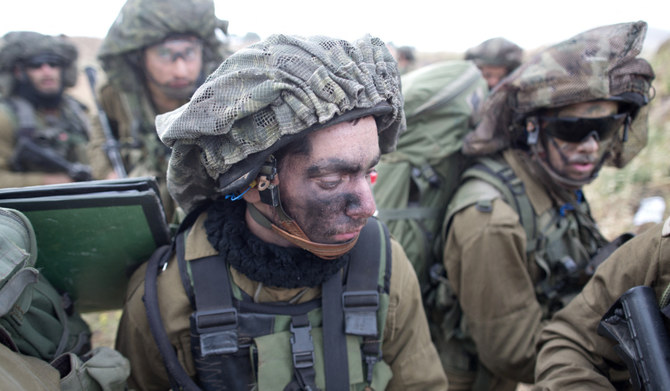
Israeli soldiers of the Jewish Ultra-Orthodox battalion "Netzah Yehuda" take part in their annual unit training in the Israeli annexed Golan Heights, near the Syrian border on May 19, 2014. (AFP)
2 / 2
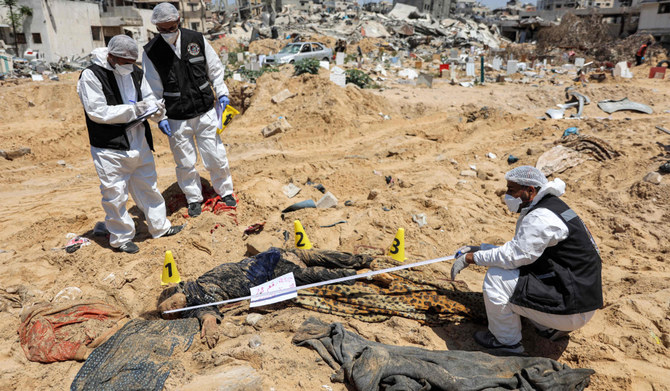
Palestinian forensic experts inspect the body of a dead person uncovered in the vicinity of Al-Shifa Hospital in Gaza City on April 17, 2024 after the recent Israeli military operation there amid the ongoing fighting in the Palestinian territory between Israel and Hamas. (AFP)
Short Url
Updated 30 April 2024
Follow

US says five Israeli military units committed abuses in West Bank

  • Israel has killed more than 34,000 Palestinians, according to Gaza’s Health Ministry
  • Press reports have identified a battalion called the Netzah Yehuda, composed mainly of ultra-Orthodox Jews, as being accused of abuses. It is about 1,000-strong and since 2022 has been stationed in the West Bank, which Israel has occupied since 1967

WASHINGTON: The United States has concluded that five Israeli security force units committed serious human rights violations against Palestinians in the West Bank before the Hamas attack in October, the State Department said Monday.
Israel has taken remedial measures with four of these units, making US sanctions less likely. Consultations are under way with Israel over the fifth unit, State Department deputy spokesman Vedant Patel told reporters.
He declined to identify the units, give details of the abuse, or say what measures the Israeli government had taken against them.
A US official speaking on condition of anonymity said the fifth unit is part of the army.
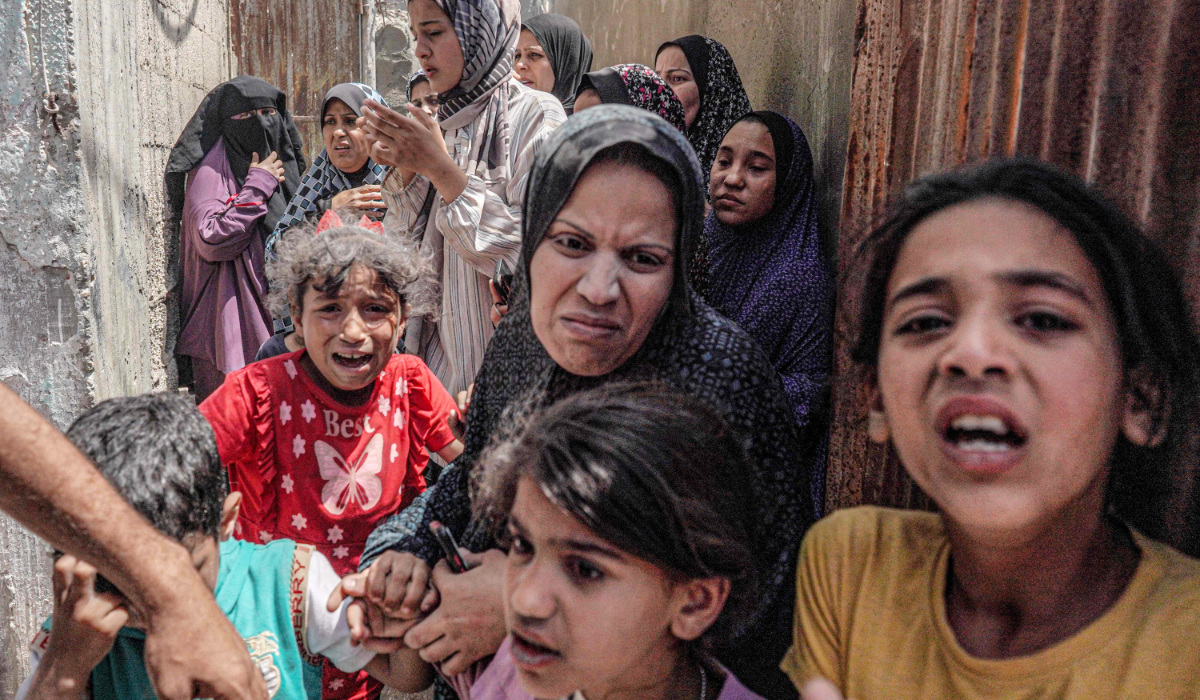


Children react as they flee following Israeli bombardment in Nuseirat in the central Gaza Strip on April 29, 2024, amid the ongoing conflict in the Palestinian territory between Israel and the militant group Hamas.  (AFP)

Press reports have identified a battalion called the Netzah Yehuda, composed mainly of ultra-Orthodox Jews, as being accused of abuses.
It is about 1,000-strong and since 2022 has been stationed in the West Bank, which Israel has occupied since 1967.
“After a careful process, we found five Israeli units responsible for individual incidents of gross violations of human rights,” Patel said.
All the incidents took place before the October 7 Hamas attack and were not in Gaza, he added.
“Four of these units have effectively remediated these violations, which is what we expect partners to do, and is consistent with what we expect all countries whom we have a secure relationship with,” said Patel.
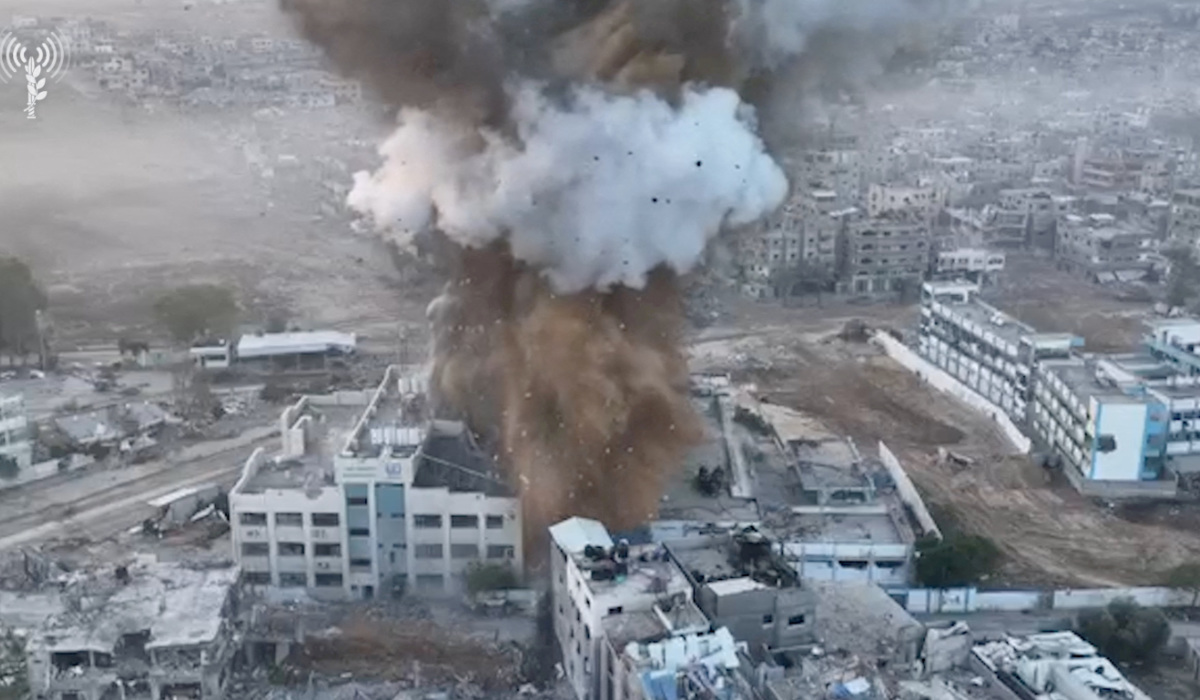


Israeli military attacks Al-Shifa hospital complex in Gaza. (Reuters file photo)

Israel has provided “additional information” about the fifth unit, he added.
US law bars the government from funding or arming foreign security forces against which there are credible allegations of human rights abuses.
The United States provides military aid to allies around the world, including Israel.
The Israeli army has been fighting the militant Palestinian group Hamas in the Gaza Strip for almost seven months and is trading fire almost every day with Hezbollah along the border with Lebanon. Both groups are backed by Iran.
Prime Minister Benjamin Netanyahu reacted angrily to recent news reports that the United States might slap sanctions against a unit of the Israeli military because of human rights abuses, saying the army should not be punished with the country at war.
Patel said the United States is continuing its evaluation of the fifth army unit and has not decided whether to deny it US military assistance.
This case comes with the administration of President Joe Biden under pressure to demand accountability from Israel over how it is waging war against Hamas, with such a high civilian death toll.
In an election year, more people are calling for the United States to make its billions of dollars in annual military aid to Israel contingent on more concern for Palestinian civilians. Pro-Palestinian protests are also sweeping US college campuses.
Hamas’ October attack in Israel resulted in the deaths of about 1,170 people in Israel, mostly civilians, according to an AFP tally based on Israeli official figures.
Israel’s retaliatory offensive has killed at least 34,488 people in Gaza, mostly women and children, according to the health ministry in the Hamas-run territory.


Syria’s Kurdish fighters agree to leave Aleppo after deadly clashes

Updated 3 sec ago
Follow

Syria’s Kurdish fighters agree to leave Aleppo after deadly clashes

  • Syria’s official SANA news agency reported that “buses carrying the last batch of members of the SDF organization have left the Sheikh Maqsud neighborhood in Aleppo, heading toward northeastern Syria”

ALEPPO: Syria’s Kurdish fighters said Sunday that they agreed under a ceasefire to withdraw from Aleppo after days of fighting government forces in the city.
Hours earlier, Syria’s military said it had finished operations in the Kurdish-held Sheikh Maqsud neighborhood with state television reporting that Kurdish fighters who surrendered were being bused to the north.
The military had already announced its seizure of Aleppo’s other Kurdish-held neighborhood, Ashrafiyeh.
Kurdish forces had controlled pockets of Syria’s second city Aleppo and operate a de facto autonomous administration across swathes of the north and northeast, much of it captured during the 14-year civil war.
The latest clashes erupted after negotiations to integrate the Kurds into the country’s new government stalled.
“We reached an understanding that led to a ceasefire and secured the evacuation of the martyrs, the wounded, the trapped civilians and the fighters from Ashrafiyeh and Sheikh Maqsud neighborhoods to northern and eastern Syria,” the Kurdish-led Syrian Democratic Forces (SDF) wrote in a statement.
Syria’s official SANA news agency reported that “buses carrying the last batch of members of the SDF organization have left the Sheikh Maqsud neighborhood in Aleppo, heading toward northeastern Syria.”
The SDF initially denied its fighters were leaving, describing the bus transfers as forced displacement of civilians.
An AFP correspondent saw at least five buses on Saturday carrying men out of Sheikh Maqsud, but could not independently verify their identities.
According to the SDF statement, the ceasefire was reached “through the mediation of international parties to stop the attacks and violations against our people in Aleppo.”
The United States and European Union both called for the Syrian government and Kurdish authorities to return to political dialogue.
The fighting, some of the most intense since the ousting of long-time ruler Bashar Assad in December 2024, has killed at least 21 civilians, according to figures from both sides, while Aleppo’s governor said 155,000 people fled their homes.
Both sides blamed the other for starting the clashes on Tuesday.

Children ‘still inside’

On the outskirts of Sheikh Maqsud, families who had been trapped by the fighting were leaving, accompanied by Syrian security forces.
An AFP correspondent saw men carrying children on their backs board buses headed to shelters.
Dozens of young men in civilian clothing were separated from the crowd, with security forces making them sit on the ground before transporting them to an unknown destination, according to the correspondent.
A Syrian security official told AFP on condition of anonymity that the young men were “fighters” being “transferred to Syrian detention centers.”
At the entrance to the district, 60-year-old Imad Al-Ahmad was heading in the opposite direction, trying to seek permission to return home.
“I left four days ago...I took refuge at my sister’s house,” he told AFP. “I don’t know if we’ll be able to return today.”
Nahed Mohammad Qassab, a 40-year-old widow also waiting to return, said she left before the fighting to attend a funeral.
“My three children are still inside, at my neighbor’s house. I want to get them out,” she said.
A flight suspension at Aleppo airport was extended until further notice.

‘Return to dialogue’

US envoy Tom Barrack met Syrian President Ahmed Al-Sharaa on Saturday, and afterwards called for a “return to dialogue” with the Kurds in accordance with the integration framework agreed in March.
The deal was meant to be implemented last year, but differences, including Kurdish demands for decentralized rule, stymied progress as Damascus repeatedly rejected the idea.
The fighting in Aleppo raised fears of a regional escalation, with neighboring Turkiye, a close ally of Syria’s new Islamist authorities, saying it was ready to intervene. Israel has sided with the Kurdish forces.
The clashes have also tested the Syrian authorities’ ability to reunify the country after the brutal civil war and commitment to protecting minorities, after sectarian bloodshed rocked the country’s Alawite and Druze communities last year.