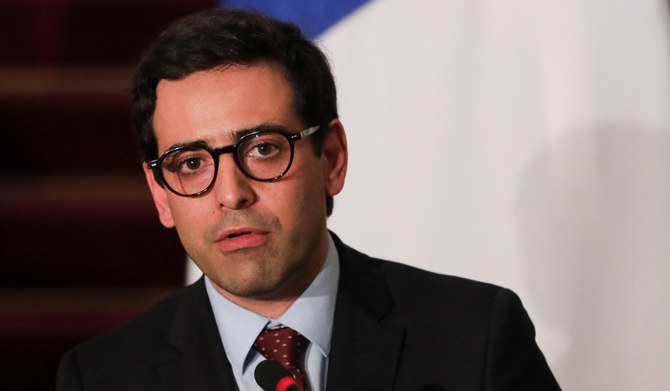

BEIRUT: France’s foreign minister will push proposals to prevent further escalation and a potential war between Israel and Iran-backed Hezbollah during a visit to Lebanon on Sunday as Paris seeks to refine a roadmap that both sides could accept to ease tensions.
France has historical ties with Lebanon and earlier this year Stephane Sejourne delivered an initiative that proposed Hezbollah’s elite unit pull back 10 km (6 miles) from the Israeli border, while Israel would halt strikes in southern Lebanon.
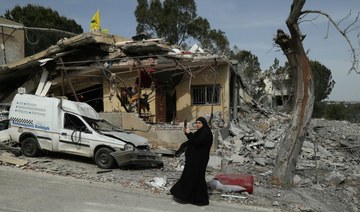
The two have exchanged tit for tat strikes in recent months, but the exchanges have increased since Iran launched a barrage of missiles on Israel in response to a suspected Israeli attack on the Iranian embassy in the Syrian capital Damascus that killed members of Iran’s Revolutionary Guards Corps’ overseas Quds Force.
France’s proposal, which has been discussed with partners, notably the United States, has not moved forward, but Paris wants to keep momentum in talks and underscore to Lebanese officials that Israeli threats of a military operation in southern Lebanon should be taken seriously.
Hezbollah has maintained it will not enter any concrete discussion until there is a ceasefire in Gaza, where the war between Israel and Islamist militant group Hamas has entered its sixth month.
Israel has also said it wants to ensure calm is restored on its northern border so that thousands of displaced Israelis can return to the area without fear of rocket attacks from across the border.
“The objective is to prevent a regional conflagration and avoid that the situation deteriorates even more on the border between Israel and Lebanon,” foreign ministry deputy spokesperson Christophe Lemoine said at a news conference.
Lebanese Prime Minister Najib Nikati and Lebanese army chief Joseph Aoun met French President Emmanuel Macron earlier this month, where they discussed the French proposal.
In a letter addressed to the French embassy in Beirut in March, Lebanon’s foreign ministry said Beirut believed the French initiative would be a significant step toward peace and security in Lebanon and the broader region.
Local Lebanese media had reported the government had provided feedback to the French on the proposal.
French officials say the responses so far have been general and lack consensus among the Lebanese. While they deem it too early for any form of accord, they believe it is vital to engage now so that when the moment comes both sides are ready.
Paris will also underline the urgency of breaking the political deadlock in the country. Lebanon has neither a head of state nor a fully empowered cabinet since Michel Aoun’s term as president ended in October 2022.
Israel has remained cautious on the French initiative, although Israeli and French officials say Israel supports efforts to defuse the cross-border tensions.
“The flames will flicker and tensions will continue,” said a Lebanese diplomat. “We are in a situation of strategic ambiguity on both sides.”
France has 700 troops based in southern Lebanon as part of the 10,000-strong United Nations peacekeeping force.
Officials say the UN troops are unable to carry out their mandate and part of France’s proposals are aimed at beefing up the mission by strengthening the Lebanese army.
After Lebanon, Sejourne will head to Saudi Arabia before traveling to Israel.
Arab and Western foreign ministers, including US Secretary of State Antony Blinken, will hold informal talks on the sidelines of a World Economic Forum event in Riyadh to discuss the Gaza war with Palestinian President Mahmoud Abbas.