

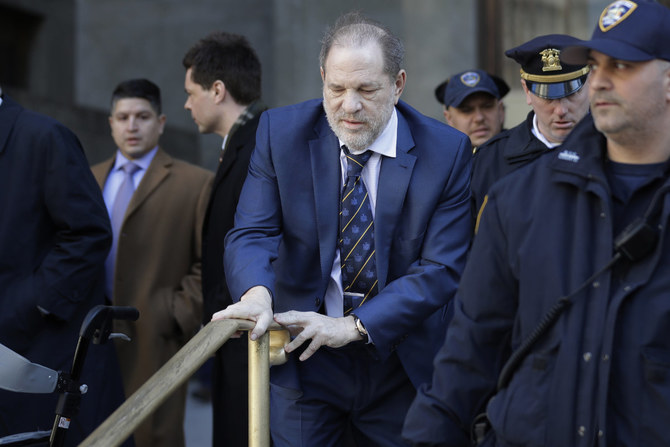


NEW YORK: New York’s highest court on Thursday threw out Harvey Weinstein ‘s 2020 rape conviction with a ruling that shocked and disappointed women who celebrated historic gains during the #MeToo era and left those who testified in the case bracing for a retrial against the ex-movie mogul.
The court found the trial judge unfairly allowed testimony against Weinstein based on allegations that weren’t part of the case.
Weinstein, 72, will remain in prison because he was convicted in Los Angeles in 2022 of another rape. But the New York ruling reopens a painful chapter in America’s reckoning with sexual misconduct by powerful figures — an era that began in 2017 with a flood of allegations against Weinstein.
#MeToo advocates noted that Thursday’s ruling was based on legal technicalities and not an exoneration of Weinstein’s behavior, saying the original trial irrevocably moved the cultural needle on attitudes about sexual assault.
The Manhattan district attorney’s office said it intends to retry Weinstein, and at least one of his accusers said through her lawyer that she would testify again.
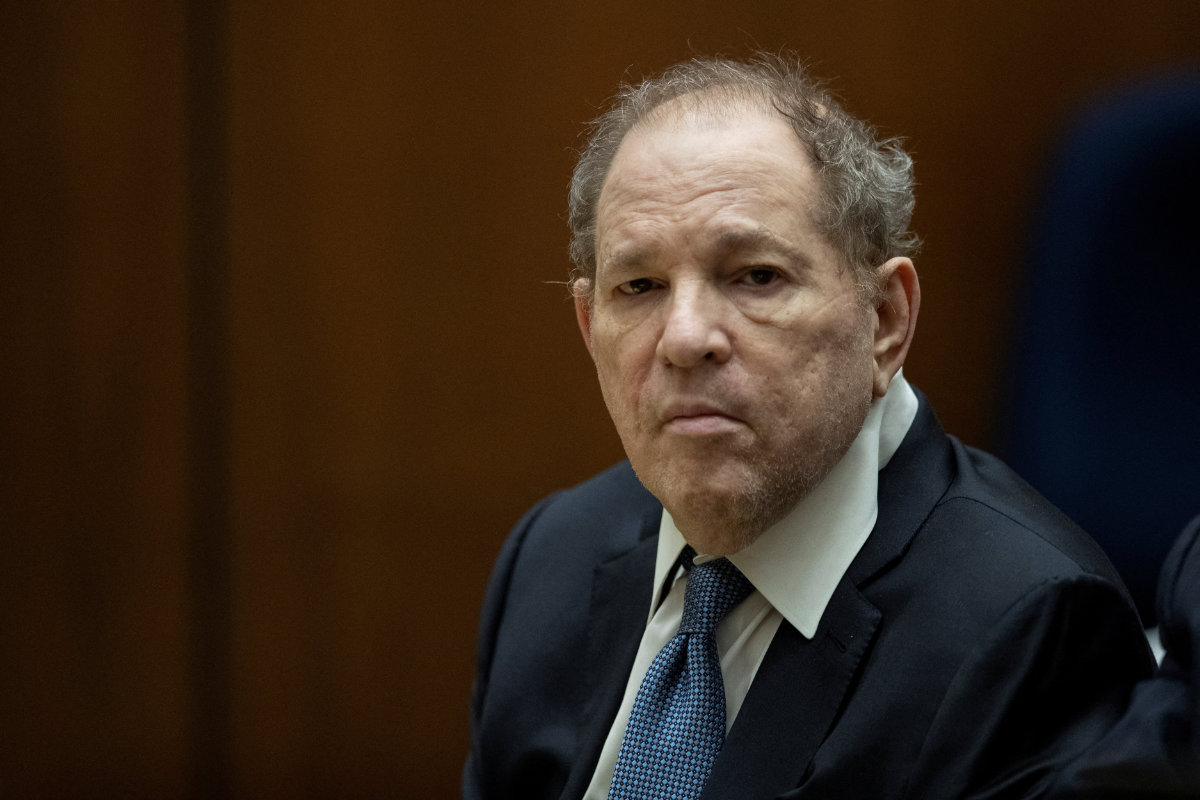
Former film producer Harvey Weinstein appears in court at the Clara Shortridge Foltz Criminal Justice Center in Los Angeles, California, on October 4, 2022. (Pool via REUTERS/File Photo)
The state Court of Appeals overturned Weinstein’s 23-year sentence in a 4-3 decision, saying “the trial court erroneously admitted testimony of uncharged, alleged prior sexual acts” and permitted questions about Weinstein’s “bad behavior” if he had testified. It called this “highly prejudicial” and “an abuse of judicial discretion.”
In a stinging dissent, Judge Madeline Singas wrote that the Court of Appeals was continuing a “disturbing trend of overturning juries’ guilty verdicts in cases involving sexual violence.” She said the ruling came at “the expense and safety of women.”
In another dissent, Judge Anthony Cannataro wrote that the decision was “endangering decades of progress in this incredibly complex and nuanced area of law” regarding sex crimes after centuries of “deeply patriarchal and misogynistic legal tradition.”
The reversal of Weinstein’s conviction is the second major #MeToo setback in the last two years. The US Supreme Court refused to hear an appeal of a Pennsylvania court decision to throw out Bill Cosby’s sexual assault conviction.
Weinstein has been in a New York prison since his conviction for forcibly performing oral sex on a TV and film production assistant in 2006, and rape in the third degree for an attack on an aspiring actor in 2013. He was acquitted on the most serious charges — two counts of predatory sexual assault and first-degree rape.
He was sentenced to 16 years in prison in the Los Angeles case.
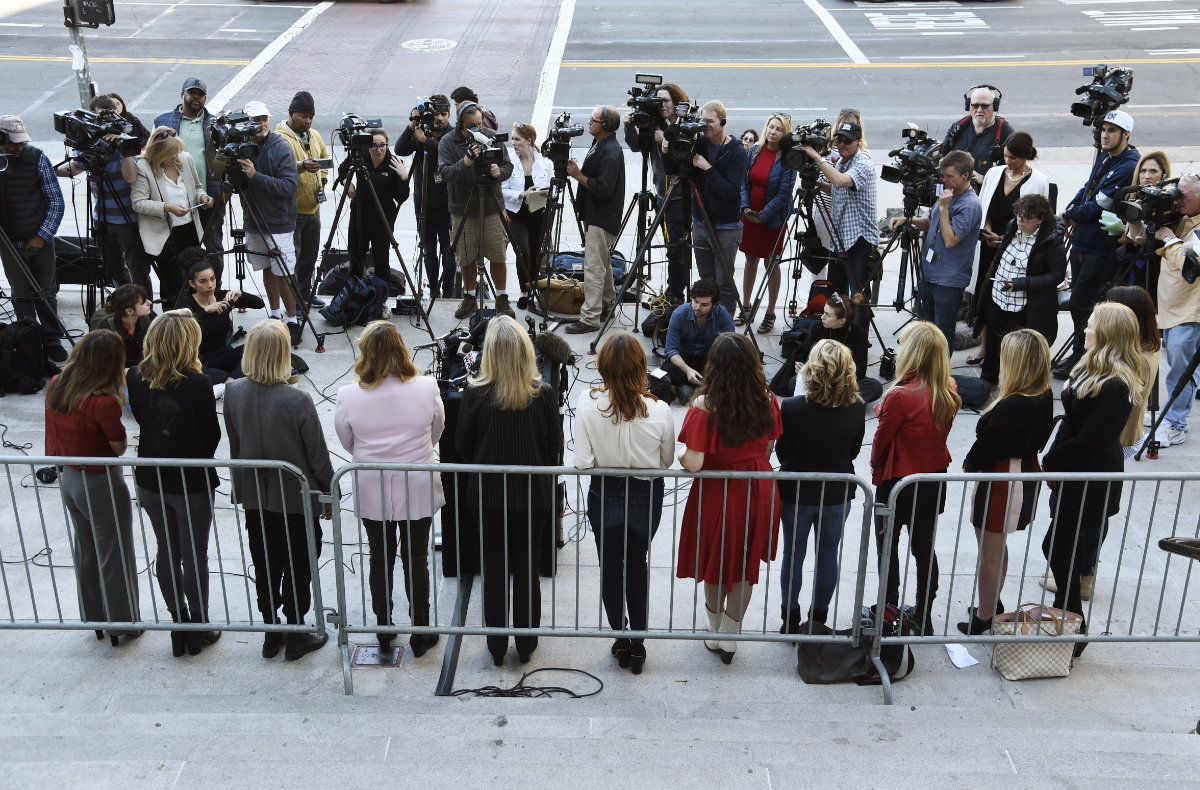
Caption
Weinstein’s lawyers expect Thursday’s ruling to have a major impact on the appeal of his Los Angeles rape conviction. Their arguments are due May 20.
Jennifer Bonjean, a Weinstein attorney, said the California prosecution also relied on evidence of uncharged conduct alleged against him.
“A jury was told in California that he was convicted in another state for rape,” Bonjean said. “Turns out he shouldn’t have been convicted and it wasn’t a fair conviction. … It interfered with his presumption of innocence in a significant way in California.”
Weinstein lawyer Arthur Aidala called the Court of Appeals ruling “a tremendous victory for every criminal defendant in the state of New York.”
Attorney Douglas H. Wigdor, who has represented eight Harvey Weinstein accusers including two witnesses at the New York criminal trial, called it “a major step back” and contrary to routine rulings by judges allowing evidence of uncharged acts to help jurors understand the intent or patterns of a defendant’s criminal behavior.
Debra Katz, a prominent civil rights and #MeToo attorney who represented several Weinstein accusers, said her clients are “feeling gutted” by the ruling, but she believes — and is telling them — that their testimony had changed the world.
“People continue to come forward, people continue to support other victims who’ve reported sexual assault and violence, and I truly believe there’s no going back from that,” Katz said. She predicted Weinstein will be convicted at a retrial and said accusers like her client Dawn Dunning feel great comfort knowing he will remain behind bars.
Dunning, a former actor who was a supporting witness at the New York trial, said in remarks to The Associated Press conveyed through Katz that she was “shocked” by the ruling and dealing with a range of emotions, including asking herself, “Was it all for naught?”
“It took two years of my life,” Dunning said. “I had to live through it every day. But would I do it again? Yes.”
She said that in confronting Weinstein, she faced her worst fear and realized he had no power over her.
Weinstein’s conviction in 2020 was heralded by activists and advocates as a milestone achievement, but dissected just as quickly by his lawyers and, later, the Court of Appeals when it heard arguments on the matter in February.
Allegations against Weinstein, the once powerful and feared studio boss behind such Oscar winners as “Pulp Fiction” and “Shakespeare in Love,” ushered in the #MeToo movement.
Dozens of women came forward to accuse Weinstein, including stars such as Ashley Judd and Uma Thurman. His New York trial drew intense publicity, with protesters chanting “rapist” outside the courthouse.
“This is what it’s like to be a woman in America, living with male entitlement to our bodies,” Judd said Thursday.
Weinstein, incarcerated at the Mohawk Correctional Facility, about 100 miles (160 kilometers) northwest of Albany, maintains his innocence. He contends any sexual activity was consensual.
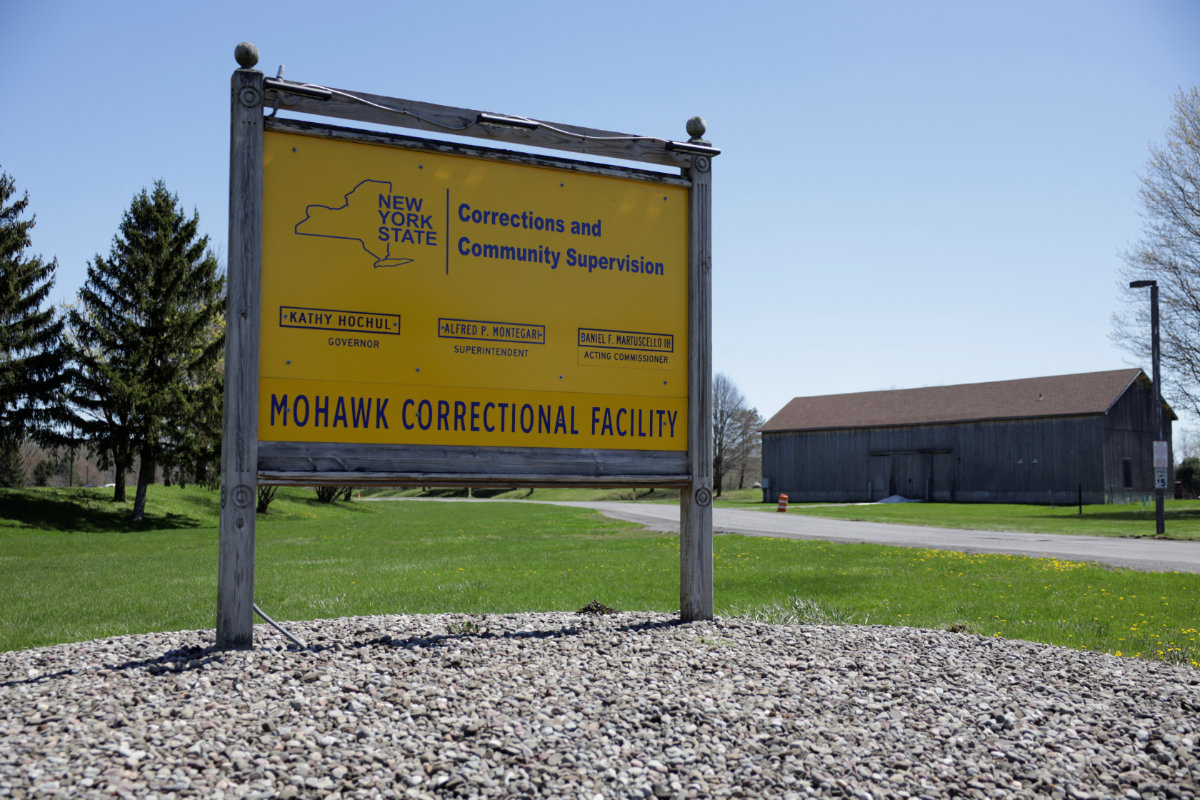
A general view of Mohawk Correctional Facility in Rome, New York, where Harvey Weinstein is currently being held. (REUTERS)
His lawyers argued on appeal that the trial overseen by Judge James Burke was unfair because testimony was allowed from three women whose claims of unwanted sexual encounters with Weinstein were not part of the charges. Burke’s term expired at the end of 2022, and he is no longer a judge.
They also appealed the judge’s ruling that prosecutors could confront Weinstein over his long history of brutish behavior, including allegations of punching his movie producer brother at a business meeting, snapping at waiters, hiding a woman’s clothes and threatening to cut off a colleague’s genitals with gardening shears.
As a result, Weinstein, who wanted to testify, did not take the stand, Aidala said.
The appeals court labeled the allegations “appalling, shameful, repulsive conduct” but warned that “destroying a defendant’s character under the guise of prosecutorial need” did not justify some trial evidence and testimony.
In a majority opinion written by Judge Jenny Rivera, the Court of Appeals said defendants have a right to be held accountable “only for the crime charged and, thus, allegations of prior bad acts may not be admitted against them for the sole purpose of establishing their propensity for criminality.”
The Court of Appeals agreed last year to take Weinstein’s case after an intermediate appeals court upheld his conviction. Prior to their ruling, judges on the lower appellate court at oral arguments had raised doubts about Burke’s conduct. One observed that Burke let prosecutors pile on with “incredibly prejudicial testimony” from additional witnesses.
At a news conference, Aidala predicted that the lasting effect of the reversal would be that more defendants will testify at their trials, including Weinstein, who “will be able to tell his side of the story.”
He said that when he spoke to Weinstein on Thursday, his client told him: “I’ve been here for years in prison for something I didn’t do. You got to fix this.”


