TEL AVIV: Aid group Doctors Without Borders announced the suspension of some of its operations at one of the largest functioning hospitals in Gaza after patients and staff reported seeing armed, masked men roaming parts of the building.
Nasser Hospital, in Khan Younis, is one of the few functioning hospitals left in the strip. Hundreds of patients and war-wounded have been treated there and the facility was a hub for Palestinian prisoners Israel released in exchange for Israeli hostages as part of the ceasefire deal.
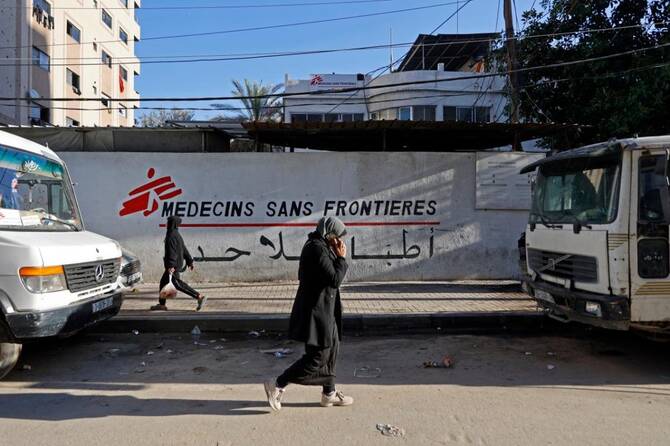
Doctors Without Borders, known by its acronym MSF, said in a statement all its non-critical medical operations at Nasser Hospital were suspended due to “security breaches” that posed “serious security threats to our teams and patients”.
While the suspension occurred in January, MSF’s comments in the“frequently asked questions” section on its website were the first to disclose its decision. It’s unclear when the post was made, but MSF’s site said it was updated Feb. 11. The comments were a rare public announcement by an international organization about the presence of armed men in or near medical facilities since the war began over two years ago.
MSF said it made the difficult decision after an uptick of patients and staff seeing armed men in parts of the hospital compound since the US-brokered October ceasefire was reached. The gunmen were seen in areas where the medical aid group didn’t operate.
“MSF teams have reported a pattern of unacceptable acts including the presence of armed men, intimidation, arbitrary arrests of patients and a recent situation of suspicion of movement of weapons,” said the statement.
Attacks on health facilities
Throughout the war, Israel has struck hospitals on repeated occasions, including Nasser, accusing Hamas of operating in or around them. Hamas security men have also often been seen inside hospitals, blocking access to some areas of the facilities.
While Hamas remains the dominant force in areas not under Israeli control, including Nasser Hospital, other armed groups have mushroomed across Gaza as a result of the war, including groups backed by Israel’s army in the Israeli-controlled part of the strip. Nasser Hospital staff says that in recent months it has repeatedly been attacked by masked armed men and militias, despite police presence there.
MSF said it wasn’t able to indicate who the armed men were affiliated with. It said it had expressed its concern to the “relevant” authorities, without elaborating, stressing that hospitals must remain neutral, civilian spaces. It said its concerns were also heightened by previous and deliberate Israeli attacks on health facilities during the war.
Some hostages who were released from Gaza have said that they spent time during their captivity in a hospital
Police to be deployed
The Hamas-run interior ministry, which oversees the police force in Gaza, said Saturday police would be deployed to secure hospitals and rid them of armed presence. It said it would take legal action against violators and was in the process of implementing stricter measures to ensure patients’ safety.
While international law gives hospitals special protections during war, they can lose this immunity if combatants use them to hide fighters or store weapons, according to the International Committee of the Red Cross. Still, there has to be plenty of warning to allow the evacuation of staff and patients before any operations take place. If harm to civilians from an attack is disproportionate to the military objective, it is illegal under international law.
Aid groups and rights organizations say Israel has decimated Gaza’s health system, forcing most of its hospitals to shut down while heavily damaging others. During the war, Israeli forces raided a number of hospitals and struck others, detaining hundreds of staff.
Impact on depleted medical system
MSF said that until further notice, it will continue supporting critical services at Nasser Hospital, including inpatient and surgical departments for patients with traumatic or burn injuries. However, it is ending support to the paediatrics and maternity wards, including the neonatal intensive care unit. It has also indefinitely suspended its outpatient consultations for 3D burn screening and mental health, as well as other services.
Zaher Al-Waheidi, head of the records department at the health ministry, said MSF’s suspension would have a significant impact as hundreds of patients are admitted to the maternity and burn wards daily. He said the Ministry of Health would take over maternity patient care, but said burn victims won’t have many options.
Israel has been cracking down on aid groups operating in Gaza and the occupied West Bank, including MSF. The group is one of more than three dozen aid groups that Israel has banned from operating in the strip for failing to comply with new registration rules.
MSF says Israel’s decision will have a catastrophic impact on its work in Gaza, where it provides funding and international staff for six hospitals as well as running two field hospitals and eight primary health centers, clinics and medical points. It also runs two of Gaza’s five stabilization centers, helping children with severe malnutrition.


![]()

MSF suspends some hospital operations in Gaza due to presence of armed men
Short Url
https://arab.news/ppp9s
MSF suspends some hospital operations in Gaza due to presence of armed men
- Charity also concerned of possible weapons movement at hospital
- Suspension cites neutrality concerns, repeated security breaches


Latest updates


© 2026 SAUDI RESEARCH & PUBLISHING COMPANY, All Rights Reserved And subject to Terms of Use Agreement.