
RIYADH: Growth in air traffic, heightened investment interest, and a comprehensive strategy are driving Saudi Arabia’s aviation sector expansion, according to a top official.
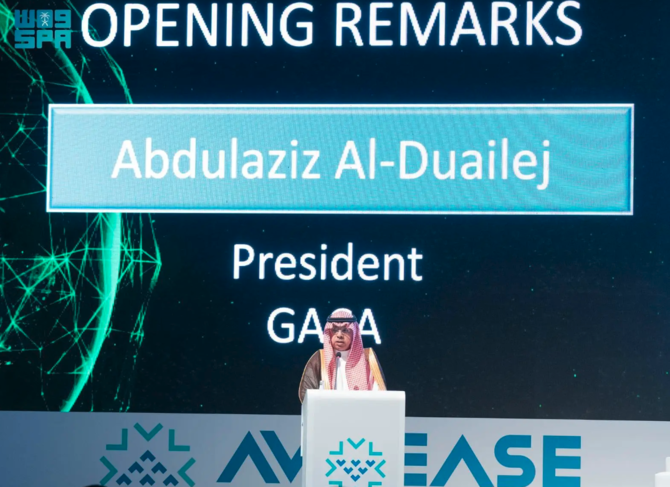
Abdulaziz Al-Duailej, president of the Saudi General Authority of Civil Aviation, highlighted the sector’s pivotal role in economic growth and sustainable development during his speech at the Airlines Economic Growth Frontiers conference in Riyadh.
Al-Duailej emphasized that Saudi Arabia is significantly advancing its civil aviation sector under Vision 2030 and the National Aviation Strategy, according to a report by the Saudi Press Agency.
The initiative aims to cement the Kingdom’s leadership in Middle Eastern civil aviation by enabling investments worth $100 billion by 2030 and leveraging private sector resources and expertise.
The strategy also outlines a holistic plan to upgrade airport services, airlines, and associated facilities, including cargo and logistics.
It aims to enhance the Kingdom’s global air connectivity through 29 airports, significantly grow passenger numbers, and establish Saudi Arabia as a premier center for cargo and logistics by 2030.
Al-Duailej pointed out the initiative’s focus on enabling competition and efficiency to stimulate investment and growth, overseeing its implementation, and ensuring compliance with regulations that provide safety, security, and sustainability.
He also highlighted the significant progress made in the aviation sector’s infrastructure and overall performance, driven by several undertakings launched by GACA.
These initiatives include massive investments that offer unprecedented opportunities for global aviation investors and operators.
He also mentioned a partnership between the public and private sectors to triple Abha International Airport’s capacity to accommodate 10 million passengers by 2030. The airport has already received interest from 100 companies to participate in this project.
Among the undertakings is the establishment of Riyadh Air, the launch of the master plan for King Salman International Airport in Riyadh, which aims to serve nearly 120 million passengers by 2030, and the opening of the Red Sea International Airport.
Moreover, Al-Duailej highlighted the launch of the National Air Connectivity Program to support the tourism and travel sectors in the Kingdom.
He also discussed significant investments in renewable energy and advanced air transport involving Saudia Airlines and NEOM, alongside substantial expansions by The Helicopter Co.
These efforts align with broader regulations promoting environmental awareness, ensuring balanced and sustainable growth for the aviation sector in the Kingdom in the long term.
Regarding passenger traffic, Al-Duailej revealed that the Kingdom saw a 26 percent increase last year, reaching a record 112 million travelers and surpassing 2019 figures by 8 percent.
In the first two months of this year alone, air traffic increased by 20 percent compared to the same period in 2023.
Another point of emphasis was the increase in air connectivity to nearly 150 destinations, with low-cost airlines driving growth between 2019 and 2023, thereby doubling their market share both domestically and internationally.
The Airlines Economic Growth Frontiers conference, hosted by AVILEASE, a subsidiary of the Public Investment Fund, aims to highlight opportunities within the civil aviation sector.
The event, held at the Four Seasons in Riyadh from April 22-23, saw the presence of the vice presidents of the GACA, representatives of the PIF, and numerous officials and industry stakeholders from around the world.