

Mitsui says no decision yet on ADNOC LNG project tie-up after Nikkei report 

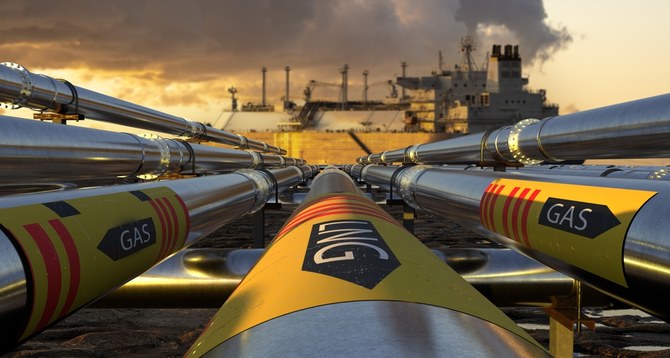
The Nikkei reported ADNOC would have a stake of around 60 percent and Mitsui 10 percent of the $7 billion LNG project at Ruwais. Shutterstock
Short Url
Updated 23 April 2024
Follow

Mitsui says no decision yet on ADNOC LNG project tie-up after Nikkei report 

TOKYO: Japan’s Mitsui & Co. said on Tuesday nothing has been decided on a liquefied natural gas project in the UAE, after the Nikkei reported it was teaming up with Abu Dhabi National Oil Co. on it. 

The Nikkei reported ADNOC would have a stake of around 60 percent and Mitsui 10 percent of the $7 billion LNG project at Ruwais, adding Mitsui’s investment is estimated to be several tens of billions of yen. 

Other oil majors Shell, BP and Total Energies are also expected to invest, the report said. 

A Mitsui spokesperson said nothing had yet been decided when asked about the report. ADNOC, BP and Shell declined to comment. TotalEnergies did not immediately respond to a request for comment. 

ADNOC has big ambitions in gas and LNG, which along with renewable energy and petrochemicals, it sees as pillars for its future growth. 

Demand for natural gas soared as Europe scrambled to secure supplies to replace Russian gas in the wake of Moscow’s invasion of Ukraine last year. 

The planned Ruwais LNG project, to the west of Abu Dhabi city, will help ADNOC reach its goal of doubling its LNG production capacity. It currently has liquefaction capacity of about 6 million metric tons per annum at its Das Island facility. 

The Ruwais plant will have electric-powered processing facilities and run on renewable and nuclear grid power, making it one of the lowest carbon intensity LNG facilities globally, ADNOC has said. It will have two 4.8 mtpa LNG liquefaction trains when completed. 

ADNOC said in March it had issued a limited notice to proceed for early engineering, procurement and construction on the Ruwais LNG project to a consortium led by Technip Energies and including JGC Corporation and National Petroleum Construction Co. A final investment decision is expected this year. 

ADNOC has since last year signed several LNG supply deals, including two for LNG from the Ruwais project, expected to begin commercial operations in 2028. 

ADNOC has eyed acquisitions of foreign companies in part to help boost its gas portfolio. 


Education spending surges 251% as students return from autumn break: SAMA

Updated 12 December 2025
Follow

Education spending surges 251% as students return from autumn break: SAMA

RIYADH: Education spending in Saudi Arabia surged 251.3 percent in the week ending Dec. 6, reflecting the sharp uptick in purchases as students returned from the autumn break.

According to the latest data from the Saudi Central Bank, expenditure in the sector reached SR218.73 million ($58.2 million), with the number of transactions increasing by 61 percent to 233,000.

Despite this surge, overall point-of-sale spending fell 4.3 percent to SR14.45 billion, while the number of transactions dipped 1.7 percent to 236.18 million week on week.

The week saw mixed changes between the sectors. Spending on freight transport, postal and courier services saw the second-biggest uptick at 33.3 percent to SR60.93 million, followed by medical services, which saw an 8.1 percent increase to SR505.35 million.

Expenditure on apparel and clothing saw a decrease of 16.3 percent, followed by a 2 percent reduction in spending on telecommunication.

Jewelry outlays witnessed an 8.1 percent decline to reach SR325.90 million. Data revealed decreases across many other sectors, led by hotels, which saw the largest dip at 24.5 percent to reach SR335.98 million. 

Spending on car rentals in the Kingdom fell by 12.6 percent, while airlines saw a 3.7 percent increase to SR46.28 million.

Expenditure on food and beverages saw a 1.7 percent increase to SR2.35 billion, claiming the largest share of the POS. Restaurants and cafes retained the second position despite a 12.6 percent dip to SR1.66 billion.

Saudi Arabia’s key urban centers mirrored the national decline. Riyadh, which accounted for the largest share of total POS spending, saw a 3.9 percent dip to SR4.89 billion, down from SR5.08 billion the previous week.

The number of transactions in the capital settled at 74.16 million, down 1.4 percent week on week.

In Jeddah, transaction values decreased by 5.9 percent to SR1.91 billion, while Dammam reported a 0.8 percent surge to SR713.71 million.

POS data, tracked weekly by SAMA, provides an indicator of consumer spending trends and the ongoing growth of digital payments in Saudi Arabia. 

The data also highlights the expanding reach of POS infrastructure, extending beyond major retail hubs to smaller cities and service sectors, supporting broader digital inclusion initiatives. 

The growth of digital payment technologies aligns with the Kingdom’s Vision 2030 objectives, promoting electronic transactions and contributing to the nation’s broader digital economy.
