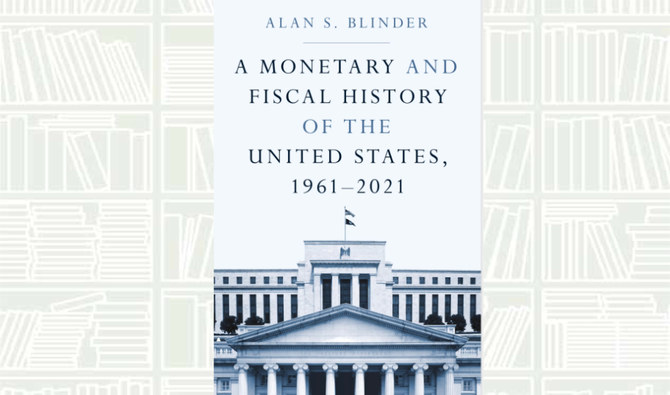
What We Are Reading Today: A Monetary and Fiscal History of the United States, 1961–2021

Photo/Supplied
Short Url
Updated 19 April 2024
Follow

What We Are Reading Today: A Monetary and Fiscal History of the United States, 1961–2021

Author: Alan S. Blinder

In this book, Alan Blinder, one of the world’s most influential economists and one of the field’s best writers, draws on his deep firsthand experience to provide an authoritative account of 60 years of monetary and fiscal policy in the US. Spanning 12 presidents, from John F. Kennedy to Joe Biden, and eight Federal Reserve chairs, from William McChesney Martin to Jerome Powell, this is an insider’s story of macroeconomic policy that hasn’t been told before—one that is a pleasure to read, and as interesting as it is important.
Focusing on the most significant developments and long-term changes, Blinder traces the highs and lows of monetary and fiscal policy, which have by turns cooperated and clashed through many recessions and several long booms over the past six decades. From the fiscal policy of Kennedy’s New Frontier to Biden’s responses to the pandemic, the book takes readers through the stagflation of the 1970s, the conquest of inflation under Jimmy Carter and Paul Volcker, the rise of Reaganomics, and the bubbles of the 2000s before bringing the story up through recent events — including the financial crisis, the Great Recession, and monetary policy during COVID-19.

A lively and concise narrative that is sure to become a classic, A Monetary and Fiscal History of the United States, 1961–2021 is filled with vital lessons for anyone who wants to better understand where the economy has been—and where it might be headed.


What We Are Reading Today: ‘The Bell Jar’

Photo/Supplied
Updated 20 December 2025
Follow

What We Are Reading Today: ‘The Bell Jar’

  • The bell jar — clear, enclosing, and distorting the air she breathes — becomes the perfect image of Greenwood’s entrapment. Just as telling is the fig tree she imagines, with each fig representing a possible future: writer, traveler, mother, lover

Author: Sylvia Plath

Sylvia Plath’s “The Bell Jar” (1963) is a raw and luminous portrait of a young woman standing at the edge of adulthood, grappling with ambition, doubt, and the suffocating weight of expectation. 

Through the eyes of the novel’s troubled protagonist Esther Greenwood, Plath reveals the loneliness that can lie hidden beneath achievement and the unease brought on by future expectations.  

The novel opens in New York, where Greenwood’s magazine internship seems the gateway to success. Yet the city’s glamor soon feels hollow, and the confidence around her thin and brittle. 

Her sense of direction begins to fade, and the life laid out before her starts to feel both too small and impossibly distant.  

The bell jar — clear, enclosing, and distorting the air she breathes — becomes the perfect image of Greenwood’s entrapment. Just as telling is the fig tree she imagines, with each fig representing a possible future: writer, traveler, mother, lover. 

Torn between these possibilities, she hesitates until the figs shrivel and drop. This image, perhaps more than any other, reveals how fear of choice can quietly undo a person.   

Plath’s writing is sharp and deeply humane. She exposes the subtle pressures shaping women’s lives at that time without sentiment or complaint. 

The narrative’s erratic rhythm mirrors the character’s disoriented state of mind, where thought and memory blur at the edges. 

“The Bell Jar” speaks to anyone who has felt caught between possibility and paralysis, between who they are and who they are expected to be. 

Plath writes with precision and compassion, turning confusion into clarity and despair into something almost inspiring.