RIYADH: Armenia is committed to drafting a “road map” for the development of diplomatic relations with Saudi Arabia, Ararat Mirzoyan, Armenia’s minister for foreign affairs, told Arab News on Thursday in an exclusive interview during a visit to the Kingdom.
In a wide-ranging discussion, in which he explored the development of ties, the peace process in the South Caucasus, and the war in Gaza, Mirzoyan said the establishment of official diplomatic relations in November last year was only the start.
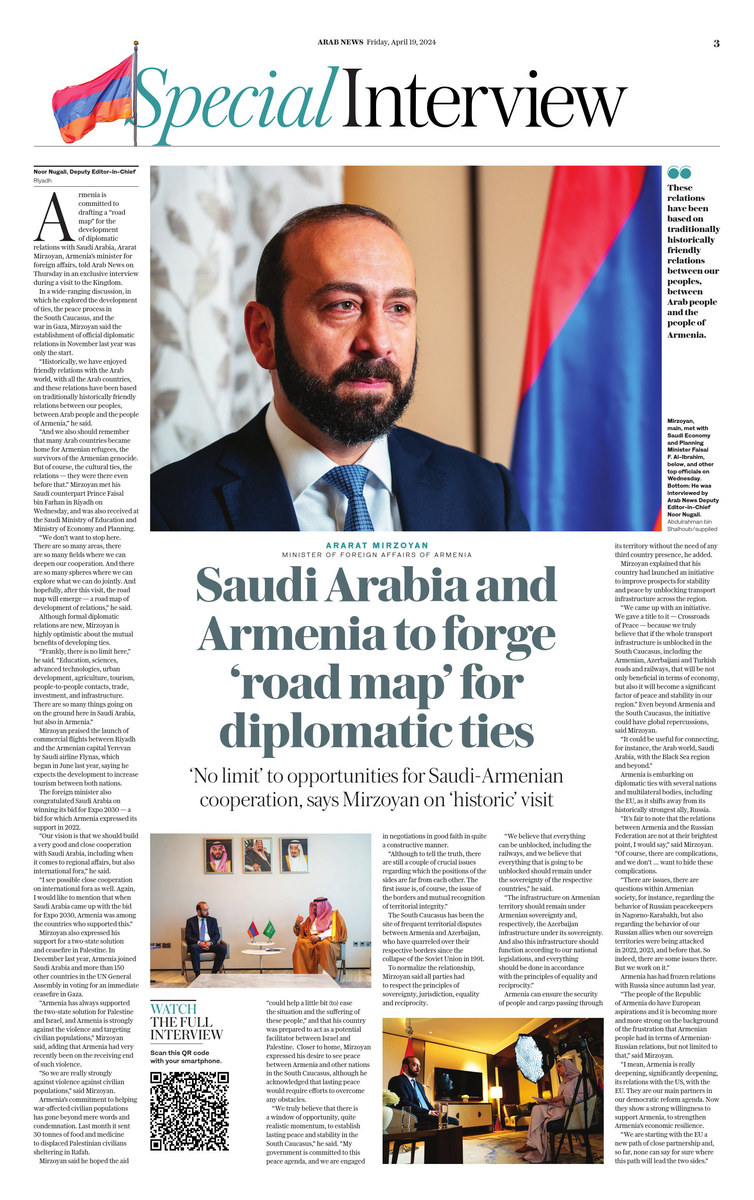
Armenian Foreign Minister Ararat Mirzoyan says there's ‘no limit’ to opportunities for Saudi-Armenian cooperation. (AN photo)
“Historically, we have enjoyed friendly relations with the Arab world, with all the Arab countries, and these relations have been based on traditionally historically friendly relations between our peoples, between Arab people and the people of Armenia,” he said.
“And we also should remember that many Arab countries became home for Armenian refugees, the survivors of the Armenian genocide. But of course, the cultural ties, the relations — they were there even before that.”
Mirzoyan met his Saudi counterpart Prince Faisal bin Farhan in Riyadh on Wednesday, and was also received at the Saudi Ministry of Education and Ministry of Economy.
“We don’t want to stop here. There are so many areas, there are so many fields where we can deepen our cooperation. And there are so many spheres where we can explore what we can do jointly. And hopefully, after this visit, the road map will emerge — a road map of development of relations,” he said.
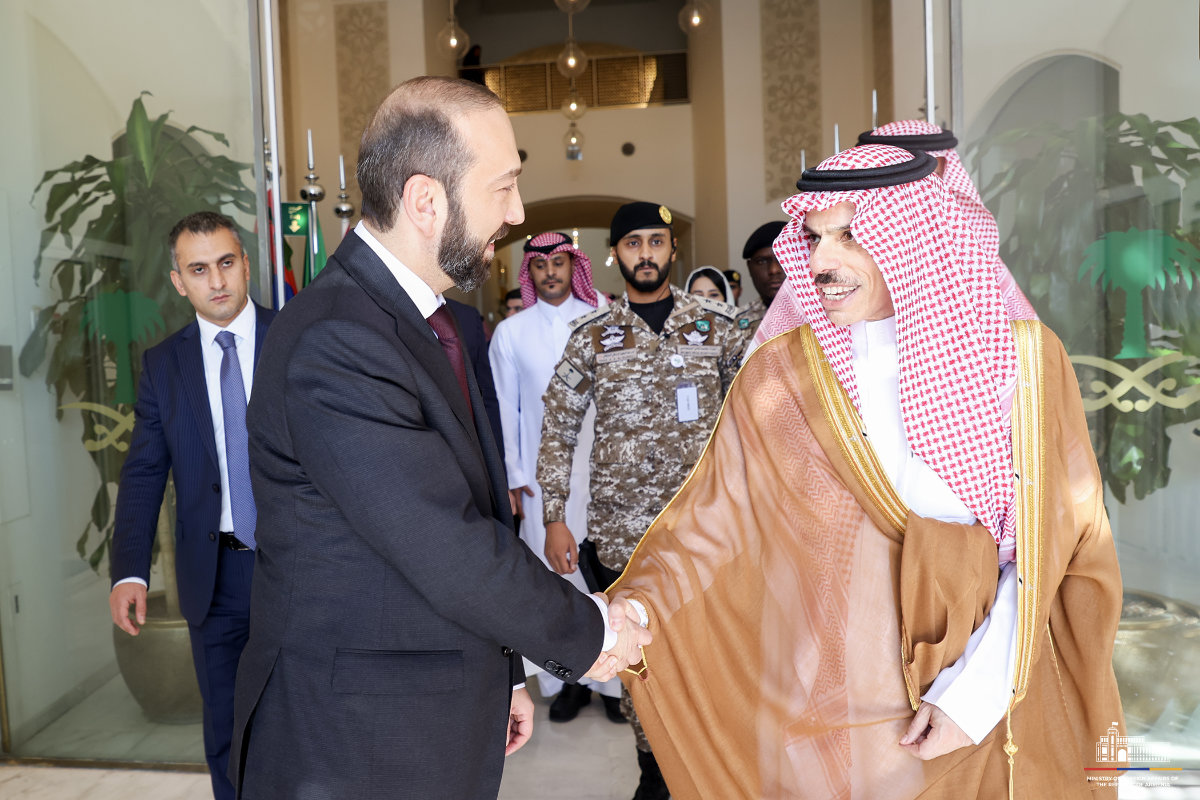
Saudi Minister of Foreign Affairs Prince Faisal bin Farhan (R) receives Armenian FM Ararat Mirzoyan ahead of their meeting Riyadh on April 17, 2024. (SPA photo)
The past few years have seen gradually warming ties between the two countries. In October 2021, Armenia’s then-President Armen Sarkissian visited Saudi Arabia. This visit marked the beginning of a new diplomatic future for Armenia.
Although formal diplomatic relations are new, Mirzoyan is highly optimistic about the mutual benefits of developing ties.
“Frankly, there is no limit here,” he said. “Education, sciences, advanced technologies, urban development, agriculture, tourism, people-to-people contacts, trade, investment, and infrastructure. There are so many things going on on the ground here in Saudi Arabia, but also in Armenia.”
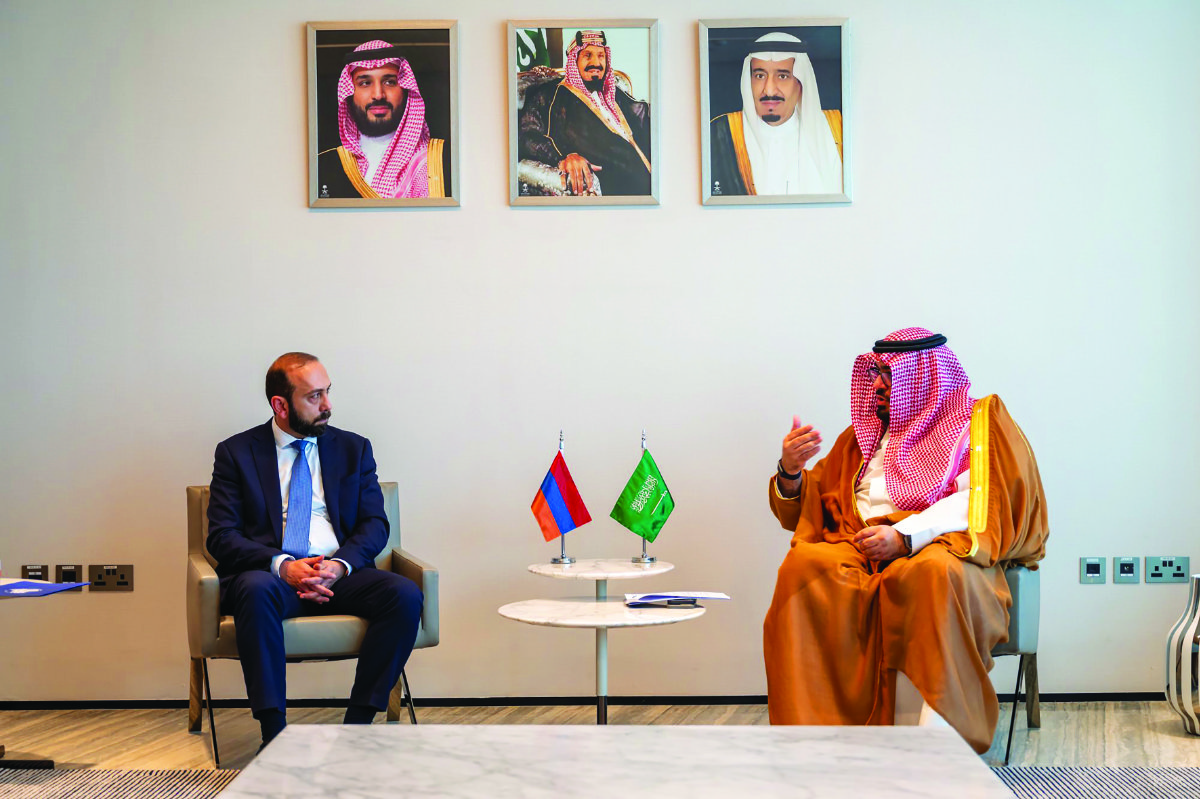
Armenian FM Ararat Mirzoyan also met with Saudi Economy and Planning Minister Faisal F. Al-Ibrahim (R) in Riyadh on April 17, 2024. (SPA photo)
Mirzoyan praised the launch of commercial flights between Riyadh and the Armenian capital Yerevan by Saudi airline Flynas, which began in June last year, saying he expects the development to increase tourism between both nations.
The foreign minister also congratulated Saudi Arabia on winning its bid for Expo 2030 — a bid for which Armenia expressed its support in 2022.
“Our vision is that we should build a very good and close cooperation with Saudi Arabia, including when it comes to regional affairs, but also international fora,” he said.
“I see possible close cooperation on international fora as well. Again, I would like to mention that when Saudi Arabia came up with the bid for Expo 2030, Armenia was among the countries who supported this.”
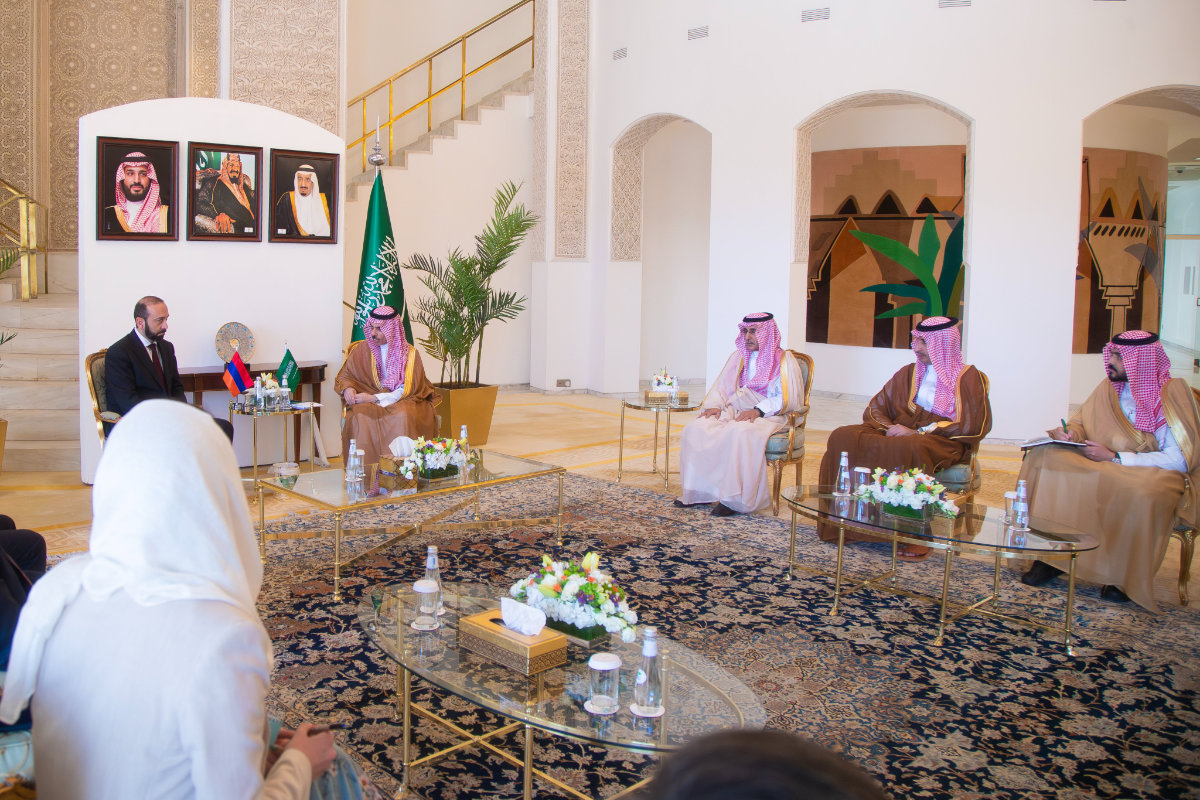
The Saudi and Armenian foreign affairs ministers, along with their respective delegations, meeting in Riyadh on April 17, 2024. (SPA photo)
Mirzoyan also expressed his support for a two-state solution and ceasefire in Palestine. In December last year, Armenia joined Saudi Arabia and more than 150 other countries in the UN General Assembly in voting for an immediate ceasefire in Gaza. If necessary, and if asked, he said Armenia would be ready to act as a potential facilitator between the two sides.
“Armenia has always supported the two-state solution for Palestine and Israel, and Armenia is strongly against the violence and targeting civilian populations,” Mirzoyan said, adding that Armenia had very recently been on the receiving end of such violence.
“So we are really strongly against violence against civilian populations,” said Mirzoyan.
Armenia’s commitment to helping war-affected civilian populations has gone beyond mere words and condemnation. Last month it sent 30 tonnes of food and medicine to displaced Palestinian civilians sheltering in Rafah.
“Armenia regrets tens of thousands of innocent victims of the escalation of hostilities in Gaza. We ourselves have experienced the horror of attacks on civilians and civilian infrastructure, and we join calls of the international community for an immediate ceasefire in Gaza,” Armenian Prime Minister Nikol Pashinyan said at a press briefing during a visit to Egypt to discuss aid deliveries.
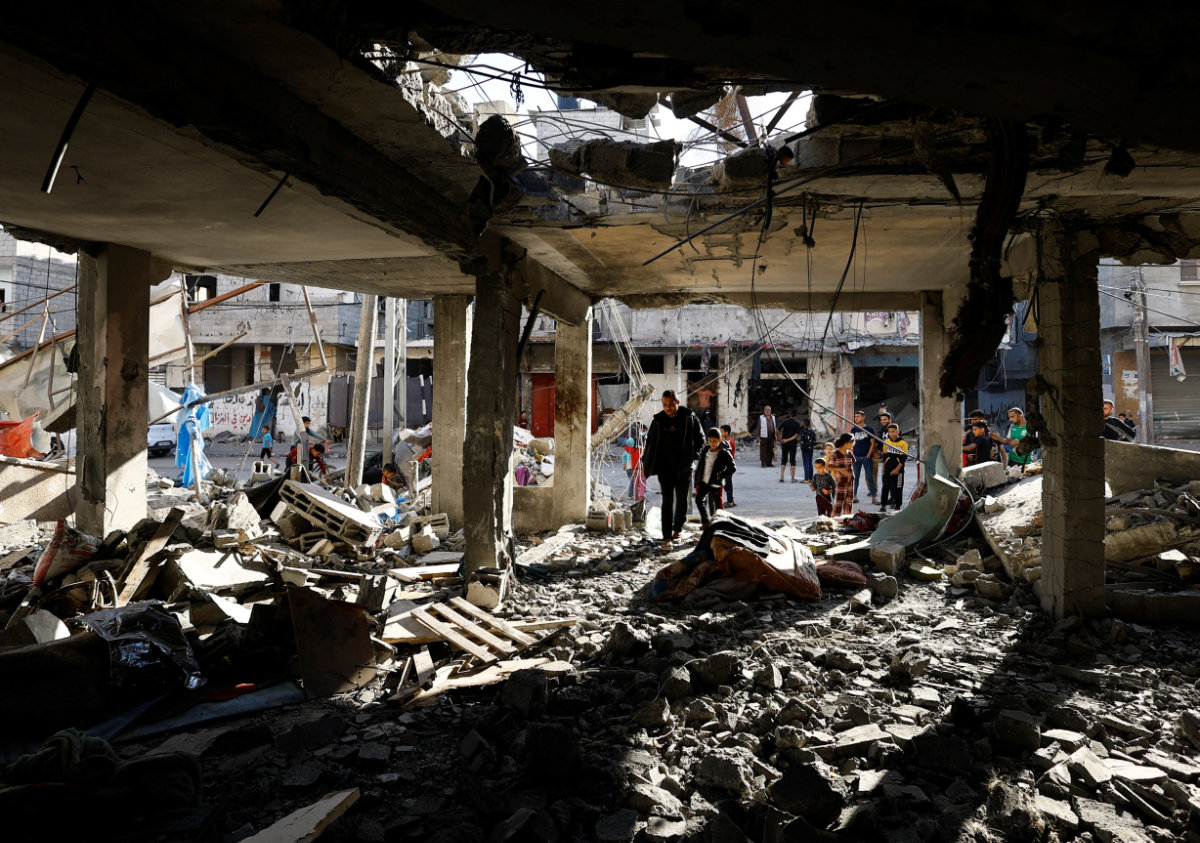
Palestinians inspect a house destroyed in an Israeli strike in Rafah, in the southern Gaza Strip, on April 17, 2024. (Reuters)
Mirzoyan said he hoped the aid “could help a little bit (to) ease the situation and the suffering of these people.”
Closer to home, Mirzoyan expressed his desire to see peace between Armenia and other nations in the South Caucasus, although he acknowledged that lasting peace would require efforts to overcome any obstacles.
“We truly believe that there is a window of opportunity, quite realistic momentum, to establish lasting peace and stability in the South Caucasus,” he said. “My government is committed to this peace agenda, and we are engaged in negotiations in good faith in quite a constructive manner.
“Although to tell the truth, there are still a couple of crucial issues regarding which the positions of the sides are far from each other. The first issue is, of course, the issue of the borders and mutual recognition of territorial integrity.”
The South Caucasus has been the site of frequent territorial disputes between Armenia and Azerbaijan, who have quarreled over their respective borders since the collapse of the Soviet Union in 1991.
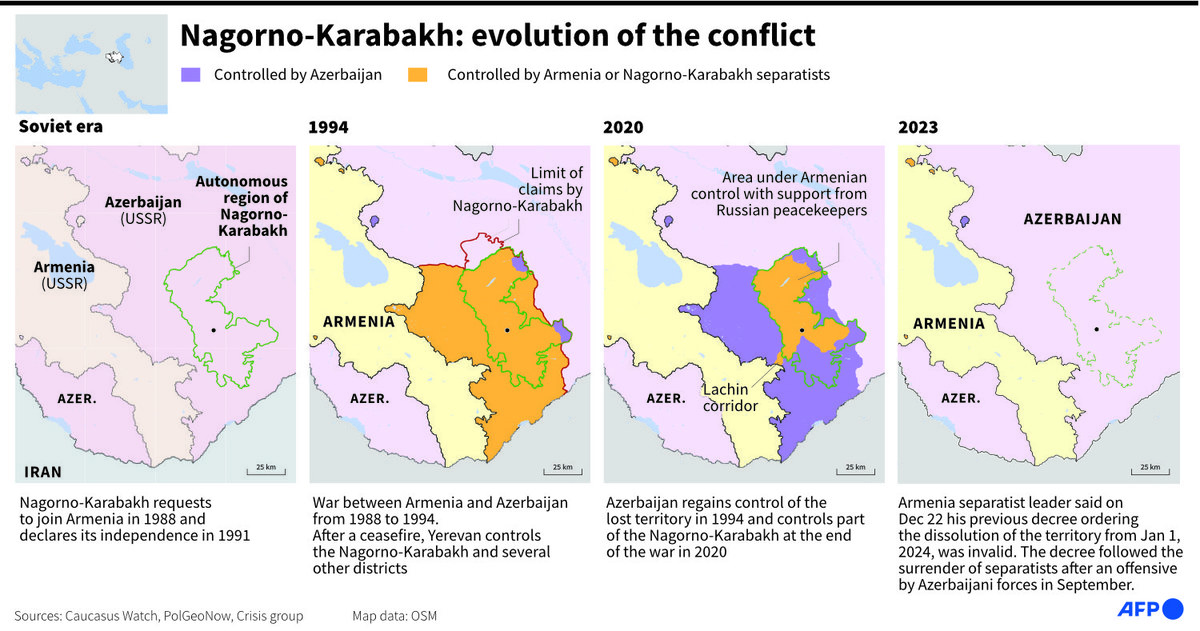
To normalize the relationship, Mirzoyan said all parties had to respect the principles of sovereignty, jurisdiction, equality and reciprocity.
“We believe that everything can be unblocked, including the railways, and we believe that everything that is going to be unblocked should remain under the sovereignty of the respective countries,” he said.
“The infrastructure on Armenian territory should remain under Armenian sovereignty and, respectively, the Azerbaijan infrastructure under its sovereignty. And also this infrastructure should function according to our national legislations, and everything should be done in accordance with the principles of equality and reciprocity.”
Armenia can ensure the security of people and cargo passing through its territory without the need of any third country presence, he added.
Mirzoyan explained that his country had launched an initiative to improve prospects for stability and peace by unblocking transport infrastructure across the region.
“We came up with an initiative. We gave a title to it — Crossroads of Peace — because we truly believe that if the whole transport infrastructure is unblocked in the South Caucasus, including the Armenian, Azerbaijani and Turkish roads and railways, that will be not only beneficial in terms of economy, but also it will become a significant factor of peace and stability in our region.”
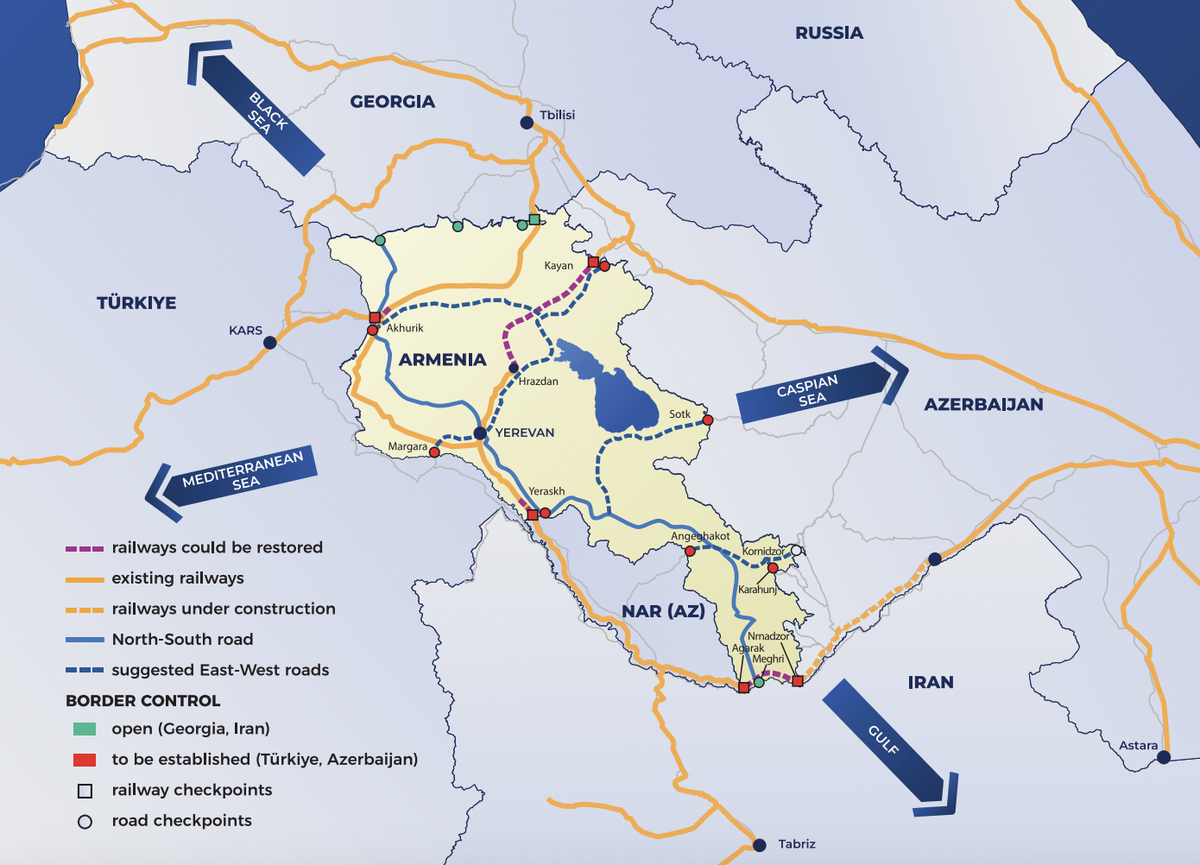
Illustration map showing Armenia's proposed “Crossroads of Peace”.
Even beyond Armenia and the South Caucasus, the initiative could have global repercussions, said Mirzoyan.
“Several countries are interested in this implementation of this project of peace, the Crossroads of Peace, because the benefits are obvious and I spoke about this in terms of east-west connections, but also we should remember south-north or north-south connections. And that’s why it’s called a crossroads.”
He added: “It could be useful for connecting, for instance, the Arab world, Saudi Arabia, with the Black Sea region and beyond.”
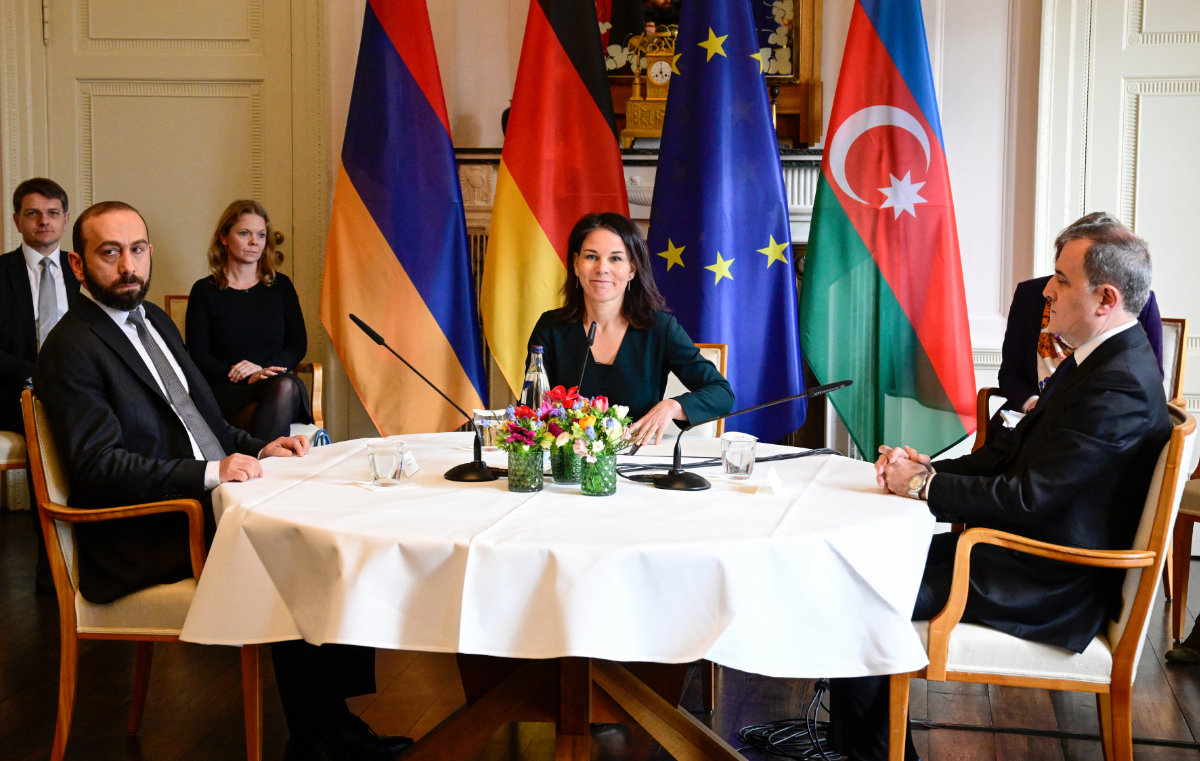
German Foreign Minister Annalena Baerbock (C) hosts Armenia's FM Ararat Mirzoyan (L) and Azerbaijan's FM Jeyhun Bayramov (R) for peace talks in Berlin on February 28, 2024. (AFP/File)
Armenia is embarking on diplomatic ties with several nations and multilateral bodies, including the EU, as it shifts away from its historically strongest ally, Russia.
“It’s fair to note that the relations between Armenia and the Russian Federation are not at their brightest point, I would say,” said Mirzoyan. “Of course, there are complications, and we don’t … want to hide these complications.
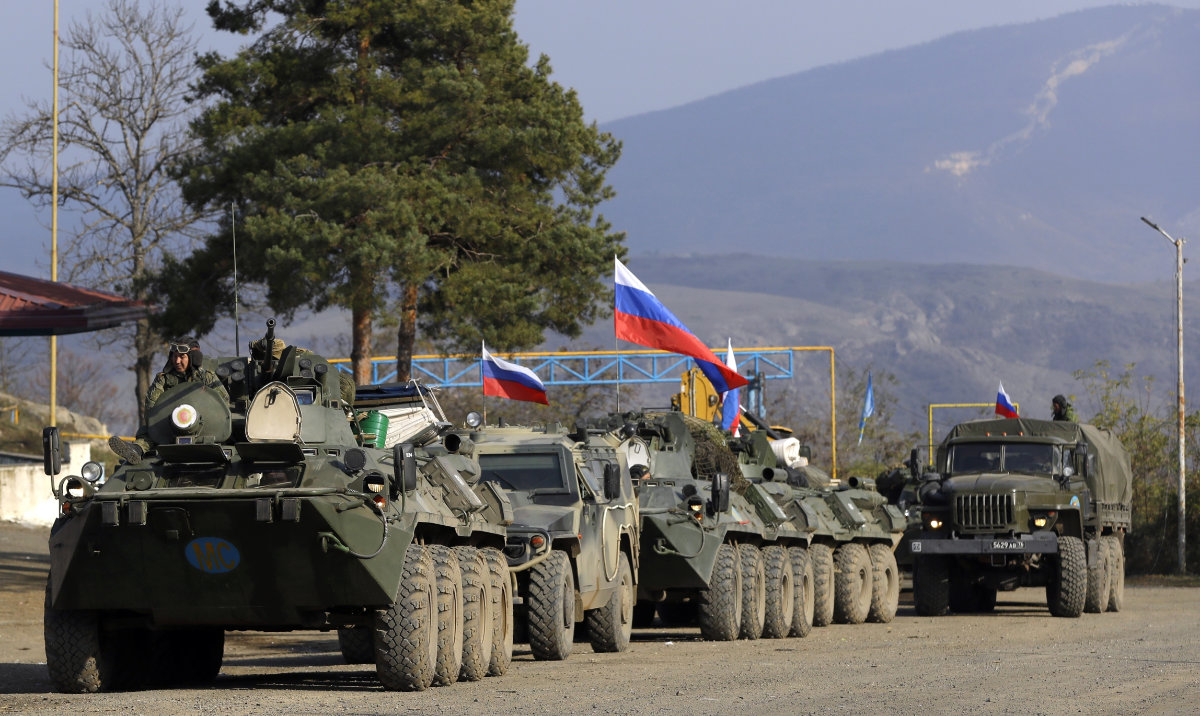
This photo taken on Nov. 17, 2020, shows Russian peacekeepers' vehicles parked at a checkpoint on the road to Shusha in Nagorno-Karabakh. President Vladimir Putin's spokesman said on April 17, 2024 that Russian forces are being withdrawn from the Karabakh region, where they have been stationed as peacekeepers since the end of a war in 2020. (AP Photo/File)
“There are issues, there are questions within Armenian society, for instance, regarding the behavior of Russian peacekeepers in Nagorno-Karabakh, but also regarding the behavior of our Russian allies when our sovereign territories were being attacked in 2022, 2023, and before that. So indeed, there are some issues there. But we work on it.”
Armenia has had frozen relations with the Collective Security Treaty Organization (CSTO) since autumn last year. Formed in 2002, the CSTO is a military alliance which consists of six post-Soviet states: Armenia, Belarus, Kazakhstan, Kyrgyzstan, Russia, and Tajikistan.
Mirzoyan stated in an interview in March with Turkiye’s TRT World that Armenia’s application for EU candidacy was under discussion.
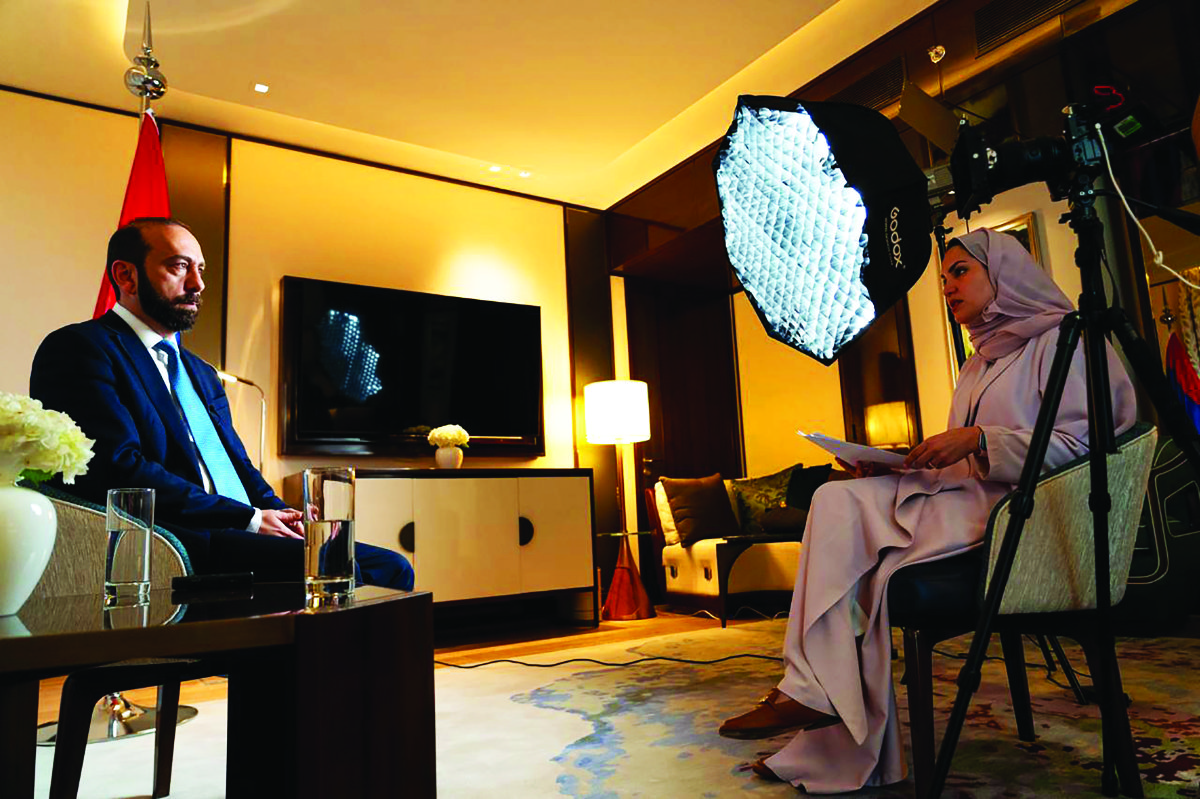
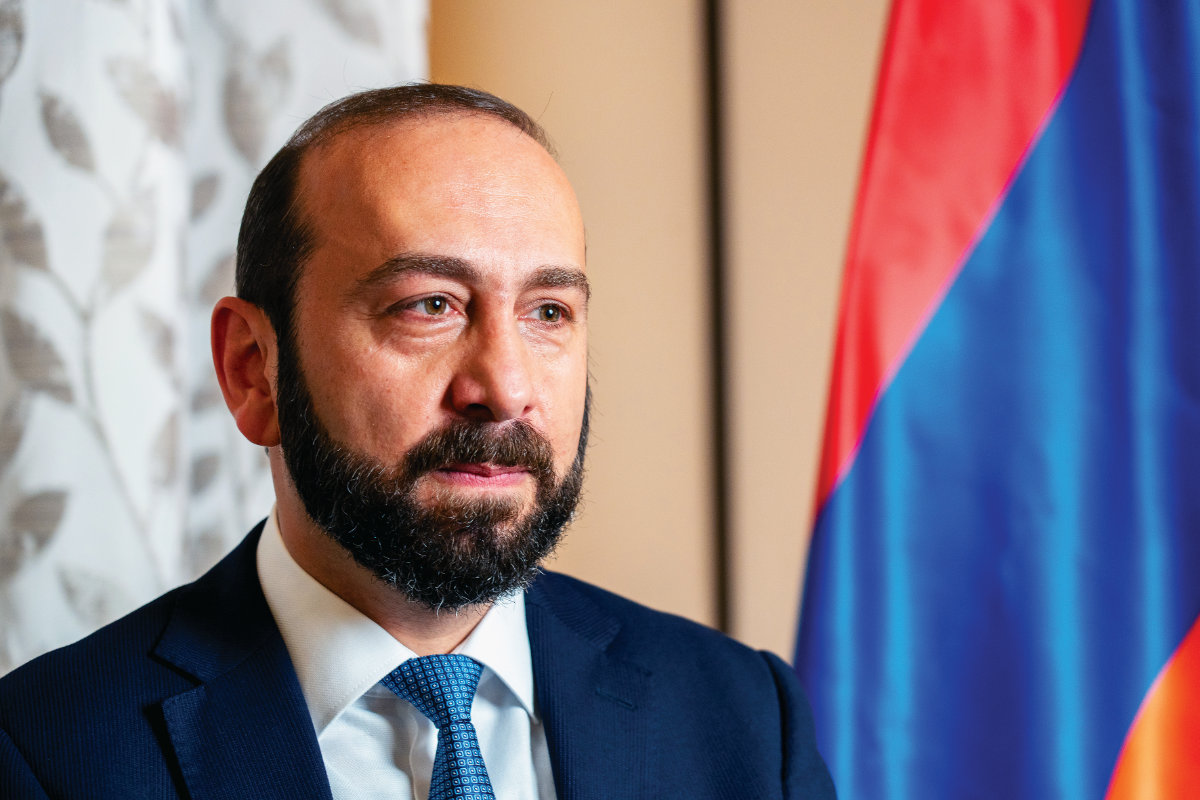
Armenian FM Ararat Mirzoyan, who was on a visit to the Kingdom this week, sat for an exclusive interview with Arab News' Deputy Editor in Chief Noor Nugali. (AN photo)
Addressing the issue with Arab News, Mirzoyan said: “The people of the Republic of Armenia do have European aspirations and it is becoming more and more strong on the background of the frustration that Armenian people had in terms of Armenian-Russian relations, but not limited to that.
“I mean, Armenia is really deepening, significantly deepening, its relations with the US, with the EU. They are our main partners in our democratic reform agenda. Now they show a strong willingness to support Armenia, to strengthen Armenia’s economic resilience.
“We are starting with the EU a new path of close partnership and, so far, none can say for sure where this path will lead the two sides.”