

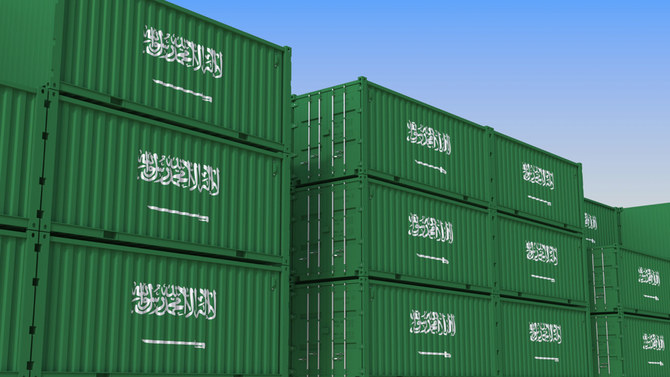
Saudi Arabia issues over 37k certificates of origin in March

This initiative is part of the Kingdom’s goal increase the share of non-oil exports to gross domestic product to 50 percent by 2030. Shutterstock.
Short Url
Updated 18 April 2024
Follow

Saudi Arabia issues over 37k certificates of origin in March

RIYADH: Saudi exporters were issued 37,188 certificates of origin in March by the Ministry of Industry and Mineral Resources, marking an annual increase of 0.5 percent.

The document confirms that the products are of national origin or have acquired that status. It is part of the ministry’s effort to support and facilitate the service for exporters in various sectors.

This initiative is part of the Kingdom’s goal under the Vision 2030 economic transformation plan to increase the share of non-oil exports to Saudi Arabia’s gross domestic product from 16 percent to 50 percent by the decade’s end.

According to the Saudi Press Agency, the service targets industrial establishments, the commercial sector, including companies and institutions, and individuals, including farmers, fishermen and individuals, as well as local artisans, and others.

The news agency pointed out that the document includes four distinct modes: one for national products intended for the Gulf Cooperation Council countries, another for Arab nations, a preferential origin certificate, and a bilingual version for countries that do not grant preferential treatment.

It is worth mentioning that the Ministry of Industry started issuing these documents following the Cabinet’s decision to transfer over the handing out of these certificates of origin for all national products from the Ministry of Commerce. 

The initiative is also an electronic service that enables businesses to obtain the certification without the need to visit the ministry to save time and effort.

Figures released earlier this year revealed that the Industry and Mineral Resource Ministry issued 118 new industrial licenses in February — a 72 percent annual increase – with the volume of investments amounting to SR1.88 billion ($500 million).

The permits were distributed across five sectors, with the food product production domain securing 23 licenses.


Saudi minister at Davos urges collaboration on minerals

Global collaboration on minerals essential to ease geopolitical tensions and secure supply, WEF hears. (Supplied)
Updated 20 January 2026
Follow

Saudi minister at Davos urges collaboration on minerals

  • The reason of the tension of geopolitics is actually the criticality of the minerals

LONDON: Countries need to collaborate on mining and resources to help avoid geopolitical tensions, Saudi Arabia’s minister of industry and mineral resources told the World Economic Forum on Tuesday.

“The reason of the tension of geopolitics is actually the criticality of the minerals, the concentration in different areas of the world,” Bandar Alkhorayef told a panel discussion on the geopolitics of materials.

“The rational thing to do is to collaborate, and that’s what we are doing,” he added. “We are creating a platform of collaboration in Saudi Arabia.”

Bandar Alkhorayef, Saudi Minister of Industry and Mineral Resources 

The Kingdom last week hosted the Future Minerals Forum in Riyadh. Alkhorayef said the platform was launched by the government in 2022 as a contribution to the global community. “It’s very important to have a global movement, and that’s why we launched the Future Minerals Forum,” he said. “It is the most important platform of global mining leaders.”

The Kingdom has made mining one of the key pillars of its economy, rapidly expanding the sector under the Vision 2030 reform program with an eye on diversification. Saudi Arabia has an estimated $2.5 trillion in mineral wealth and the ramping up of extraction comes at a time of intense global competition for resources to drive technological development in areas like AI and renewables.

“We realized that unlocking the value that we have in our natural resources, of the different minerals that we have, will definitely help our economy to grow to diversify,” Alkhorayef said. The Kingdom has worked to reduce the timelines required to set up mines while also protecting local communities, he added. Obtaining mining permits in Saudi Arabia has been reduced to just 30 to 90 days compared to the many years required in other countries, Alkhorayef said.

“We learned very, very early that permitting is a bottleneck in the system,” he added. “We all know, and we have to be very, very frank about this, that mining doesn’t have a good reputation globally.

“We are trying to change this and cutting down the licensing process doesn’t only solve it. You need also to show the communities the impact of the mining on their lives.”

Saudi Arabia’s new mining investment laws have placed great emphasis on the development of society and local communities, along with protecting the environment and incorporating new technologies, Alkhorayef said. “We want to build the future mines; we don’t want to build old mines.”