

IMF raises growth forecast for Saudi economy to 6% in 2025

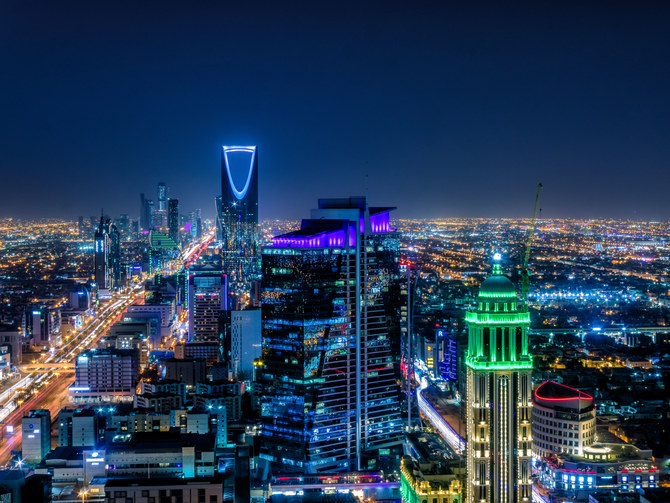
The IMF also noted that the Kingdom’s output will grow by 2.6 percent in 2024. Shutterstock
Short Url
Updated 16 April 2024
Follow

IMF raises growth forecast for Saudi economy to 6% in 2025

RIYADH: The International Monetary Fund has raised its expectations for Saudi Arabia’s economic growth in 2025 to 6 percent – up from 5.5 percent predicted earlier this year. 

In its latest report, the IMF also noted that the Kingdom’s output will grow by 2.6 percent in 2024, down 0.1 percent compared to the previous projection. 

The financial institution added that the overall economic growth in the Middle East and Central Asian region is projected at 2.8 percent and 4.2 percent in 2024 and 2025, respectively. 

Earlier in April, the World Bank also raised the growth prospects of the Kingdom’s economy to 5.9 percent in 2025, up from an earlier projection of 4.2 percent. 

Taming inflation should be a priority

According to the IMF, global economic growth, which is estimated at 3.2 percent in 2023, is projected to continue at the same pace in 2024 and 2025. 

The report further pointed out that global headline inflation is expected to drop 5.9 percent this year after 2023’s 6.8 percent average. 

However, the IMF warned that it is still too early to declare victory in the fight against inflation. 

“Bringing inflation back to target should remain the priority. While inflation trends are encouraging, we are not there yet. Somewhat worryingly, progress toward inflation targets has somewhat stalled since the beginning of the year. This could be a temporary setback, but there are reasons to remain vigilant,” said IMF Economic Counsellor Pierre-Olivier Gourinchas. 

He added: “Most of the good news on inflation came from the decline in energy prices and in goods inflation. The latter has been helped by easing supply-chain frictions, as well as by the decline in Chinese export prices. But oil prices have been rising recently in part due to geopolitical tensions and services inflation remains stubbornly high.” 

Global economic recovery differs by region

According to the report, the global economy was resilient in 2023, but these gains were felt differently as low-income countries continued to experience the after-effects of the pandemic. 

“We now estimate that there will be more scarring for low-income developing countries, many of which are still struggling to turn the page from the pandemic and cost-of-living crises,” said Gourinchas. 

The IMF also called on countries to rebuild their fiscal buffers to help protect their sovereign debt levels, which will help them reverse the decline in medium-term growth prospects. 

“Going forward, policymakers should prioritize measures that help preserve or even enhance the resilience of the global economy. The first such priority is to rebuild fiscal buffers. Even as inflation recedes, real interest rates remain high and sovereign debt dynamics have become less favorable,” he added. 


Saudi Arabia, Japan trade rises 38% between 2016 and 2024, minister says

Updated 11 January 2026
Follow

Saudi Arabia, Japan trade rises 38% between 2016 and 2024, minister says

RIYADH: Trade between Saudi Arabia and Japan has increased by 38 percent between 2016 and 2024 to reach SR138 billion ($36 billion), the Kingdom’s investment minister revealed.

Speaking at the Saudi-Japanese Ministerial Investment Forum 2026, Khalid Al-Falih explained that this makes the Asian country the Kingdom’s third-largest trading partner, according to Asharq Bloomberg.

This falls in line with the fact that Saudi Arabia has been a very important country for Japan from the viewpoint of its energy security, having been a stable supplier of crude oil for many years.

It also aligns well with how Japan is fully committed to supporting Vision 2030 by sharing its knowledge and advanced technologies.

“This trade is dominated by the Kingdom's exports of energy products, specifically oil, gas, and their derivatives. We certainly look forward to the Saudi private sector increasing trade with Japan, particularly in high-tech Japanese products,” Al-Falih said.

He added: “As for investment, Japanese investment in the Kingdom is good and strong, but we look forward to raising the level of Japanese investments in the Kingdom. Today, the Kingdom offers promising opportunities for Japanese companies in several fields, including the traditional sector that links the two economies: energy.”

The minister went on to note that additional sectors that both countries can also collaborate in include green and blue hydrogen, investments in advanced industries, health, food security, innovation, entrepreneurship, among others.

During his speech, Al-Falih shed light on how the Kingdom’s pavilion at Expo 2025 in Osaka achieved remarkable success, with the exhibition receiving more than 3 million visitors, reflecting the Japanese public’s interest in Saudi Arabia.

“The pavilion also organized approximately 700 new business events, several each day, including 88 major investment events led by the Ministry of Investment. Today, as we prepare for the upcoming Expo 2030, we look forward to building upon Japan’s achievements,” he said.

The minister added: “During our visit to Japan, we agreed to establish a partnership to transfer the remarkable Japanese experience from Expo Osaka 2025 to Expo Riyadh 2030. I am certain that the Japanese pavilion at Expo Riyadh will rival the Saudi pavilion at Expo Osaka in terms of organization, innovation, and visitor turnout.”

Al-Falih also shed light on how Saudi-Japanese relations celebrated their 70th anniversary last year, and today marks the 71st year of these relations as well as how they have flourished over the decades, moving from one strategic level to an even higher one.