JERUSALEM/DUBAI/WASHINGTON: President Joe Biden warned Prime Minister Benjamin Netanyahu the US will not take part in a counter-offensive against Iran if Israel decides to retaliate for a mass drone and missile attack on Israeli territory overnight, a White House official said.
The threat of open warfare erupting between the arch Middle East foes and dragging in the United States has put the region on edge, triggering calls for restraint from global powers and Arab nations to avoid further escalation.
US media reported earlier on Sunday that Biden had informed Netanyahu he would not participate in retaliatory action in a phone call overnight. The remarks were confirmed to Reuters by a White House official.
The US will continue to help Israel defend itself, but does not want war, John Kirby, the White House’s top national security spokesperson, told ABC’s “This Week” program on Sunday.
Iran launched the attack over a suspected Israeli strike on its consulate in Syria on April 1 that killed top Revolutionary Guards commanders and followed months of clashes between Israel and Iran’s regional allies, triggered by the war in Gaza.
However, the attack from more than 300 missiles and drones, mostly launched from inside Iran, caused only modest damage in Israel as most were shot down with the help of the US, Britain and Jordan.
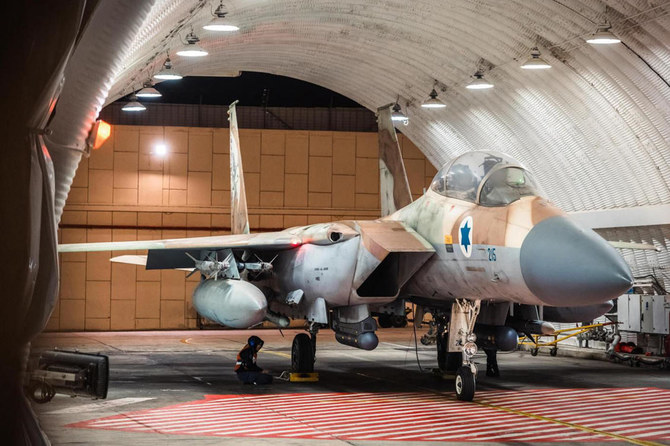
An Air Force base in southern Israel was hit, but continued to operate as normal and a 7-year old child was seriously hurt by shrapnel. There were no other reports of serious damage.
Two senior Israeli ministers signalled on Sunday that retaliation by Israel is not imminent and it would not act alone.
“We will build a regional coalition and exact the price from Iran in the fashion and timing that is right for us,” centrist minister Benny Gantz said ahead of a war cabinet meeting.
Defense Minister Yoav Gallant also said Israel had an opportunity to form a strategic alliance against “against this grave threat by Iran which is threatening to mount nuclear explosives on these missiles, which could be an extremely grave threat,” he said. Iran denies seeking nuclear weapons.
Iranian army chief of staff Major General Mohammad Bagheri warned on television that “our response will be much larger than tonight’s military action if Israel retaliates against Iran” and told Washington its bases could also be attacked if it helped Israel retaliate.
Iranian Foreign Minister Amir Abdollahian said Tehran had informed the United States its attack on Israel would be “limited” and for self defense and that regional neighbors had also been informed of its planned strikes 72-hours in advance.
A Turkish diplomatic source said Iran had informed Turkiye in advance of what would happen.
Iran said the attack was aimed at punishing “Israeli crimes” but it now “deemed the matter concluded.”
Russia, China, France and Germany as well as Arab states Egypt, Qatar and the United Arab Emirates urged restraint and the UN Security Council was set to meet at 4 p.m. ET (2000 GMT) on Sunday.
“We will do everything to stop a further escalation,” German Chancellor Olaf Scholz said on a visit to China. “We can only warn everyone, especially Iran, against continuing this way.”
Turkiye also warned Iran it did not want further tension in the region.
Escalation
Analysts debated how far Iran’s attack was calibrated to cause genuine devastation in Israel, or to save face at home after vows of revenge while avoiding a major new war.
“I think the Iranians took into consideration the fact that Israel has a very, very strong multi-layer anti-missile system and they probably took into consideration that there will not be too many casualties,” said Sima Shine, a former senior Mossad official at the Institute for National Security Studies in Tel Aviv.
But if Iran was hoping for a muted response, like with its missile attacks on US forces in Iraq after the killing of Guards commander Qassem Soleimani in 2020, she warned “I don’t think Israel sees it this way.”
On Saturday Iran’s Revolutionary Guards seized an Israel-linked cargo ship in the Strait of Hormuz, one of the world’s most important energy shipping routes, underscoring the risks to the world economy of a wider conflict.
Some flights were suspended in countries across the region.
The war in Gaza, which Israel invaded after an attack by Iran-backed Hamas on Oct. 7, has spread to fronts with Iran-aligned groups in Lebanon, Syria, Yemen and Iraq.
Iran’s most powerful ally in the region, the Lebanese Shiite group Hezbollah fired rockets at an Israeli base overnight. Israel said it struck a Hezbollah site deep inside Lebanon on Sunday morning.
Yemen’s Houthis, who have been firing missiles at ships in the Red Sea in what they say is support for the Palestinians, called Iran’s attack legitimate.
The Oct. 7 attack in which Israel says 1,200 were killed and 253 taken hostage, along with internal discontent with the government and international pressure over the war in Gaza, form the backdrop to Netanyahu’s decisions over a response. At least 33,000 people have been killed in Gaza since Israel began its military offensive, according to authorities in the enclave.
The Israeli prime minister has for years advocated a tough military line against Iran, pushing the United States for harder action over Tehran’s nuclear program and its backing for Hezbollah, Hamas and other groups in the region.
In Israel, although there was alarm at the first direct attack from another country in more than three decades, the mood was in contrast to the trauma after the Hamas-led attack on Oct.7.
“I think we’ve been given license to respond now. I mean it was a major attack from Iran... I imagine Israel will respond and may be over quickly and get back to normal life,” said Jeremy Smith, 60.
In Iran, state television showed small gatherings in several cities celebrating the attack, but in private some Iranians were worried about Israel’s response.
“Iran gave Netanyahu a golden opportunity to attack our country. But we, the people of Iran, will bear the brunt of this conflict,” said Shima, a 29-year-old nurse, from Tehran.


![]()

US will not take part in retaliatory action against Iran, White House says
Short Url
https://arab.news/rj5h9
US will not take part in retaliatory action against Iran, White House says
- The US will continue to help Israel defend itself, but does not want war: John Kirby, the White House’s top national security spokesperson

Latest updates


© 2026 SAUDI RESEARCH & PUBLISHING COMPANY, All Rights Reserved And subject to Terms of Use Agreement.