


British Muslim children conclude Ramadan campaign for displaced families in Gaza, Yemen

1 / 6
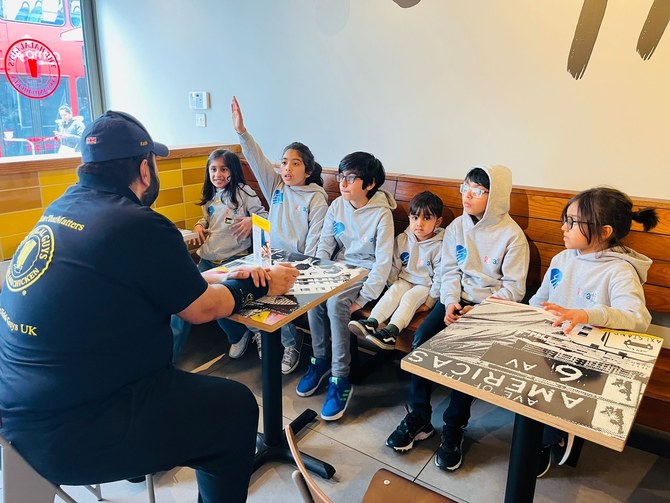
The humanitarian campaign, Ramadan Kids, was first launched four years ago by then 10-year-old Zaavier Khan from East London. (Supplied)
2 / 6
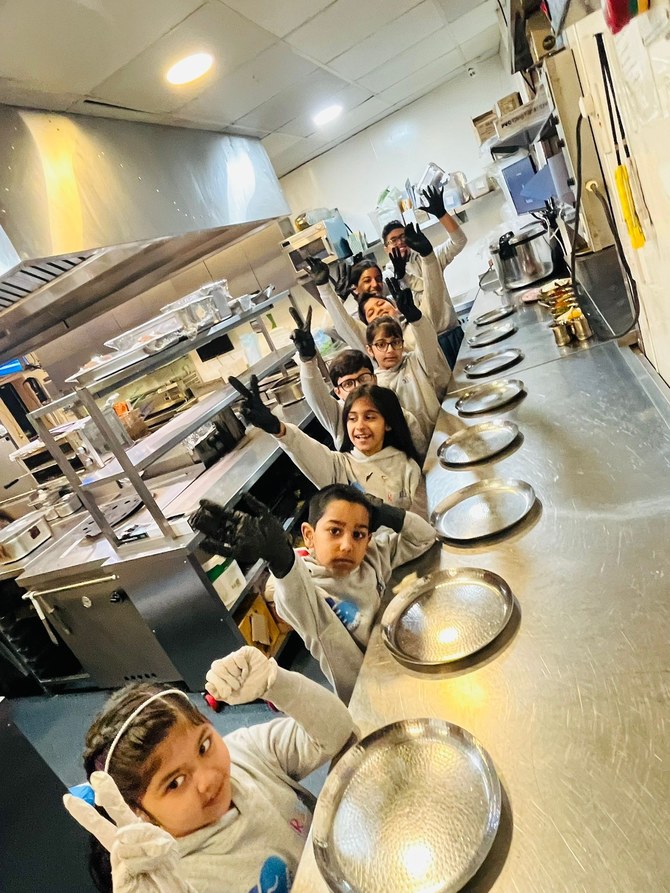
The humanitarian campaign, Ramadan Kids, was first launched four years ago by then 10-year-old Zaavier Khan from East London. (Supplied)
3 / 6
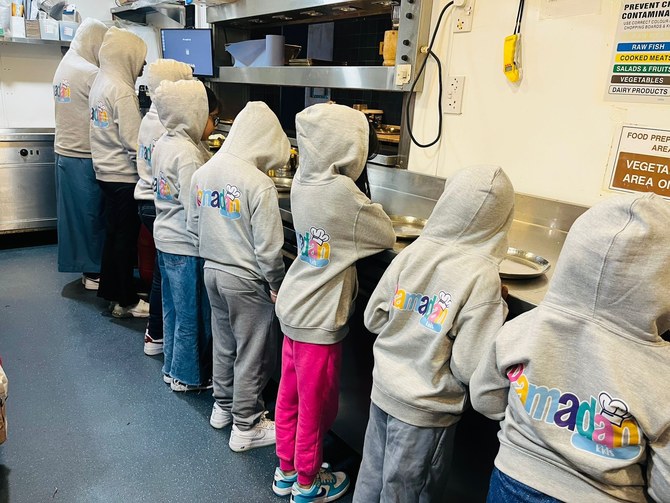
The humanitarian campaign, Ramadan Kids, was first launched four years ago by then 10-year-old Zaavier Khan from East London. (Supplied)
4 / 6
The humanitarian campaign, Ramadan Kids, was first launched four years ago by then 10-year-old Zaavier Khan from East London. (Supplied)
5 / 6
The humanitarian campaign, Ramadan Kids, was first launched four years ago by then 10-year-old Zaavier Khan from East London. (Supplied)
6 / 6
The humanitarian campaign, Ramadan Kids, was first launched four years ago by then 10-year-old Zaavier Khan from East London. (Supplied)
Short Url
Updated 14 April 2024
Follow

British Muslim children conclude Ramadan campaign for displaced families in Gaza, Yemen

  • Ramadan Kids campaign partnered with a mental health charity to help raise $132,000 throughout the month
  • 23 children took part, touring restaurants across London

LONDON: British Muslim children concluded a cooking campaign during the month of Ramadan to raise funds for an initiative to help displaced families and children in Palestine and Yemen.

For the third consecutive year, the humanitarian campaign, Ramadan Kids, partnered with London-based mental health charity Supporting Humanity to help raise £106,000 ($132,000) during the Muslim fasting month.

Ramadan Kids was first launched four years ago by then 10-year-old Zaavier Khan from East London, and this year 23 children took part, touring restaurants across the UK capital and learning how to cook an array of dishes.

“It was just a grassroots initiative that started in my kitchen because my son was supposed to embark on his journey of Ramadan, and as a British Muslim, I thought I wanted to really mark this occasion for him,” his mother, Tahreem Noor, told Arab News.

Khan began the campaign on his own during Ramadan 2021 to collect £5,000 for UK food parcels. The following year he teamed up with Supporting Humanity and helped raise £10,000 with the help of a handful of children.

Last year, he began touring restaurants and homes and cooked with a 15-member squad, contributing to raising more than £42,000 toward Supporting Humanity’s initiative to help children affected by the devastating earthquakes in Syria and Turkiye..

“Every year since then, we’ve done the Ramadan Kids campaign (and) every year the team has grown by a few children,” she added.

This year, the children, aged between four and 13, visited four restaurants. They also filmed their personal cooking at home and uploaded the footage to social media, calling on donors to help fund them via an online donation link.

“They were cooking in their own kitchens and sending us videos for us to upload to promote the concept of Ramadan Kids, but at the same time, fundraising for their own sub links as well,” Noor said.

“This year, we decided to give all the kids that took part in the campaign a Ramadan Kids pack that had lots of Islamic resources,” she added.

The children also received a 30-day journal to learn about the Muslim religion throughout the month.

The pack included religious educational material, Eid decorations and balloons, and customized pens and hoodies, which the children wore at the Ramadan Kids-related events that were held across the month.

As part of the fundraising campaign, the children visited Indian restaurant Saffron Street — the campaign’s regular annual sponsor for the last four years. They “cooked up a storm with chef Nitesh,” Noor said.

Pakistani theme-based cafe Naanstaap, Moroccan steakhouse HS & Co. and US fast food chain The Halal Guys also hosted the group.

Among the dishes the children learned to make this year were marinated chicken, grilled chicken burgers, and naans with cheese and chicken filling.

“It was a really fun hands-on experience for the children, because, obviously, naan is not something that they will usually make at home because it requires a specialist oven,” Noor said.

“At The Halal Guys, they were taught how the gyro is cooked and were shown how to plate up a gyro with hummus and the special Halal Guys rice and sauces,” she added.

The campaign also held its third date decorating workshop, with about 100 children registering to stuff, cover and sprinkle dates with various ingredients and chocolates, according to their taste and liking.

Noor said that she has noticed an increase in children’s fundraising initiatives over the past four years, largely due to media exposure, which has “really heightened the concept of charity among the youth now, which is amazing.”

Khan said that he enjoyed getting to learn about the history of the four restaurants and being taught how to cook in the kitchens.

This year, the Ramadan Kids team was “much bigger” as he became a Ramadan teen, celebrating his 13th birthday.

“I felt like a big brother to 20 children,” he said.

“As Ramadan Kids progresses, I feel like we should involve more kids from all over England, cooking food in their own houses and (holding) much bigger events to influence children to make a change during the holy month of Ramadan,” Khan added.

This year, Supporting Humanity sponsored the costs of the fundraising kits and goodie bags “to encourage (religious-based) activity,” said Sumaiya Khoda, a trustee at the charity.

It also also provided the children with marketing services and a platform to raise money via its Givebrite page, Khoda added.

The charity teamed up with delivery partners on the ground via UK-based charities Save One Life, which supports the most vulnerable people in Gaza, and Help Yateem, to support orphans in Yemen, she said.

As part of the Ramadan fundraising initiative, Supporting Humanity also held its second annual full-day Ramadan street festival, featuring a number of stall holders and vendors from the Muslim community.

Prominent East London and Essex-based restaurants as well as bakers sponsored a “huge food sale” at the event, Khoda said.

An auction was held on the sidelines of the festival selling off art and items signed by major Premier League football teams, such as Manchester United, Liverpool and West Ham United, as well as England and international cricket players, she added.


Danish ‘ghetto’ tenants hope for EU discrimination win

Updated 1 sec ago
Follow

Danish ‘ghetto’ tenants hope for EU discrimination win

COPENHAGEN: The European Court of Justice is to rule Thursday whether a Danish law requiring authorities to redevelop poor urban “ghettos” with high concentrations of “non-Western immigrants and their descendants” is discriminatory.
The law means that all social housing estates where more than half of residents are “non-Western” — previously defined as “ghettos” by the government — must rebuild, renovate and change the social mix by renting at least 60 percent of the homes at market rates by 2030.
Danish authorities, which have for decades advocated a hard line on immigration, say the law is aimed at eradicating segregation and “parallel societies” in poor neighborhoods that often struggle with crime.
In the Mjolnerparken housing estate in central Copenhagen, long associated with petty crime and delinquency, residents are confident they’ll win the case they’ve brought before the European court.
They argue that using their ethnicity to decide where they can live is discriminatory and illegal.
“100 percent we will win,” insisted Julia, a resident who did not want to tell AFP her last name.
She said the law was solely about “discrimination and racism.”
Muhammad Aslam, head of the social housing complex’s tenants’ association, was more measured, saying he was “full of hope.”

- Long legal battle -

Mjolnerparken residents filed their lawsuit in 2020.
A preliminary opinion by the European Court of Justice’s advocate general in February called the policy “direct discrimination.”
If the court’s final ruling were to be along those lines, “we will be ... completely satisfied,” Aslam said.
The 58-year-old owner of a transport company who hails originally from Pakistan, he has lived in the estate since it was created in 1987.
He and his wife raised four children in their four-room apartment, children who are now a lawyer, an engineer, a psychologist and a social worker, he said proudly.
“I who am self-employed as well as my children are all included in the negative statistics used to label our neighborhood a ‘ghetto’, a parallel society,” he fumed, referring to official data on the number of non-Western residents.
In Mjolnerparken, the landlord took advantage of a renovation of the four apartment blocks, decided by residents in 2015, to speed up the transformation of the complex and comply with the new legislation.
All of the residents — a total of 1,493 in 2020 — had to be temporarily relocated so the apartments could be refurbished, a representative of the tenants’ association, Majken Felle, told AFP.
At the time, eight out of 10 people in Mjolnerparken were deemed “non-Western,” with people from non-EU countries in the Balkans and Eastern Europe also falling into that category.

- ‘Disadvantaged ethnic group’ -

In order to avoid moving from one temporary apartment to another during the lengthy renovations, many residents agreed to just move to another neighborhood.
And those who are determined to return — like Felle, the Aslams and Julia — are at the landlord’s mercy.
“We were supposed to be temporarily relocated for four months, and now it’s been more than three years. Each year, they give us four or five different dates” for when the work will be completed, Aslam sighed.
In total, 295 of Mjolnerparken’s 560 homes have been replaced, with two apartment blocks sold and replaced by market-rate rentals out of reach for social housing tenants.
Experts say some 11,000 people across Denmark will have to leave their apartments and find new housing elsewhere by 2030.
“The effort to diversify neighborhoods might indeed be well intended. Nevertheless, such diversification cannot be achieved by placing an already disadvantaged ethnic group in a less favorable position,” the advocate general said in February.
“However, in the present situation, the Danish legislation does precisely that.”
Even if the court does not rule in residents’ favor on Thursday, the legal case could still continue in Denmark, Felle said.
But it would be a serious setback.
“That would mean that Denmark had carte blanche to adopt as many discriminatory laws as it wants,” said Lamies Nassri of the Center for Muslims’ Rights in Denmark.
“It affects the whole country when there are discriminatory laws, especially Muslim citizens who have been particularly marginalized and stereotyped.”