RIYADH: Saudi Arabia’s strategic location, thriving economy, and strong government support have attracted a diverse range of funding partners keen on assisting startups and entrepreneurs.
The Kingdom, according to Houssem Jemili, partner at management consulting firm Bain and Co., has one of the highest technology spends in the Middle East and North Africa, approximately 2.5 times that of the next country, and is growing year-on-year.
Speaking to Arab News, Jemili said: “Saudi Arabia has a mature and diverse set of funding partners — government entities and programs (e.g., Monsha’at), large investment funds, and venture capitalists that provide access to both direct and indirect funding to startups and entrepreneurs.”
Highlighting the Kingdom’s emergence as a dynamic tech hub in the region, he added: “KSA has a large domestic captive audience (the largest in MENA) that demands technology products and services.”
Talat Zaki Hafiz, a Saudi-based economist, told Arab News that the Kingdom’s rise as a tech hub in MENA was greatly influenced by its status as the largest economy in the region, accounting for over 30 percent of the its gross domestic product, and ranking 16th among the G20 countries.
“The technology strategy of Saudi Arabia includes ambitious targets and action plans based on attracting leading international companies mainly specialized in advanced and emerging technologies to enable the Kingdom to develop mega tech projects,” he said.
Global Innovation Index
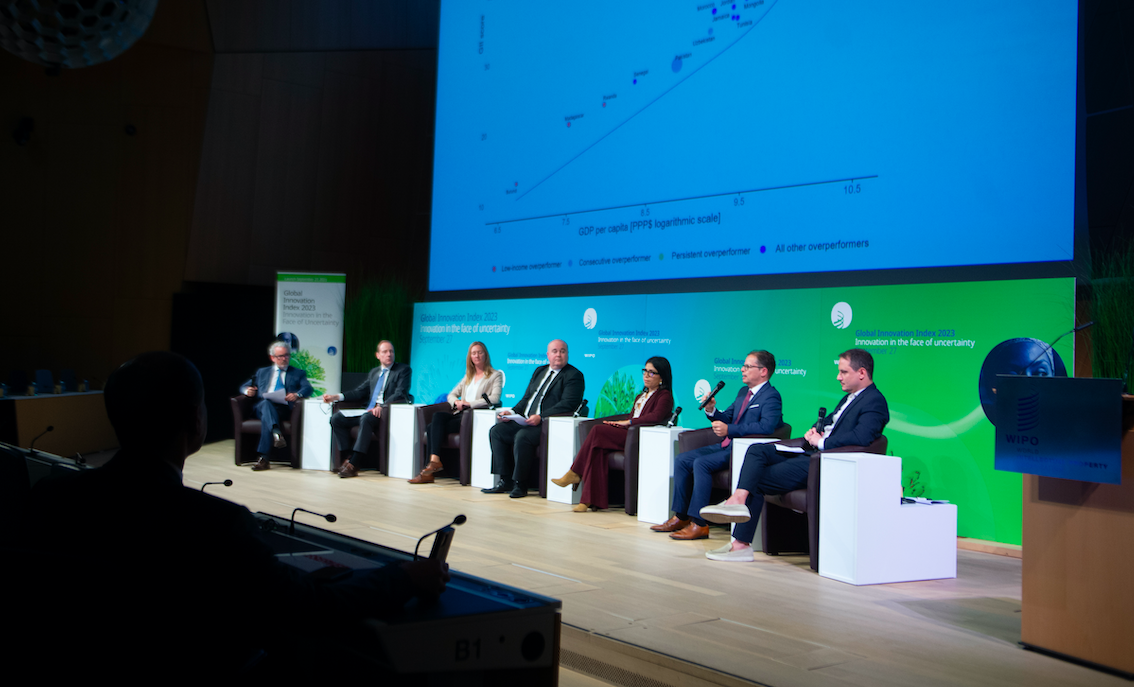
Global Innovation Index 2023 Launch Event. WIPO/Violaine
Saudi Arabia’s strides in technological innovation are underscored by its position on the Global Innovation Index 2023, where it ranks 48th among 132 featured economies.
“It (Saudi Arabia) has certainly made improvements, from 51st and 66th (position) in 2022 and 2021 respectively,” Jemili explained.
He went on to say that the Kingdom recognizes that innovation is a “key driver of economic development,” and efforts will result in significant improvements across innovation input sub-indices like human capital and infrastructure, as well as output sub-indices such as knowledge and technology outputs, and creative outputs of the Global Innovation Index.
Within the high-income group economies, Saudi Arabia ranks 41st, further solidifying its status as a burgeoning tech hub in the region.
Moreover, the Kingdom’s ranking fifth among the 18 economies in North Africa and West Asia highlights its growing influence as a beacon of innovation in the Middle East.
Hafiz believes that since the launch of Vision 2030 in 2016, Saudi Arabia has been focusing on tech-related industries in general and the digital economy in particular.
“Since the digital economy is becoming the new trend in the 21st century, especially in Saudi Arabia, where over 60 percent of its citizens are youth less than 35 years old, they heavily use the internet to purchase goods and services,” he said.
The economist explained that statistics revealed the Kingdom is witnessing a significant increase in the size of e-commerce, with expectations to reach $15 billion in 2025 and online sales projected to reach 66 percent.
Saudi Arabia’s increasing prominence in technological advancement and innovation localization was showcased at the LEAP conference held in Riyadh. The event, which concluded in early March with great success, included agreements worth over $12 billion.
“LEAP has made a tremendous effort to act as a node of the technology and innovation ecosystem in KSA — a node that connects the ecosystem and brings all the players together, through building a community,” Jemili said.
Strategic investments
Saudi Arabia’s emergence as a digital powerhouse can be attributed to its strategic investments in research and development, supportive policies, and a thriving startup ecosystem.
With initiatives such as Vision 2030 and the establishment of the Digital Government Authority, the Kingdom is laying the groundwork for a technologically advanced future.
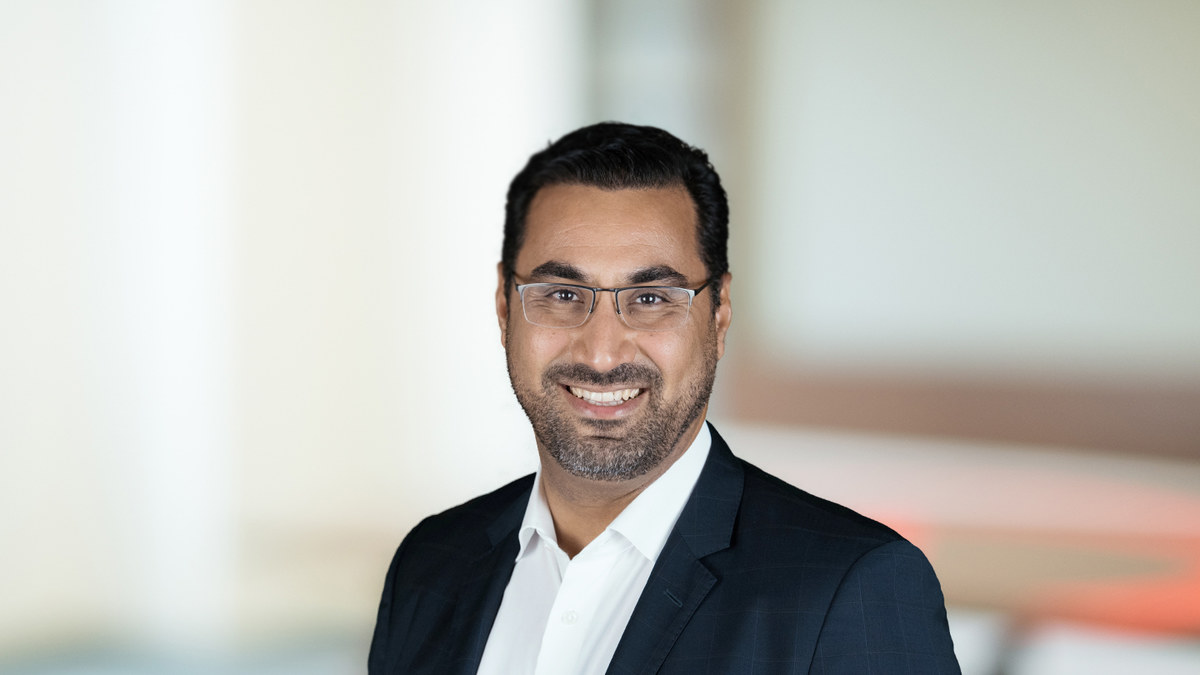
Houssem Jemili, Partner at Bain & Co. Supplied
According to Jemili, the presence of global technology giants in Saudi Arabia is a testimony to the growth of the technology and innovation landscape in the Kingdom.
“Such players provide the necessary minimum infrastructure that startups and entrepreneurs need to succeed,” he added.
Jemili further elaborated: “They provide a world-class physical and digital infrastructure, like software labs and production studios, and even cloud credits to enable innovation at scale. Such advanced offering helps startups accelerate their ideas from early-stage to large-scale commercialization.”
Global tech giants are investing billions in Saudi Arabia, highlighting its attractiveness as an investment destination, with Microsoft investing $2.1 billion in a global super-scaler cloud and Oracle committing $1.5 billion to build a new cloud region in Riyadh, as earlier revealed by Minister of Communication and Information Technology Abdullah Al-Swaha.
Hafiz emphasized that the integration of technology in the Saudi traditional economy “is going so well.”
“The Kingdom’s Vision 2030 is built on making significant changes in the Saudi economy not only to diversify its sector base but also to push for transformation to technology,” he added.
Regulatory framework
Saudi Arabia’s efforts to foster innovation extend to the regulatory realm, where the government has introduced initiatives such as regulatory sandboxes and fintech hubs.
These initiatives provide a platform for startups and tech companies to test innovative products and services in a controlled environment, thereby facilitating compliance with regulatory requirements while fostering innovation.
“Flow of and access to incentives is a big dimension that has helped Saudi Arabia drive its innovation landscape,” according to Jemili.
He highlighted that the Kingdom has a rapidly evolving business environment that requires a structured regulatory system that is mature, growth-driven, and easy to navigate.
“In addition, it is critical to enact clear and predictable regulations that enhance innovation, bring ease of doing business, and continue to build the trust of both the business community and investors,” he added.
Jemili emphasized the importance of having a “phygital center of gravity” for the startup community, highlighting its critical role in providing firsthand ecosystem orientation and guidance to new entrepreneurs and foreign startups in the Kingdom.
Phygital refers to a combined physical and digital center that serves as a pivotal hub for the startup community, offering both in-person and online resources, guidance, and orientation to new entrepreneurs and foreign startups.
With a diverse pool of founders and over 1,600 startups supported by a network of venture capital firms, Saudi Arabia is poised to become a global leader in technological innovation.
Hafiz continued, emphasizing, “It is important to note that Saudi Arabia is the third worldwide and very advanced in digital industries, leader and ranked the first regionally according to the data of GOVTECH Maturity Index for 2022 issued by the World Bank Group.”
He noted the government’s backing of advanced technologies in Saudi Arabia, which has driven significant progress toward Vision 2030’s goals by delivering high-quality digital services that bolster the national economy.
Startup ecosystem
Within the vibrant startup scene in Saudi Arabia, several companies have emerged as pioneers in innovation.
Notable among them are startups enrolled in the Saudi Unicorns Program, exemplifying the Kingdom’s commitment to nurturing homegrown talent and fostering entrepreneurship.
“Saudi Unicorns Program is a one-stop-shop solution to support and enable high-growth technology companies to reach the unicorn stage by providing an integrated set of services and offerings,” Jemili noted.
The program provides unparalleled solutions to start-ups and entrepreneurs by providing access to connect with different stakeholders — international customers, talent, investors, and private sector, and experts for mentorship and guidance.
He added that the objective of the program is in line with the overall Vision 2030, as it strives to increase the number of unicorns and create both direct and indirect impacts on the local GDP.
“A differentiating aspect of Saudi Unicorns Program is its differentiated offerings based on the degree of readiness of the startups,” Jemili explained.
Lean Tech, Mrsool, Quant, and Mozn are just a few examples of startups making waves in Saudi Arabia’s tech ecosystem.
These companies represent the Kingdom’s vibrant culture of innovation and entrepreneurship, actively shaping its dynamic business landscape.
With strategic investments, supportive policies, and a thriving startup ecosystem, the Kingdom is poised to lead the charge toward a digitally empowered future.
By fostering collaboration, nurturing homegrown talent, and embracing emerging technologies, Saudi Arabia’s current momentum is promising for technology and innovation.
Jemili cited the Magnitt report, stating that the Kingdom has emerged as the leading market for venture capital funding in the MENA region, attracting over $1.38 billion in investments in 2023.
“This was the second year in a row that KSA has recorded a billion-dollar-plus figure in VC funding,” he said.
Jemili gave examples of mega-rounds witnessed by Saudi-based platforms like Tabby and Tamara, which helped both companies secure unicorn status. “With continued efforts to improve livability aspects, improvements in ease of doing business, and continued growth and maturity of the funding institutions, KSA is on track for continued success.”
As more of these elements come to life, the maturity of the ecosystems in cities like Riyadh and Jeddah can move from an early activation stage to a globalized stage.
Hafiz concluded: “I don’t believe that the Kingdom is facing any pressing economic challenges to establish a tech ecosystem, simply because it is blessed with encouraging leadership.”
He emphasized the encouragement to use technology at a large scale, which he believes has helped to “create an excellent ecosystem, especially when considering that more than 60 percent of the Saudi population are young, below 35 years old, and we are among the highest users of the internet in the Arab world and globally.”