

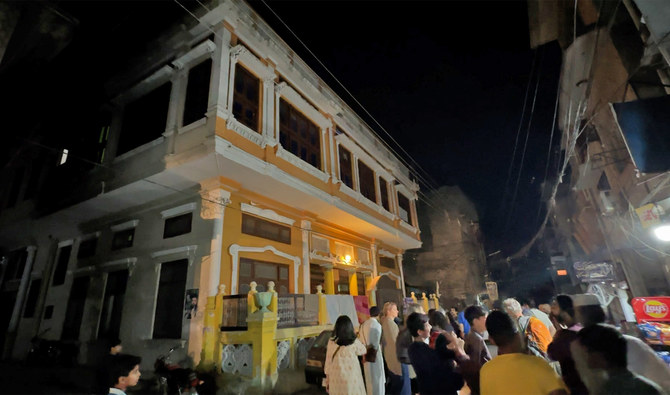

RAWALPINDI: A walk through the “Lal Kurti” neighborhood in Pakistan’s garrison city of Rawalpindi takes one through an array of old buildings and narrow streets reminiscent of a centuries-old neighborhood that was once under British occupation centuries ago.
Lal Kurti is one of Rawalpindi’s oldest residential areas, dating back to 19th century British India. Historically, Lal Kurtis were bazaars situated next to cantonment areas when the British ruled the subcontinent. The name Lal Kurti, which literally means “Red Shirt,” was derived from the distinctive uniforms worn at the time by British soldiers, the Red Coats.
Before the British colonized Rawalpindi, Lal Kurti was home to a large number of Hindu, Sikh and Jain traders. The partition of 1947 saw millions of Hindus and Muslims migrate in opposite directions to newly established India and Pakistan. With them, a lot of the communities who had built the neighborhood and the city, left it too.
Hasaan Tauseef, a 22-year-old architecture student from Rawalpindi who is also the founder of Pindi Heritage Tours, organized a “Lal Kurti By Night” heritage walk during suhoor on Saturday night. The walk was attended by people from the twin cities of Islamabad and Rawalpindi who were eager to delve into the neighborhood’s rich heritage.
“The city became a garrison city under the British Raj,” Tauseef told Arab News. “There were a lot of communities here who built the city with a lot of love. During the partition, when a lot of these communities left the city, I think that love for the city was lost in this migration.”
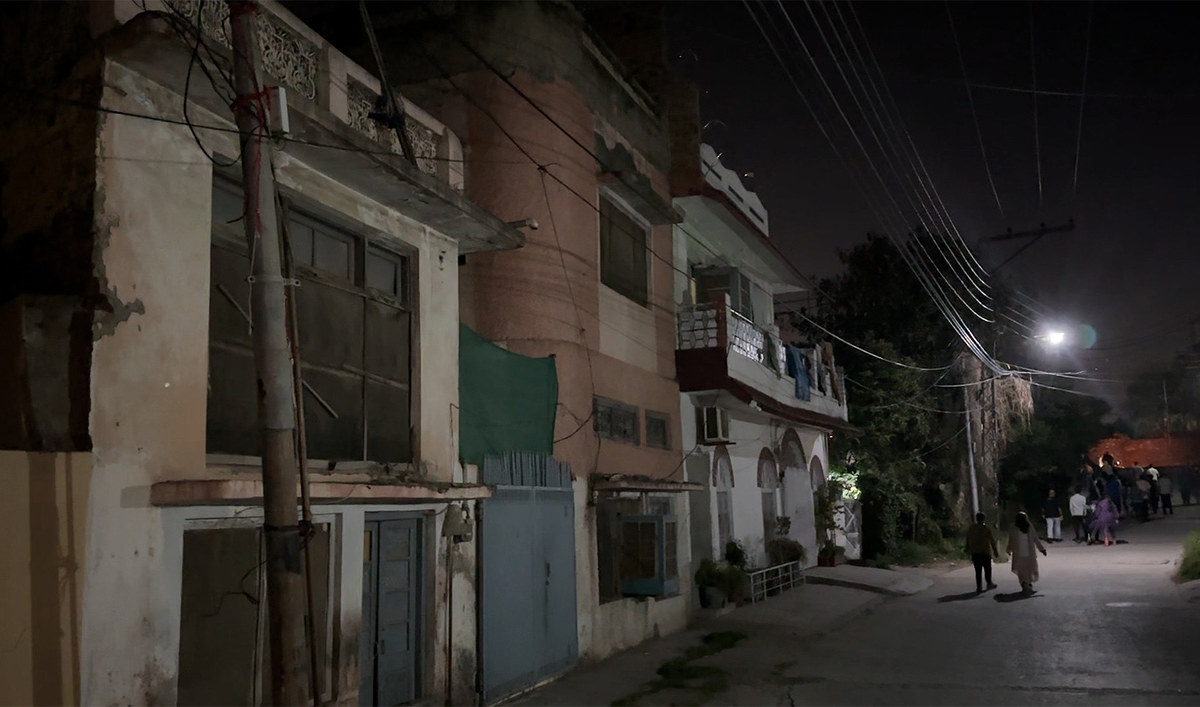
People take part in the “Lal Kurti By Night” heritage walk during suhoor in Rawalpindi, Pakistan on April 6, 2024. (AN photo)
Tauseef said one of his goals was to start a conversation about Rawalpindi’s heritage, saying the walks had successfully done so.
The heritage walk featured over 30 participants, mostly university students and elderly people. It featured stops at a lot of evacuee properties, a term used to describe houses and buildings that were abandoned when Sikh and Hindu families migrated to India. These properties were then awarded to Muslims who had inhabited them at the time.
Many of these buildings were turned into schools or commercial buildings. The walk also featured military barracks, traditional South Asian mansions also known as havelis, including the Bobby House built in 1945 and the Hari Chand Gupta building, which is now owned by a Muslim family. The Gupta building grabbed headlines a few years ago when the statue of a Hindu deity was removed from it.
Shandana Waheed, a 32-year-old anthropologist and resident of Lal Kurti, kept participants informed of the various buildings and heritage sites they came across in the old neighborhood. Waheed is currently pursuing a PhD in evacuee properties from Stanford University in California.
“It’s important to have conversations and create awareness around heritage because all of this heritage is going to fade,” Waheed told Arab News. “You cannot turn cities into museums.”
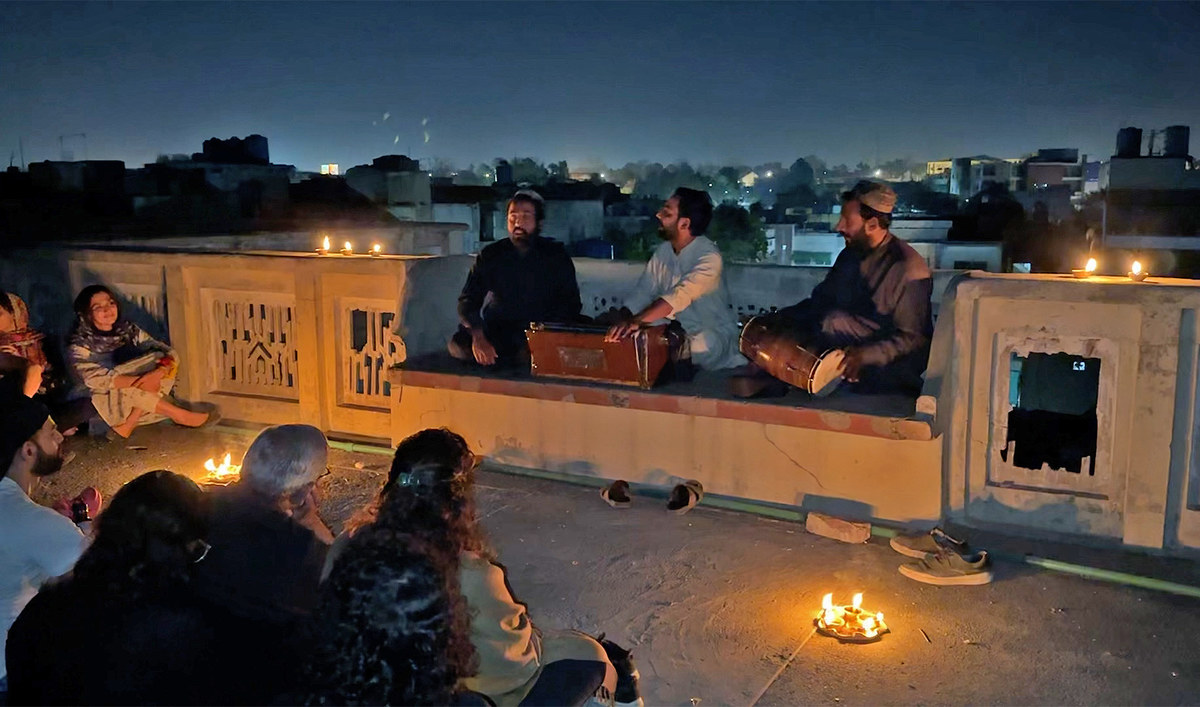
People listen to Qawali during the “Lal Kurti By Night” heritage walk in Rawalpindi, Pakistan on April 6, 2024. (AN photo)
She said it was part of a natural process that the current buildings in the neighborhood would evolve and deteriorate, causing people to build new structures.
“So, it is important to archive this heritage either in the memory or through the conversations or photographs,” Waheed said.
Participants were entreated to qawwali music— devotional songs that trace their origins to Sufi tradition and usually feature instruments such as the harmonium or small hand drums— from Lal Kurti’s singers.
They were next treated to piping hot cups of tea from the Ludhiana Tea Stall, one of the oldest tea shops in the neighborhood run by a family residing in the area since before partition.
The heritage walk concluded with suhoor, the pre-dawn Islamic meal consumed by Muslims before they begin their fast. The organizers picked Delhi Hotel as the spot to have their suhoor at, considering it is owned by a family that migrated from New Delhi and claims to have retained the flavors of its items from Indian capital as they were before partition.

The picture taken on April 6, 2024, shows an old haveli in Rawalpindi, Pakistan on April 6, 2024. (AN photo)
Participants of the walk found the tour to be a refreshing one, offering insights into a centuries-old neighborhood in the garrison city.
“Because I live in Toronto, it was really good to connect with my roots,” Hasan Tariq, a 35-year-old fashion enthusiast told Arab News. “And experience the history, especially the multi-faith, multi-cultural elements of Rawalpindi.”
For others like 21-year-old Jaisha Mubashir, the walk offered more than an introduction to the neighborhood’s rich heritage.
“I really wanted to be in the inner part of the city, at nighttime especially as a woman,” she said. “That’s something that I really enjoyed today.”


