LONDON: Israeli forces pulled out of Gaza’s largest hospital complex this week after an intensive 14-day military operation, purportedly against Hamas, leaving behind ruined buildings and charred bodies in the sprawling complex. However, accounts of what happened vary.
The Israeli army carried out what it called two weeks of “precise operational activity” at the Al-Shifa Hospital in Gaza City, before declaring its forces had withdrawn on Monday. Those who survived the siege, however, dispute the claim that the operation was “precise.”
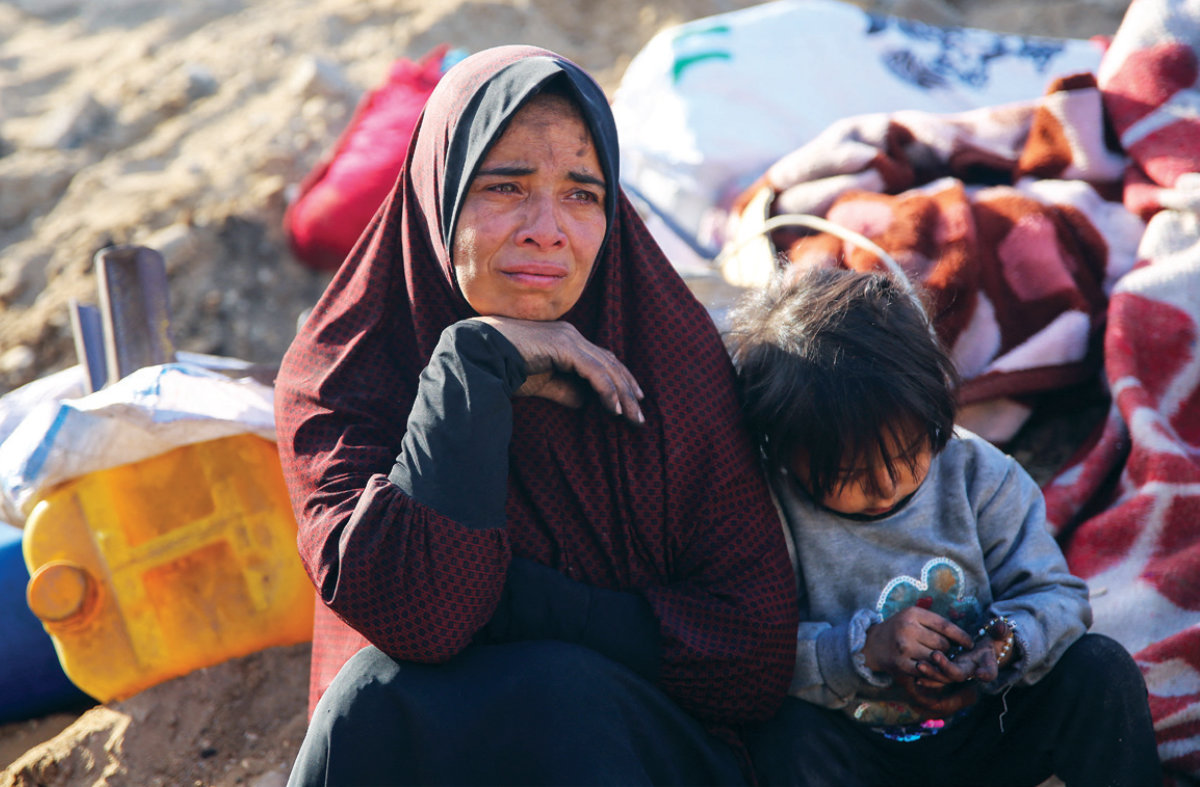
A Palestinian woman reacts as she sits amid the rubble of Gaza's Al-Shifa hospital after the Israeli military withdrew from the complex housing the hospital on April 1, 2024. (AFP)
“At 2:30, after midnight, they stormed the reception area, killing people and bombing indiscriminately,” one patient, who was trapped in Al-Shifa Hospital when the Israeli military mounted its raid on March 18, told a local reporter.
“The army employed the most horrific killing methods. And of course, they humiliated and insulted us. They threw a bomb in here. They deliberately fired at the walls.”
Two weeks of heavy fighting in and around Al-Shifa led by Shayetet 13, Israel’s equivalent of the US Navy SEALs, began with a surprise raid on the complex on March 18. The Israeli military said no patients or civilians were harmed as a result of the operation.

The grounds for the operation, Israel claimed, was that members of Hamas and other Palestinian militant groups were barricaded inside the complex. Around a month ago, Israeli military officials said they had intercepted communications and picked up other intelligence indicating militants were regrouping at the hospital compound.
Hamas has repeatedly denied using medical facilities for military purposes.
However, in November, when the Israeli military first raided Al-Shifa, officials claimed they had found a tunnel beneath the hospital leading to weapons storage areas inside medical buildings.
On March 31, a senior Israeli officer told foreign journalists brought into Al-Shifa that after the troops had left the hospital in November, Hamas fighters had returned to seek shelter among civilians.
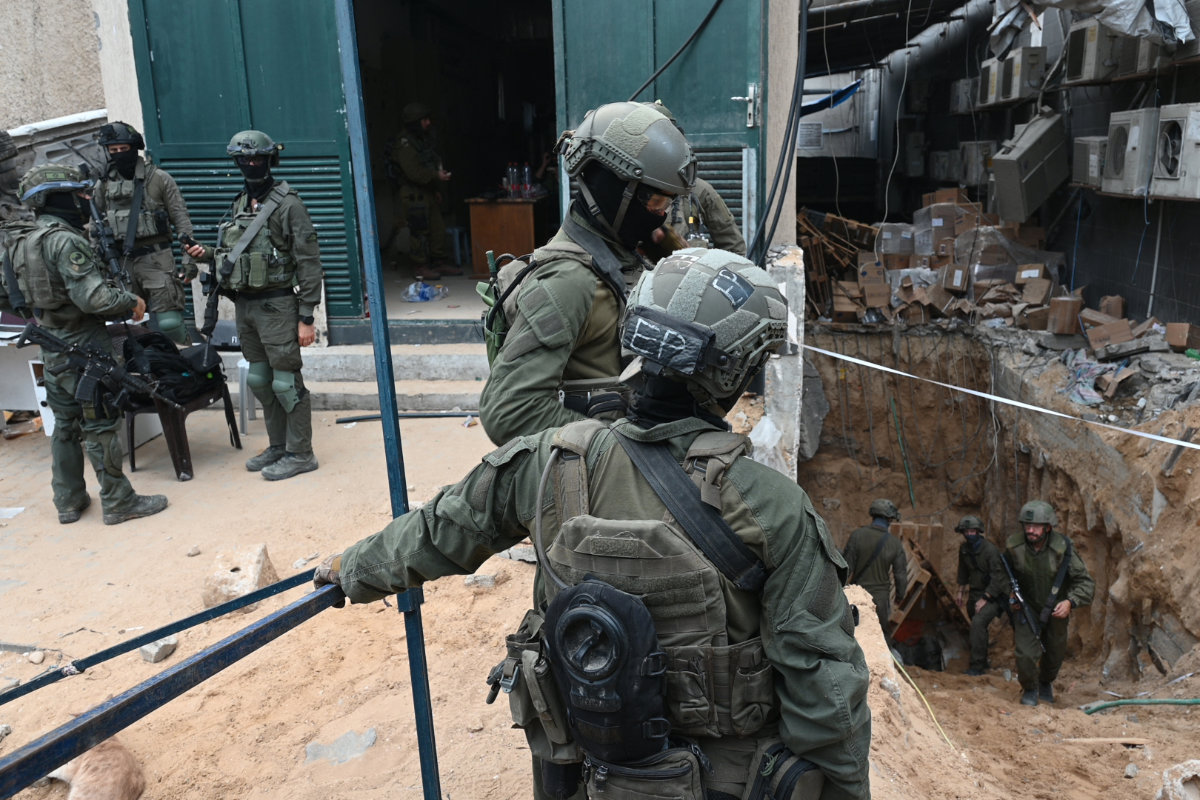
In this photo taken on November 22, 2023, Israeli troops surround an entrance to a tunnel dug supposedly by Hamas militants inside the Al-Shifa hospital complex in Gaza City. (AFP)
Confirming their withdrawal on Monday, the Israel Defense Forces said its troops had “eliminated” a “terrorist base” in Al-Shifa, killed at least 200 Hamas and other militants, and had seized weapons and intelligence.
It also said it had arrested 900 people suspected of being militants.
Conflicting with the Israeli account of events, Gaza’s health ministry said at least 400 Palestinians were killed in the operation, with that number expected to rise as Al-Shifa’s medics and local volunteers continue to recover bodies from inside and around the facility.
An AFP correspondent reported seeing “one badly decomposed body bearing tyre marks, although it was not known when it was driven over,” while several doctors and civilians told the news agency they had found at least 20 bodies that “appeared to have been driven over by military vehicles.”

In this aerial view, shallow tombs of people killed in Israeli bombardments are lined up inside a makeshift cemetery in the vicinity of Al-Shifa Medical Complex (L) in Gaza City on January 10, 2024. (AFP)
A report released on April 1 by the Euro-Med Monitor, an independent NGO headquartered in Geneva, said that although the exact number of casualties remains unknown, “preliminary reports suggest that over 1,500 Palestinians have been killed, injured, or are reported missing” in and around Al-Shifa as a result of the 14-day Israeli raid.
The NGO confirmed from its initial investigation and testimonies that “hundreds of dead bodies, including some burned and others with their heads and limbs severed, have been discovered both inside Al-Shifa Medical Complex and in the hospital’s surrounding area.”
INNUMBERS
• 200 Hamas fighters and other militants killed in the raid, according to Israeli officials.
• 900 People suspected of being militants arrested in the raid, according to Israeli officials.
• 400 Palestinians killed in the operation, according to the Gaza health ministry.
Another report by Euro-Med claimed that 13 children had been shot dead in Al-Shifa and its vicinity.
The report, published on March 27, said the raid amounted to a “war crime” and a “flagrant violation of international law,” adding that its field team had “received identical testimonies about the killings and executions of Palestinian children between the ages of four and 16.”
Meanwhile, 21 of the hospital’s patients are reported to have died during the raid, while 107 others, including four children and 28 people in critical condition, had remained trapped inside the complex until the Israeli troops pulled out, according to the World Health Organization.

Palestinians inspect the damage at Gaza's Al-Shifa hospital after the Israeli military withdrew from the complex housing the hospital on April 1, 2024, amid the ongoing battles Israel and the Hamas militant group. (AFP)
One of Al-Shifa’s doctors, Amira Al-Safady, told the BBC’s Gaza Lifeline radio that 16 patients from the intensive care unit died because there was no longer equipment to treat them.
Surgical resident Amer Jedbeh told the BBC there was no electricity or water during the siege, making it impossible to operate on those injured after a shell hit his department’s building. He said two patients on life support had died after the electricity supply was cut ahead of the raid.
Euro-Med said that at least 22 of Al-Shifa’s patients, deprived of food, medical care and water, died in their hospital beds during the siege.
The Israeli military also “committed horrendous crimes against local families,” Euro-Med said. Soldiers had allegedly forced more than 25,000 Palestinians to evacuate their homes near Al-Shifa before demolishing and setting ablaze at least 1,200 housing units.
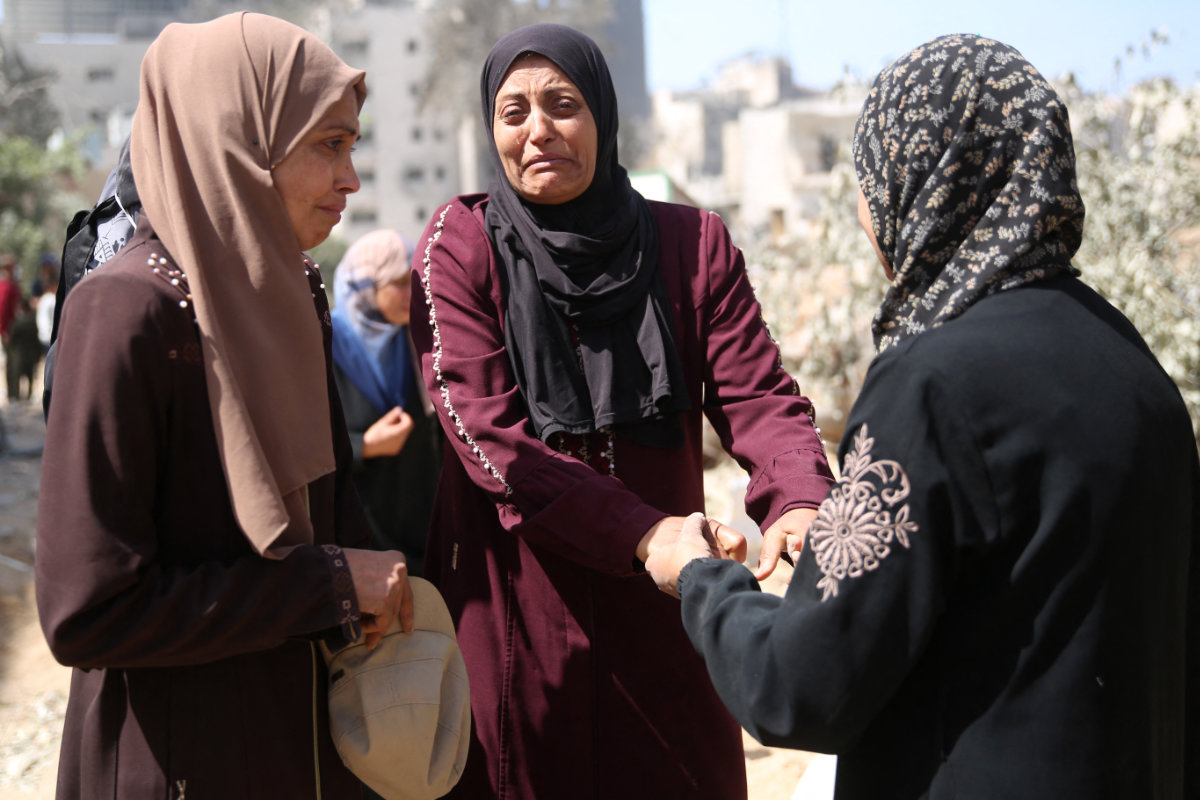
Palestinian women react as they inspect the damage in the area surrounding Gaza's Al-Shifa hospital on April 1, 2024. (AFP)
Reporters from the Washington Post, who were invited by the IDF into Al-Shifa on Sunday, said the compound smelled “like death” and “of bodies” and “rot.”
While they were told a few Hamas operatives “might still be moving around the hospital,” they “saw only Israeli soldiers.”
Not only this, but they also “didn’t see a single Palestinian” during their visit, although there were 140 staff members and patients that the IDF claimed to be “sheltering” in a nearby building.
The Post’s journalists noted that Al-Shifa’s buildings “were not pancaked by big bombs, but targeted by Israel’s air force strikes, artillery fire and small arms.” They described the IDF’s operation as “all-out urban warfare.”

A man pushes a bicycle along as he walks amid building rubble in the devastated area around Gaza's Al-Shifa hospital on April 3, 2024. (AFP)
Al-Shifa, one of Gaza’s 36 hospitals, has been knocked out of service indefinitely, said Marwan Abu Saada, the complex’s director and one of its physicians, in a press briefing held on Tuesday outside the medical facility.
He said the buildings of Al-Shifa Medical Complex “have been fully destroyed” and can no longer accommodate any patients, perform surgeries, or conduct laboratory tests. “Even the management’s offices have been destroyed.”
“These buildings are now on the verge of collapse,” he said. “Not only is the facade destroyed, but the destruction inside the buildings is far worse. Bombs were planted inside the specialized surgery department. The two lower floors are in ruins.”
New field hospitals were urgently needed, he said, amid the growing medical needs in Gaza City and the northern governorates.
Recent footage and photographs that have emerged since the raid show the massive scale of destruction that Abu Saada described.
The main buildings have been reduced to scorched husks and gnarled metal rods, and the courtyard that was last year home to makeshift tents sheltering some 50,000 displaced Palestinians now heaped with rubble.

A Palestinian inspects the damage at Gaza's Al-Shifa hospital after the Israeli military withdrew from the complex housing the hospital on April 1, 2024, amid the ongoing battles Israel and the Hamas militant group. (Photo by AFP)
The violence did not even spare a nearby clinic belonging to Medecins Sans Frontieres, which said in a press release on Tuesday that the heavy fighting had “damaged the office, clinic, all the cars, and the generators.”
The MSF was forced to evacuate the medical complex in November amid a campaign of airstrikes in the vicinity of Al-Shifa.
Prior to the conflict, Al-Shifa was made up of three specialized hospitals, for surgery, internal medicine, and obstetrics and gynecology.

Displaced Palestinians fleeing from the area in the vicinity of Gaza City's al-Shifa hospital arrive via the coastal highway at the Nuseirat refugee camp in the central Gaza Strip on March 18, 2024. (AFP)
Built on a 42,000-square-meter plot, the medical complex had a clinical capacity of 800 beds and covered the hospitalization needs of the Gaza Strip as a whole.
Despite enduring a previous siege in November, Al-Shifa continued to be partially operational, with its small medical team treating more than 200 patients in March, according to the MSF.
Gaza City and the northern Gaza Strip have now been left without a single public hospital operating at the scale of Al-Shifa, the complex’s director Abu Saada said, accusing Israel of systematically annihilating the healthcare system in Gaza.
Since the IDF launched its assault on the Gaza Strip in retaliation for the Oct. 7 Hamas-led attack, 26 out of the enclave’s 36 hospitals have been knocked out of action, while 12 were only partially functional in March.

keywords

keywords