

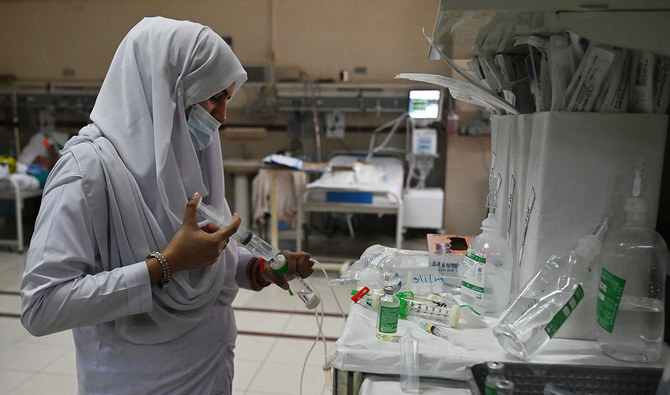

ISLAMABAD: Tuberculosis (TB) cases have risen in Pakistan by 42.5 percent in the last three years with 47,000 people dying of the illness in 2023, official data shows, as the government says it will stamp out the disease by 2035 despite inadequate resources for screening and treatment.
TB is an infectious disease that most often affects the lungs and is caused by a type of bacteria. It spreads through the air when infected people cough, sneeze or spit, though it is preventable and curable, according to the World Health Organization (WHO).
The disease is the second leading infectious killer after the coronavirus (above HIV and AIDS) and about a quarter of the global population is estimated to have been infected with TB bacteria. It remains one of the major public health problems in Pakistan as the South Asian nation of 241 million ranks fifth among high-burden TB countries worldwide.
In Pakistan, TB cases registered increase from 272,990 in 2020 to 474,981 in 2023, with a treatment success rate of more than 90 percent, according to official data. The disease killed 48,000 people in 2021, 46,000 in 2022, and 47,000 people in 2023. Currently, there are a total of 608,000 TB cases registered with the National TB Control Program.
“The number of TB cases have registered a significant increase in the last three years with a high mortality rate which is obviously concerning and a national action plan is devised to curb it,” Syed Azadar Abbas Gillani, an official of the National TB Control Program, told Arab News on Tuesday.
“Under a three-year strategic plan, we intend to bring down TB cases to zero by 2035.”
The increased number of TB incidences were also a proof for the improved screening and treatment of patients as over 1,900 TB diagnostic care facilities were operational across the country despite a lack of domestic funding, according to Gillani.
From 2024 till 2026, Pakistan requires $533 million funds to screen and treat TB patients, but there is a funding gap of around 57 percent.
“We get a meagre 8-10 percent of the required funds from the domestic resources, while majority of the funds come from international donors,” Gillani said, emphasizing early detection as a key to curb the disease.
Public health experts urge the government to concentrate on awareness, effective screening and provision of free medicines to TB patients to bring down the caseload.
“The government needs to digitalize the whole TB data for transparency, besides including its treatment in a universal health insurance program,” Dr. Nadeem Jan, former federal health minister, told Arab News.
He urged the government to follow up on a request for $1 billion funds from international donors for effective screening and treatment of TB patients. “We can control TB incidences in just three years if public and private health facilities join hands with an aim to curb the disease,” he added.
Dr. Munir Ahmed Bhatti, a TB specialist, acknowledged that TB screening and detection had improved in the past years, but urged authorities to ensure free TB tests at public health facilities that cost around Rs7,000 ($25.2) at private labs.
“It is a bacterial infectious disease that spreads from one person to another easily while coughing if not screened and treated in time,” Bhatti told Arab News. “TB is a fatal disease and can be controlled through massive rapid testing and free treatment across the country.”


