Erdogan battles key rival in Turkiye’s local elections

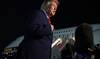
Turkish President Tayyip Erdogan and mayoral candidate of his ruling AK Party (AKP) Murat Kurum greet their supporters during a rally in Istanbul, Turkey, March 30, 2024. (REUTERS)
Short Url
Updated 31 March 2024
Follow

Erdogan battles key rival in Turkiye’s local elections

  • Polls suggest a tight race in Istanbul, a city of 16 million people that drives Turkiye’s economy, where Imamoglu faces a challenge from AKP candidate Murat Kurum, a former minister

ISTANBUL: Turks vote on Sunday in nationwide municipal elections focused on President Tayyip Erdogan’s bid to reclaim control of Istanbul from major rival Ekrem Imamoglu, who aims to reassert the opposition as a political force after bitter election defeats last year.
Istanbul Mayor Imamoglu dealt Erdogan and his AK Party the biggest electoral blow of two decades in power with his win in the 2019 vote. The president struck back in 2023 by securing re-election and a parliament majority with his nationalist allies. Sunday’s votes could now reinforce Erdogan’s control of NATO-member Turkiye, or signal change in the major emerging economy’s divided political landscape. An Imamoglu win is seen fueling expectations of him becoming a future national leader.


Istanbul Mayor Ekrem Imamoglu, mayoral candidate of the main opposition Republican People's Party (CHP), takes off his tie during a rally ahead of the local elections in Istanbul, Turkey March 30, 2024. (REUTERS)

Polling stations open at 7 a.m. (0400 GMT) in eastern Turkiye, with voting elsewhere starting at 8 a.m. and ending at 5 p.m.. Initial results are expected by 10 p.m. (1900 GMT).
Polls suggest a tight race in Istanbul, a city of 16 million people that drives Turkiye’s economy, where Imamoglu faces a challenge from AKP candidate Murat Kurum, a former minister.
The results are likely to be shaped in part by economic woes driven by rampant inflation near 70 percent, and by Kurdish and Islamist voters weighing up the government’s performance and their hopes for political change.
While the main prize for Erdogan is Istanbul, he also seeks to win back the capital Ankara. Both cities were won by the opposition in 2019 after being under the rule of his AKP and Islamist predecessors for the previous 25 years. Erdogan’s prospects have been helped by the collapse of the opposition alliance that he defeated last year, though Imamoglu still appeals to voters beyond his main opposition Republican People’s Party. Voters of the main pro-Kurdish party were crucial to Imamoglu’s 2019 success. Their DEM party this time is fielding its own candidate in Istanbul, but many Kurds are expected to put aside party loyalty and vote for him again.
In the mainly Kurdish southeast, DEM is looking to reaffirm its strength after the state unseated pro-Kurdish party mayors following previous elections over alleged ties to militants.
One factor working against Erdogan is a rise in support for the Islamist New Welfare Party due to its hard-line stance against Israel over the Gaza conflict and dissatisfaction with the Islamist-rooted AKP’s handling of the economy.


Italy wants military to stay in Lebanon after peacekeepers leave

Updated 2 sec ago
Follow

Italy wants military to stay in Lebanon after peacekeepers leave

  • Defense Minister Guido Crosetto says Italy will continue to 'do its part' even after UNIFIL mission ends next year
ROME: Italy said Monday it intends to keep a military presence in Lebanon even after the UN peacekeeping force it belongs to leaves as planned from December 31, 2026.
“Even after (the peacekeeping force) UNIFIL, Italy will continue to do its part, supporting with conviction the international presence and supporting the capacity development of the Lebanese armed forces,” Defense Minister Guido Crosetto said during a visit to Lebanon, according to a statement.
Asked by AFP if this meant Italy wanted to maintain a military presence in the country, a ministry spokesman confirmed that this was the case.
The United Nations Interim Force in Lebanon (UNIFIL) has acted as a buffer between Israel and Lebanon since 1978, remaining after Israel ended an occupation of southern Lebanon in 2000.
Lebanon had wanted UNIFIL to stay.
But the UN Security Council voted in August to allow only one final extension for UNIFIL after pressure from Israel and its US ally to end the mandate.
UNIFIL is currently led by Italian Major General Diodato Abagnara and numbers 9,923 troops from 49 countries, according to the force’s website.
Italy is the second biggest contributing country with 1,099 soldiers deployed after Indonesia which has 1,232 soldiers.
Israel has hailed the termination of UNIFIL and urged the Beirut government to exert its authority after an Israeli military campaign which devastated Iranian-backed militia Hezbollah.
Under a truce between Israel and Hezbollah, the long-fledgling Lebanese national army has been deploying in southern Lebanon and dismantling Hezbollah’s infrastructure.
“Support is needed to strengthen the Lebanese armed forces, so that they are in the best possible position to defend the country, ensuring security and respect for its borders,” Crosetto said in Monday’s statement.
“We will guarantee our presence in multilateral and bilateral contexts,” he said.