


DUBAI: Lebanese author and art expert Myrna Ayad recently released “Alcove,” a book of 30 essays exploring the lives of celebrated and forgotten modern artists from the Arab world. Ayad based her essays on intimate interviews with the artists’ relatives, students, and close friends.
“I was not after describing their work,” Ayad, who lives in Dubai, tells Arab News. “My aim was to focus on the person — what moved them, what affected them, how they lived, how they survived and why they persevered.”
The artists hailed from the Gulf, the Levant and North Africa, and were working between the 1950s and 1980s — a time when the MENA art scene was far smaller than it is today.
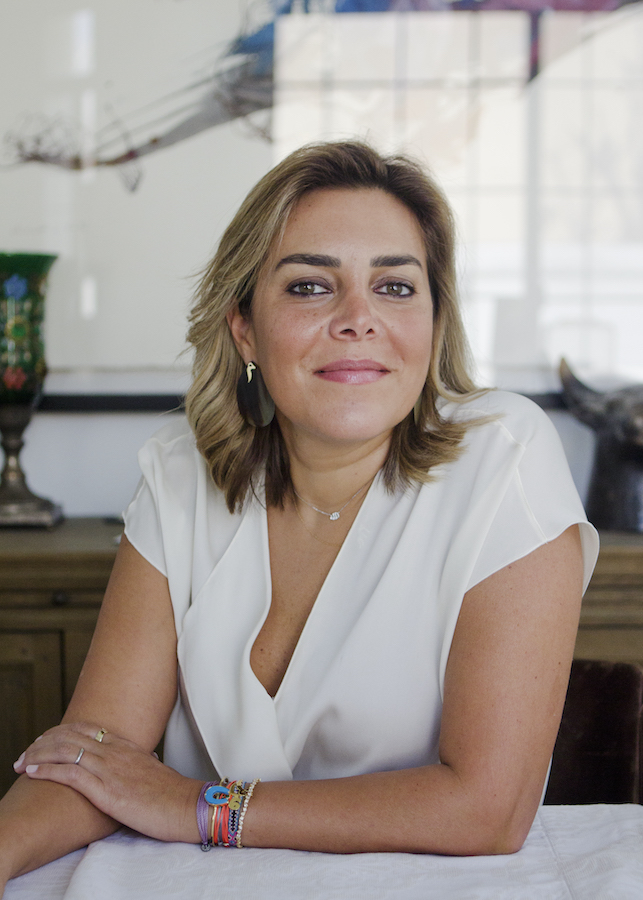
Myrna Ayad. (Supplied)
“Despite geography, they all knew each other and were friends,” says Ayad. “They exhibited alongside each other and deliberated together. In those days, there were key cultural capitals like Baghdad, Beirut and Cairo, so they would all gather there. They were likeminded people.” What also united them was a sense of struggle — be it political, personal or professional. “It was not easy at all being an artist in those days,” says Ayad.
They were also documenters of their time — depicting contemporary historical and political events.
“They addressed topics full-on,” says Ayad. “They had enough liberty and confidence to do that, which is why you find a lot of answers in modern Arab art.”
The term “alcove” derives from the Arabic word “al-qubba”, meaning a vault or a chamber. And the interviews Ayad conducted for the book unleashed a vault of memories for her interviewees. “All of the conversations were emotional,” she recalls. “I was on Zoom calls watching grown men cry.”
Here are five noteworthy artists featured in “Alcove.”
Abdullah Al-Shaikh (1936 – 2019)
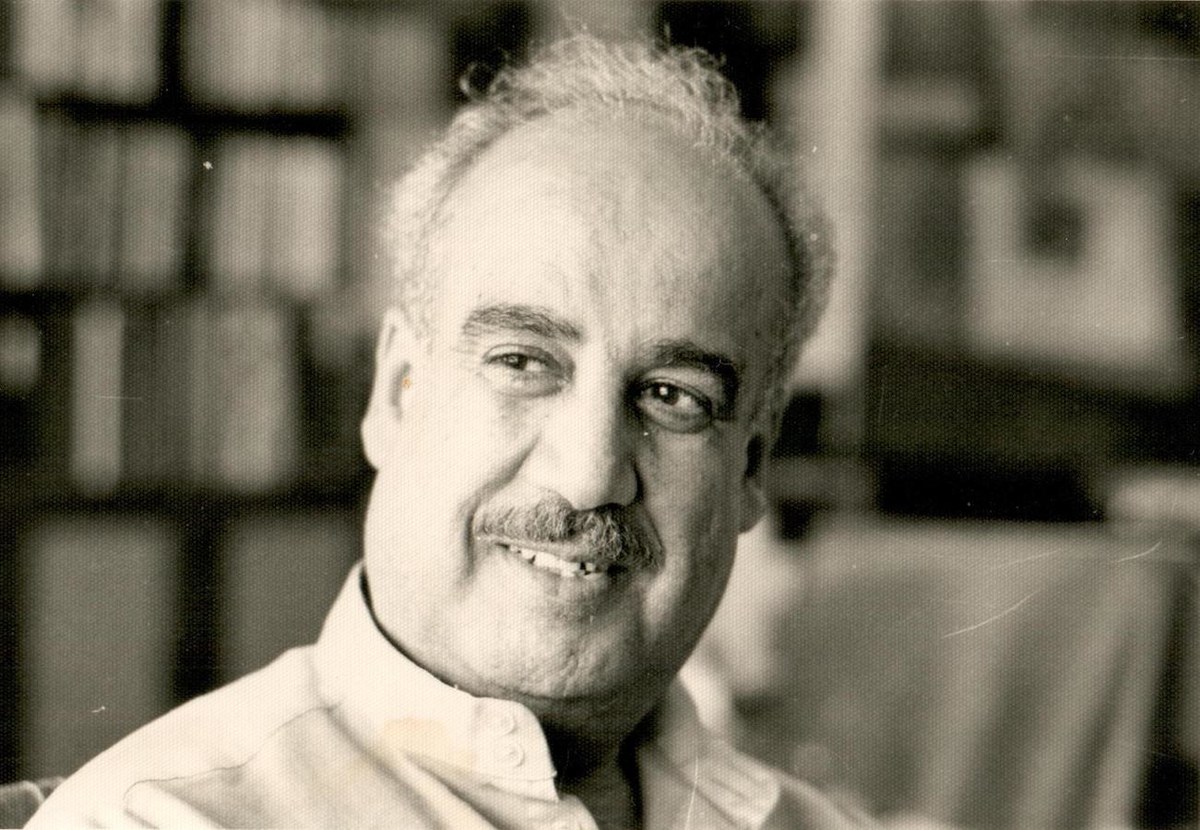
Abdullah Al-Shaikh. (Image courtesy Ala’ Al-Shaikh)
The Iraq-born Saudi artist was an introvert who devoted his life to painting folkloric scenes, local landscapes and abstract compositions. “It was so fascinating for me that this man — who grew up in a relatively conservative environment — belonged to a family who didn’t object to art-making,” says Ayad. “He never did it for fame or fortune, he was just so committed.” Al-Shaikh held his first solo show in Alkhobar in 1981, when he was in his forties.
Jumana El-Husseini (1932 – 2018)
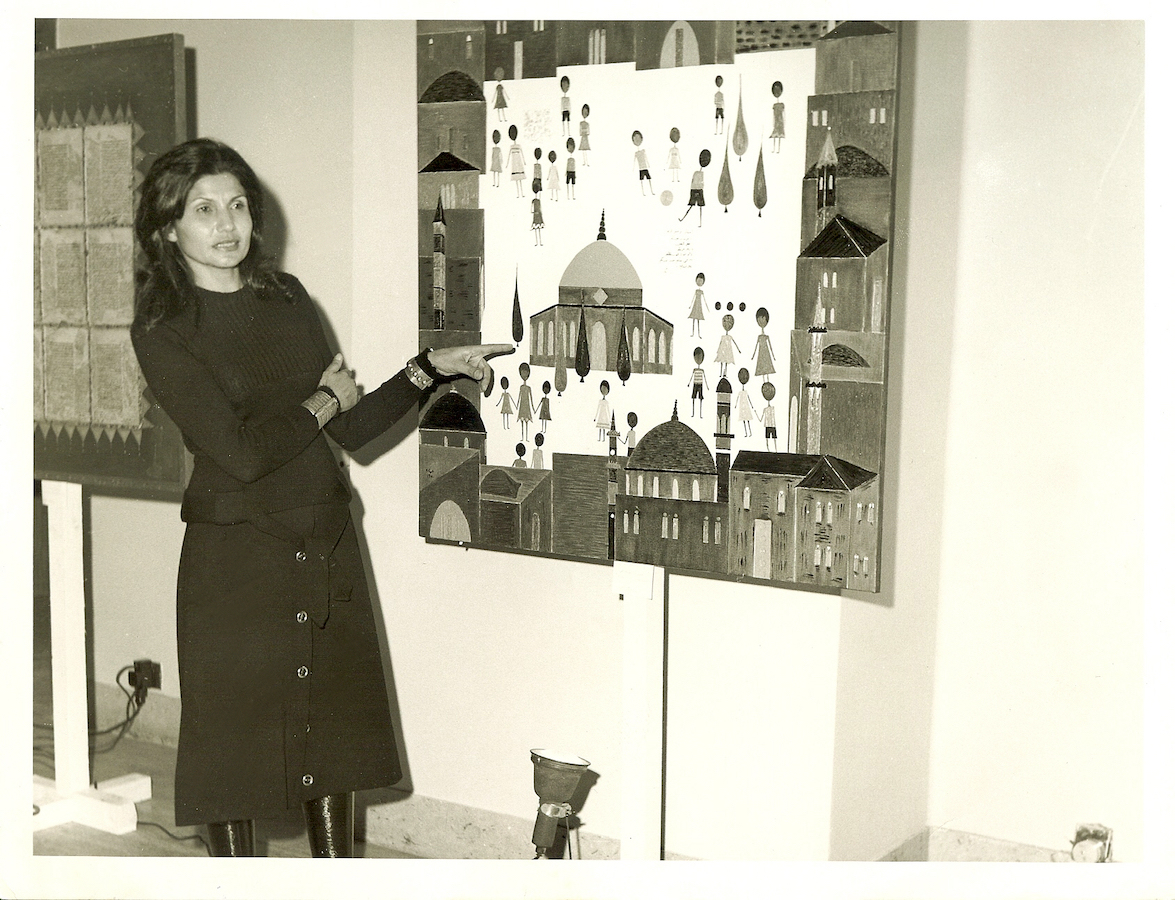
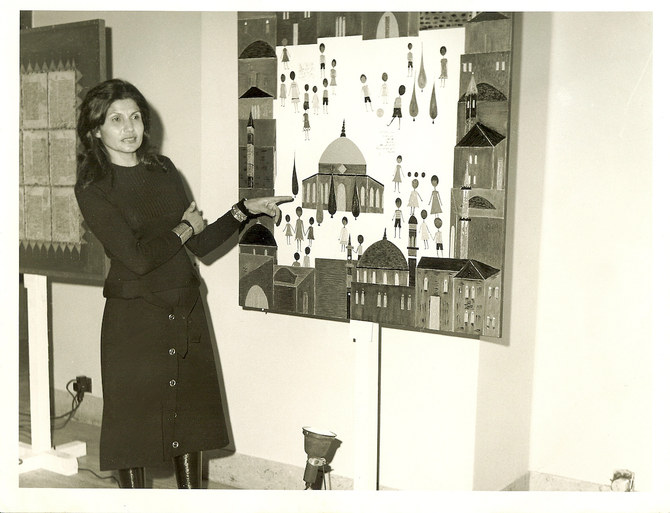
Jumana El-Husseini. (Image courtesy Wael, Salem and Omar Bayazid)
Hailing from Palestinian aristocracy, El-Husseini was exiled from her native land in 1948 and eventually settled in Lebanon. “Like other Palestinians, (her family) were dealt a catastrophic blow. They lost their home and Jumana never got over it,” says Ayad. “She channeled that pain into painting.” Many of El-Husseini’s artworks are landscapes of Jerusalem, where she was born. In Lebanon, she married, raised a family of three sons and received double degrees in political science and child psychology. But her heart was still in Palestine.
Nuha Al-Radi (1941 – 2004)
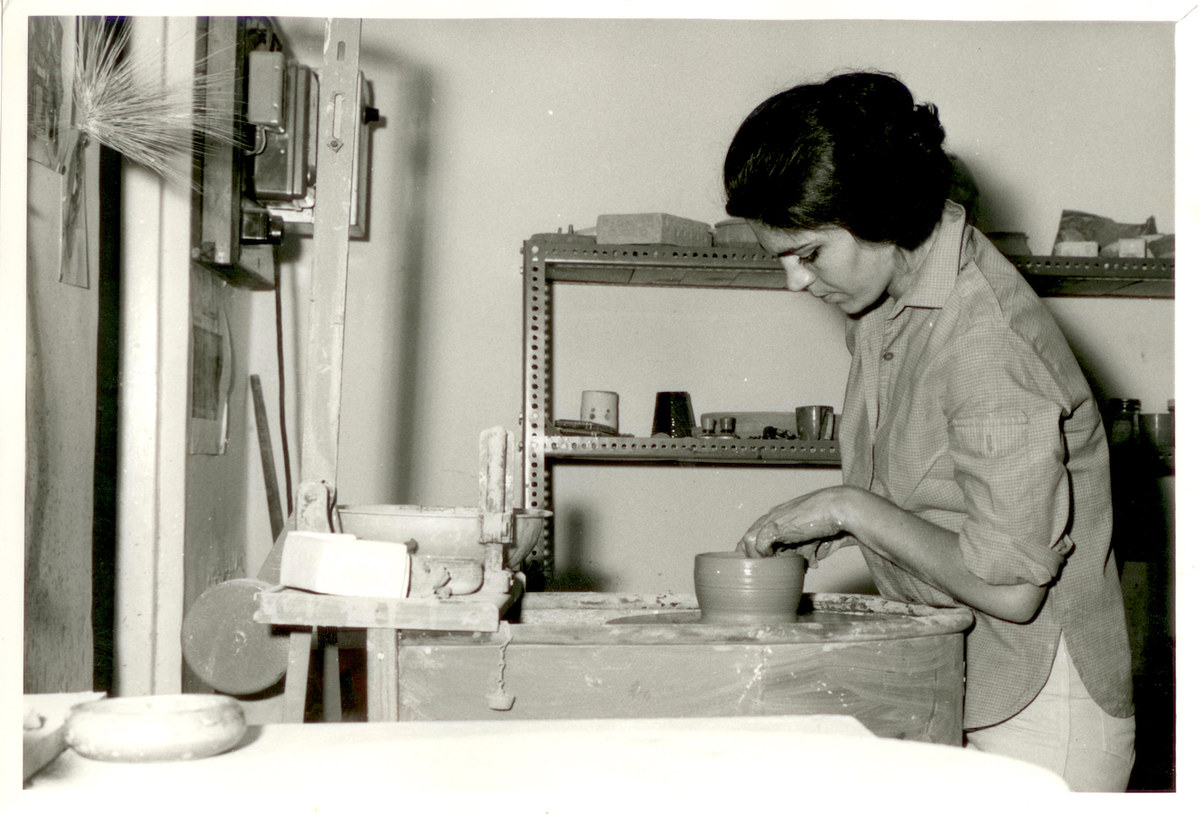
Nuha Al-Radi. (Image courtesy Abbad Al-Radi)
The Iraqi artist worked with a number of mediums, such as ceramics, painting and found objects. The daughter of an ambassador, Al-Radi lived a cosmopolitan life, residing in India, Lebanon and the UK. She was also a noted diarist, who wrote about daily life under the first Gulf War. In the politically turbulent early 2000s, she created “junk art,” making figurative wooden sculptures decorated with feathers and ornaments “in response to Western sanctions against Iraq,” according to her biography.
Mona Saudi (1945 – 2022)
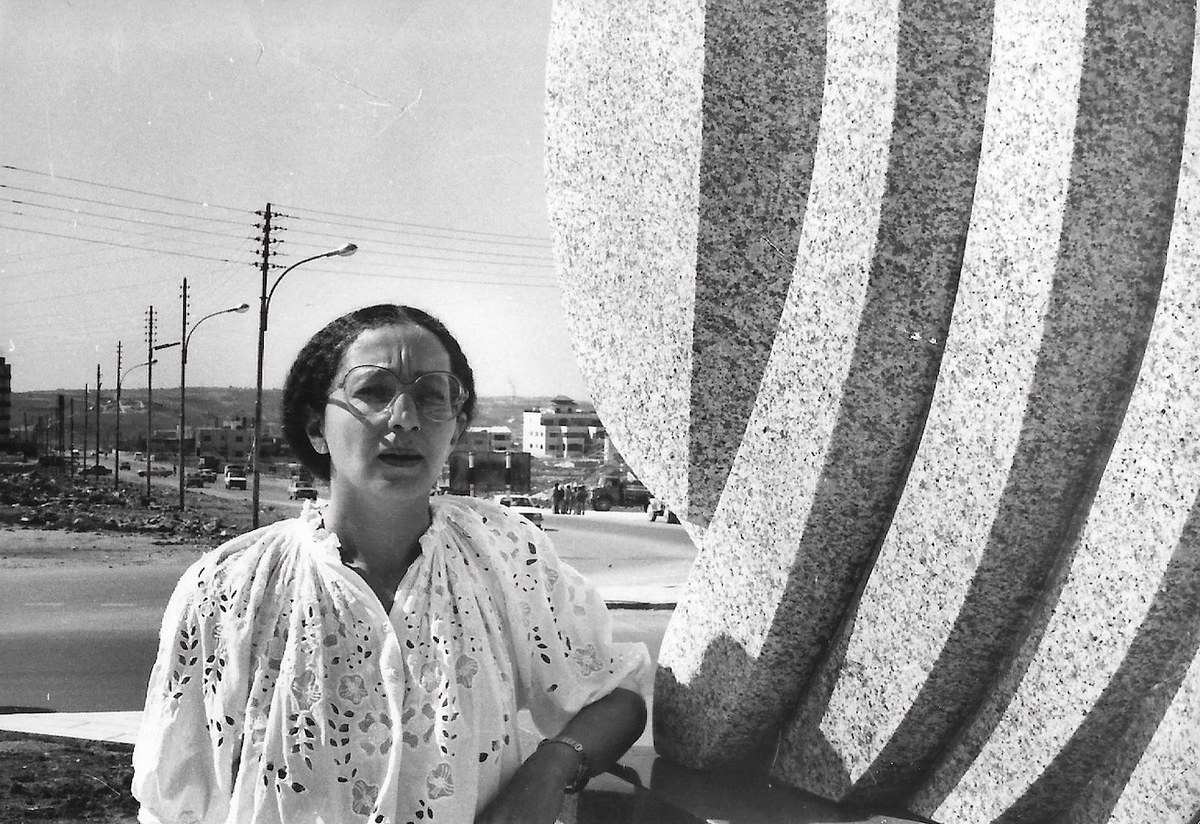
Mona Saudi. (Courtesy Dia Battal)
The Jordanian artist, famed for her abstract marble sculptures, led a remarkable life, marked by rebellion and creativity. When she was just 17, she took a taxi from Jordan to Beirut to pursue her artistic career. “She grew up in a conservative environment. Her father forbade her from going to university,” says Ayad.
In Beirut, she mingled with artists and poets, and, in 1964, staged an exhibition in a café. The funds she made financed her studies in Paris. Saudi was also an activist who designed posters for the Palestinian Liberation Organization.
Asim Abu Shakra (1961 – 1990)
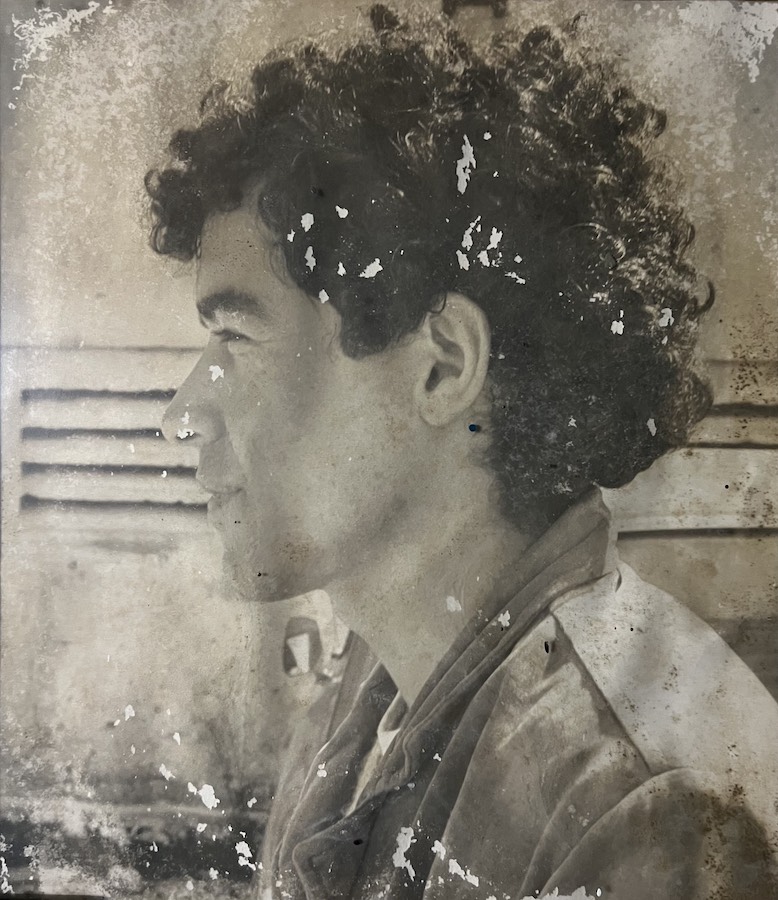
Asim Abu Shakra. (Image courtesy Karim Abu Shakra)
In his short life, the Palestinian artist used the cactus as a symbolic motif, representing resilience and toughness, in his emotionally-charged paintings.
“He was studying in Tel Aviv, Israel,” says Ayad. “Can you imagine what that did to him psychologically? He felt he had been uprooted and put in a box. He’s separated and alone.”
Abu Shakra died of cancer aged 29. “When the cactus became darker and darker in his paintings, that was when he was sicker and sicker,” Ayad says.


