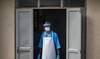

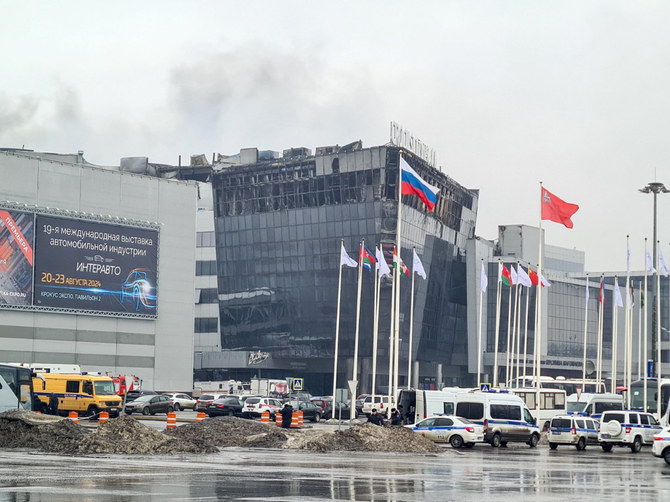


LONDON: Just hours after gunmen stormed a popular concert venue on the outskirts of the Russian capital Moscow on Friday night, killing 115, wounding scores and setting the building ablaze, the extremist group Daesh took to Telegram to claim responsibility.
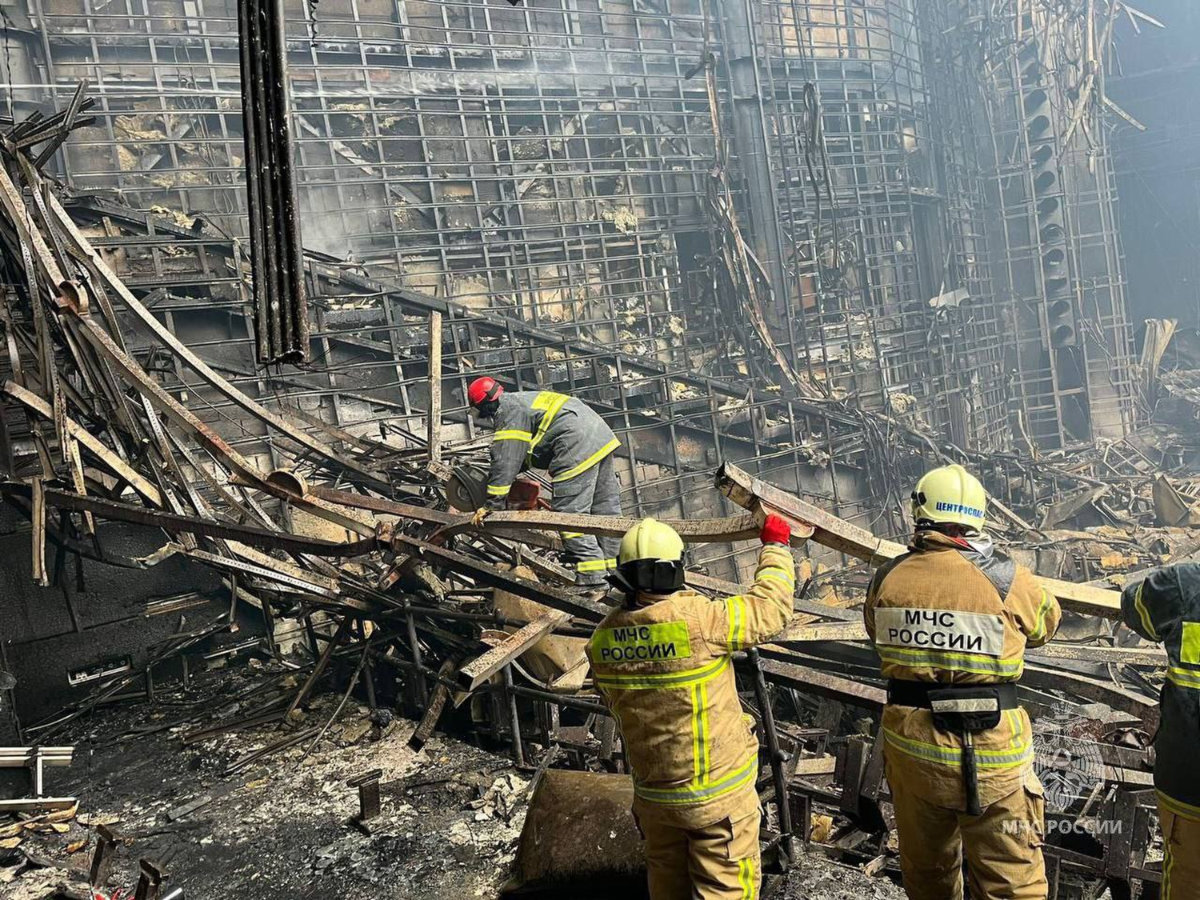
Russian firefighters clear rubble at the Crocus City Hall concert venue after a deadly attack outside Moscow on March 23, 2024. (Russian Emergency Services Handout via REUTERS)
The group said that the attack was executed by its Afghan branch, IS-K, or Islamic State in Khorasan Province — the same group that was behind the twin bombings in Iran in January that killed 94 people at the shrine of former Quds Force commander Qassem Soleimani.
“IS-K has a track record of attacking Russian targets,” Luke Coffey, a senior fellow at the Hudson Institute, told Arab News. “For example, IS-K was behind the attack against the Russian embassy in Kabul in September 2022. Also, IS-K is probably not happy with the deepening relations between Moscow and the Taliban.”
The bodies of victims killed in Daesh-claimed twin explosions that struck a crowd marking the anniversary of the 2020 killing of Guards general Qasem Soleimani, lie at a hospital in the southern Iranian city of Kerman on January 3, 2024. (ISNA/AFP)
Founded in 2015 by frustrated former members of the Pakistani Taliban who sought more violent methods to spread their extreme interpretation of Islam, IS-K has primarily operated in the ungoverned spaces of rural Afghanistan.
From this initial obscurity, IS-K shot to global attention in August 2021 amid the chaos of the Taliban’s return to power when its members bombed Hamid Karzai International Airport in Kabul, killing more than 170 people, among them 13 US military personnel.
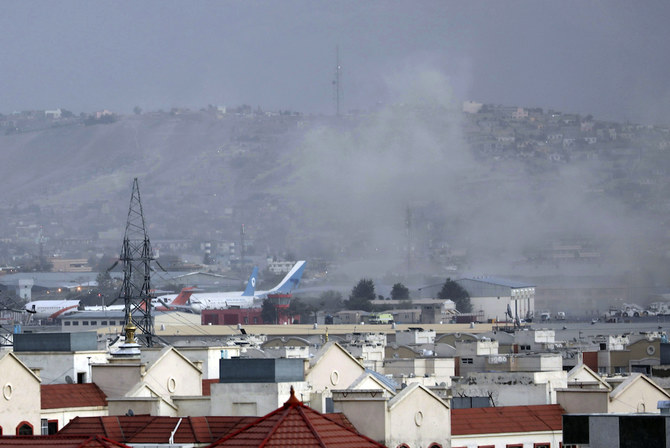
Smoke rises from a deadly explosion outside the airport in Kabul, Afghanistan, on Aug. 26, 2021. (AP/File)
US operations had reduced IS-K’s numbers significantly, but after the Western withdrawal from Afghanistan in 2021 the group renewed and grew. The Taliban is now regularly engaged in combat against IS-K, as it threatens its ability to govern.
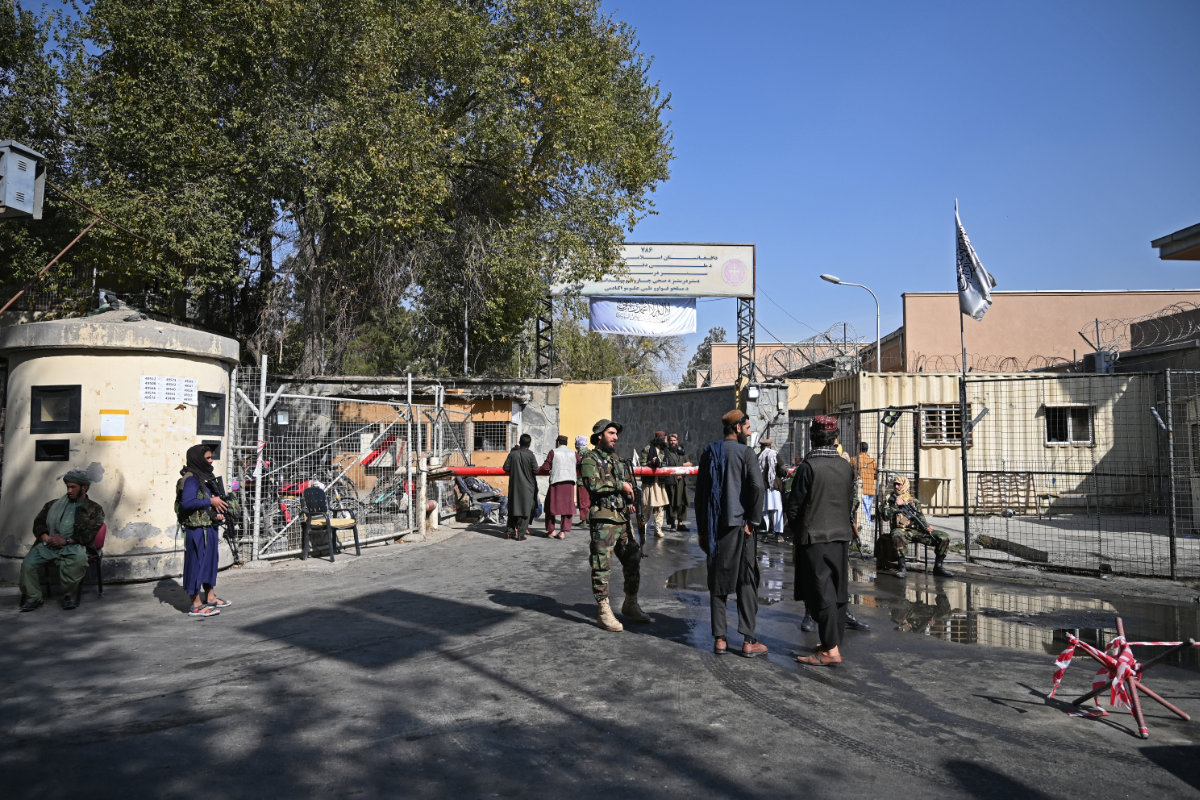
Taliban fighters stand guard at an entrance gate of the Sardar Mohammad Dawood Khan military hospital in Kabul on November 3, 2021, a day after an attack claimed by the Taliban's hardline rivals the Islamic State-Khorasan (IS-K), in which at least 19 people were killed. (AFP/File)
Daesh and its affiliates have previously claimed responsibility for random attacks that they had no direct hand in, leading to some initial skepticism about their role in the Moscow attack. However, US intelligence has since confirmed the authenticity of the claim.
In fact, the US issued a warning to its citizens in Russia as early as March 7, highlighting “reports that extremists have imminent plans to target large gatherings in Moscow, to include concerts.”
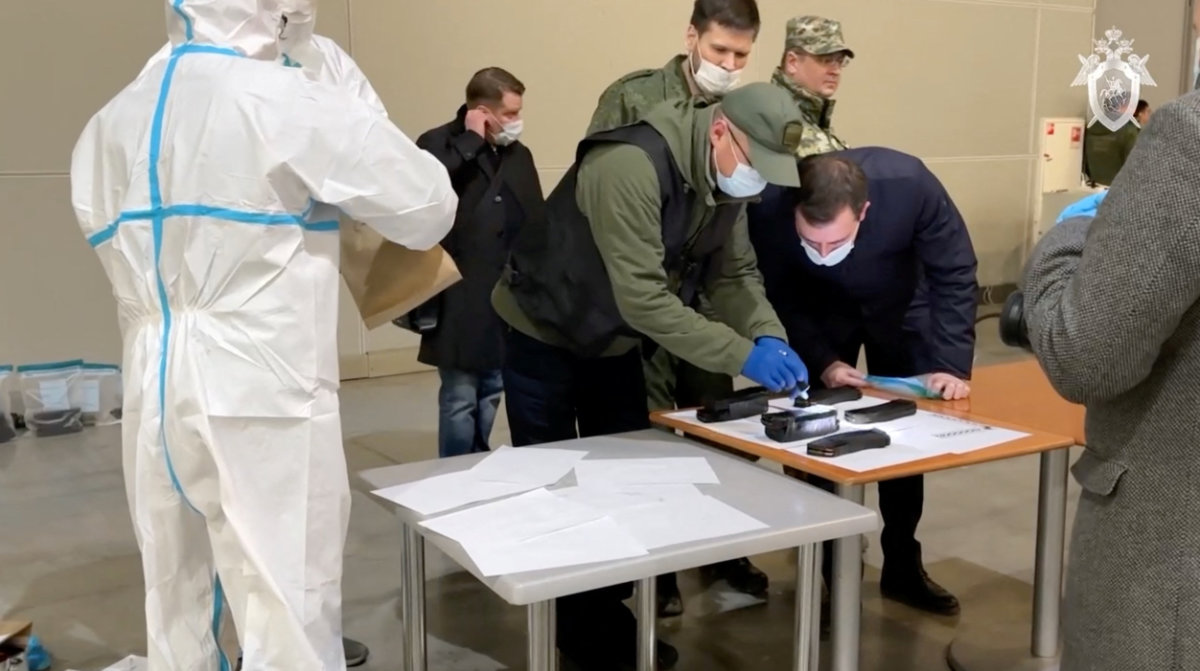
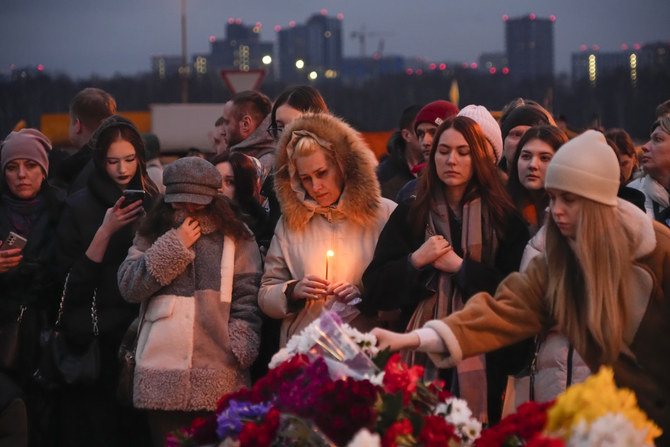
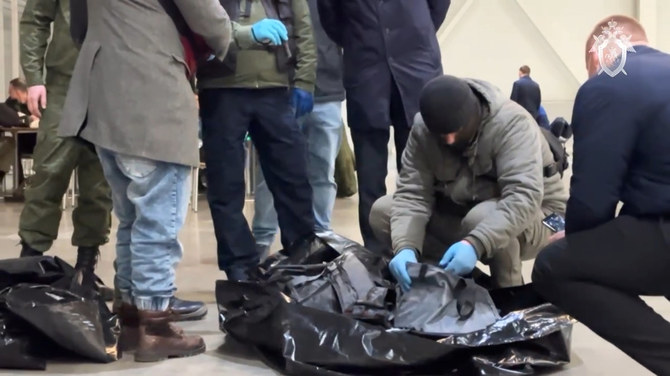
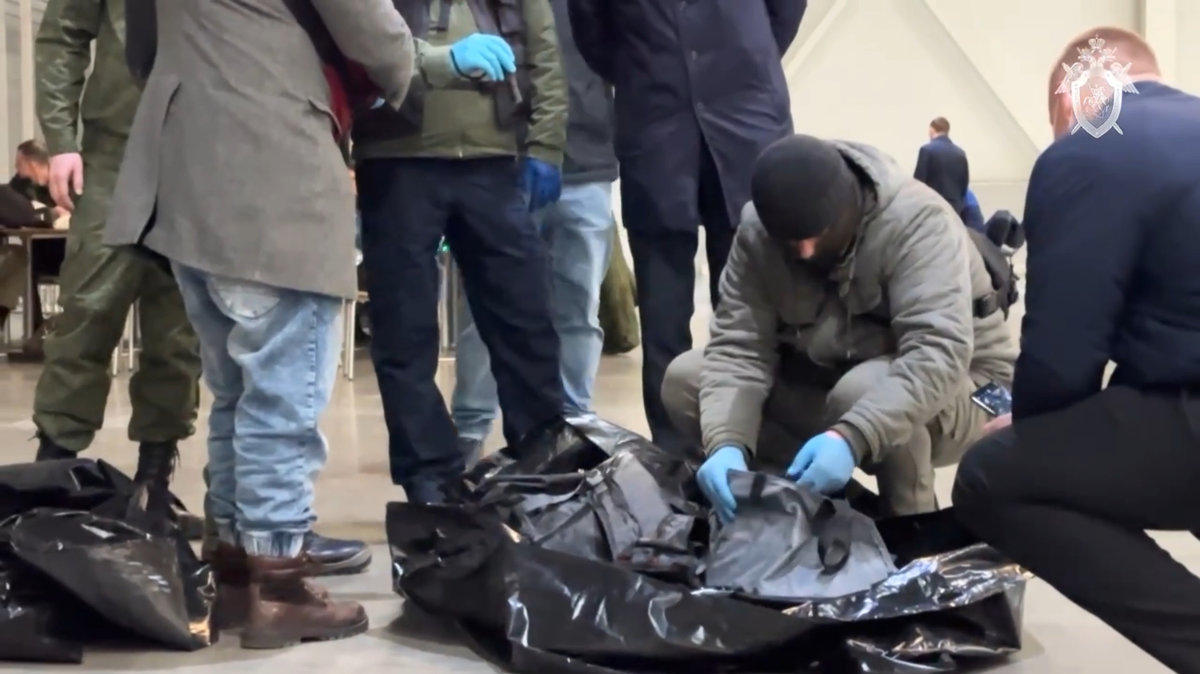
A screenshot taken from a handout video released March 23, 2024, shows Russian crime investigators working at the scene of the Crocus City Hall attack in Krasnogorsk, Moscow region. (Handout via REUTERS)
On the same day that the US embassy in Moscow issued this warning, Commander of the US Central Command in the Middle East — CENTCOM — Gen. Michael Kurilla, told a briefing that the risk of attacks emanating from Afghanistan was increasing.
“I assess Daesh-Khorasan retains the capability and will to attack US and Western interests abroad in as little as six months and with little to no warning,” he said, according to a statement issued by the US Department of Defense.
He added: “Daesh is now strong not only in Afghanistan but outside of it as well. It now possesses the capabilities to carry out attacks in Europe and Asia, with its fighters positioned along the border with Tajikistan.”
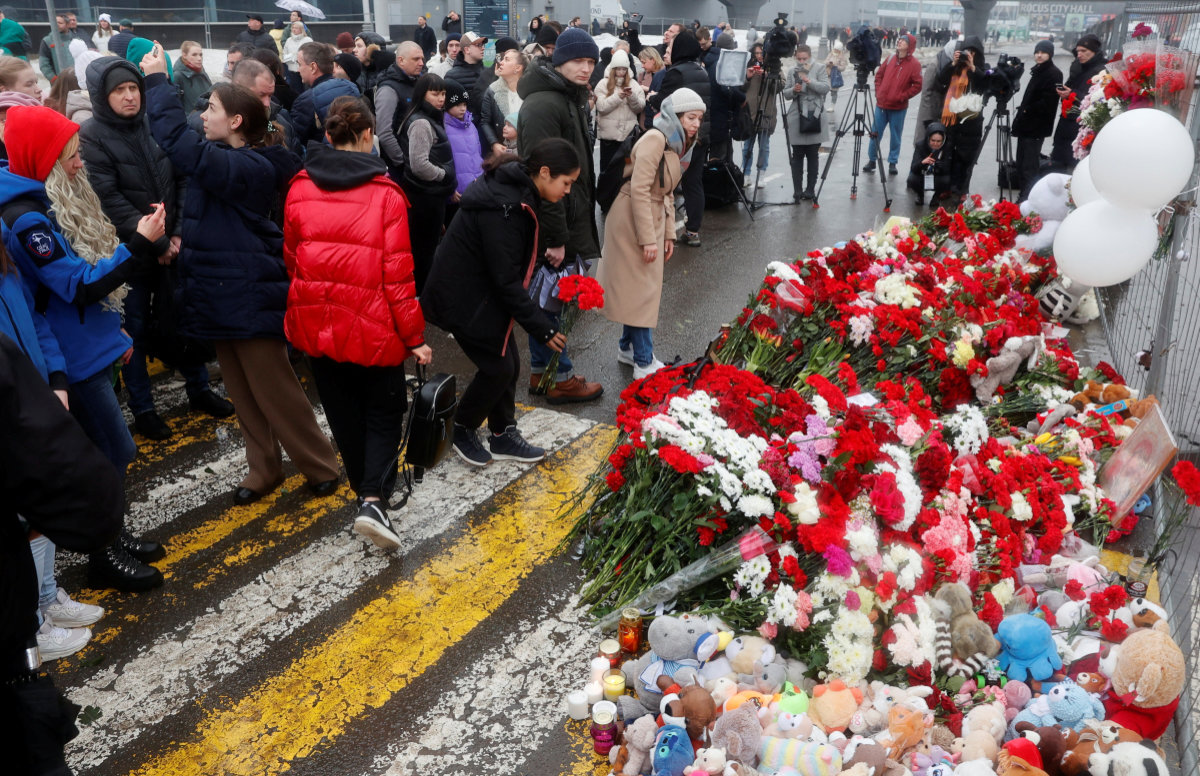
Caption
With Russia’s security apparatus and defense infrastructure focused primarily on its war with Ukraine, extremist groups such as Daesh appear to have sensed an opportunity to stage a comeback and plot audacious attacks while governments were distracted.
“There is no doubt that Daesh is taking advantage of Russia’s distractions in Ukraine,” Coffey said. “More than two years into Russia’s invasion, the war in Ukraine probably now consumes most of the attention and resources of Russia’s intelligence agencies, armed forces, security services and even law enforcement.
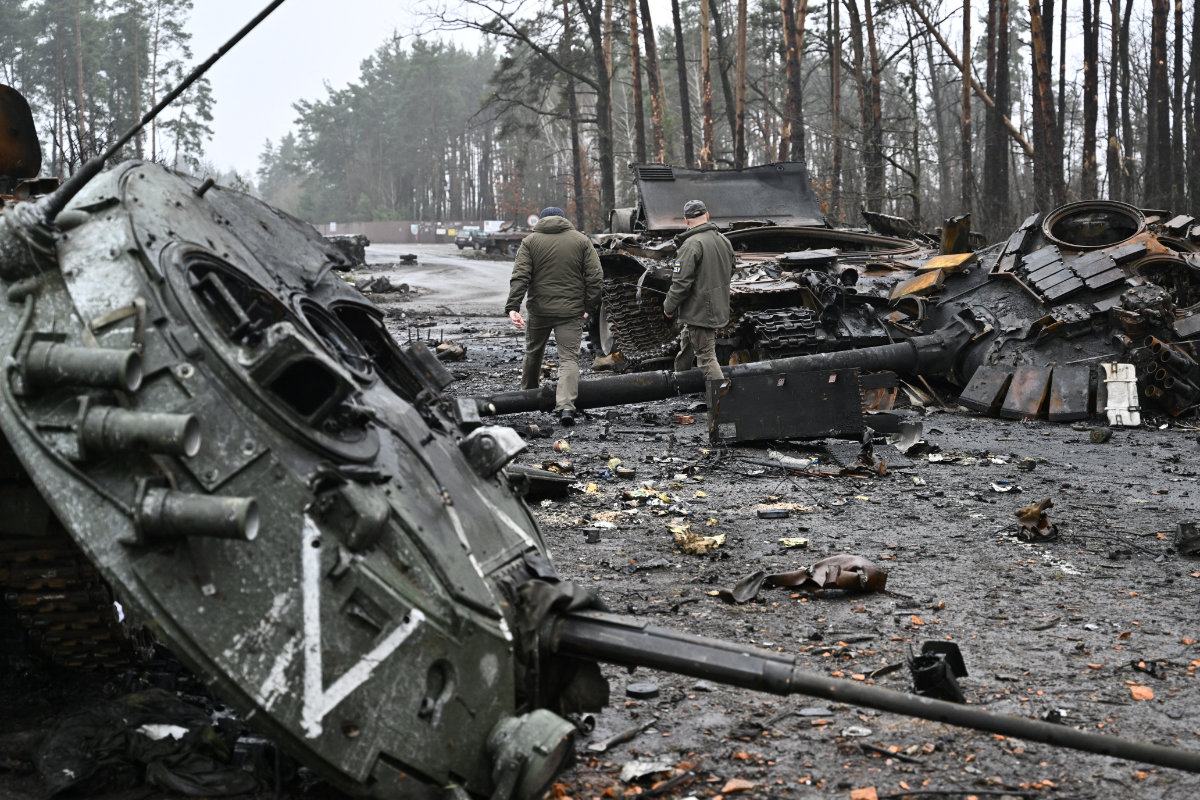
Ukrainian servicemen walk next to destroyed Russian tanks and armored personnel carriers in Dmytrivka village, west of Kyiv, on April 2, 2022. Daesh militants seem to have taken advantage as Russia gets distracted with its disastrous war on Ukraine. (AFP/File)
“Daesh probably saw an opportunity to strike while Russia is weakened. In the past, Daesh publications such as Al-Naba have contained articles about the ‘crusader against crusader war’ taking place between Russia and Ukraine, even suggesting that such a war presents opportunities for them.”
MAJOR TERROR STRIKES IN RUSSIA
• October 2002 40 Chechen militants took 912 hostages in Moscow’s Dubrovka Theater.
• July 2003 Two Chechen separatists committed suicide attacks at a rock concert in Moscow, killing 15 people.
• February 2004 A suicide bomber killed 41 people in a Moscow subway during rush hour.
• September 2004 30 Chechen militants seized a school in Beslan, North Ossetia, killing 330 people, half of whom were children.
• March 2010 Two suicide bombers from the Caucasus Emirate group killed 40 people in a Moscow subway.
• January 2011 A suicide bomber killed 37 people in the arrivals hall of Moscow Domodedovo airport.
• October 2015 Daesh claimed responsibility for blowing up a Russian Metrojet flight over Egypt, killing all 224 passengers.
• April 2017 A bomb attack on a subway train in St. Petersburg killed 16 people.
• March 2024 ISIS-K, the Afghan branch of Daesh, attacked a Moscow concert hall, killing at least 115 people.
Hani Nasira, a political analyst and expert in terrorism and extremist organizations, echoed Coffey’s view that the conflict between Russia and Ukraine has created fertile ground for surprise attacks on a distracted region.
“Since the conflict in Ukraine started, IS-K has increased the flow of its fighters who have joined the war by going from their initial center of operations in Syria toward their countries of origin to relaunch operations in Northern Caucasus and Central Asian countries, such as Uzbekistan and Tajikistan,” Nasira told Arab News.
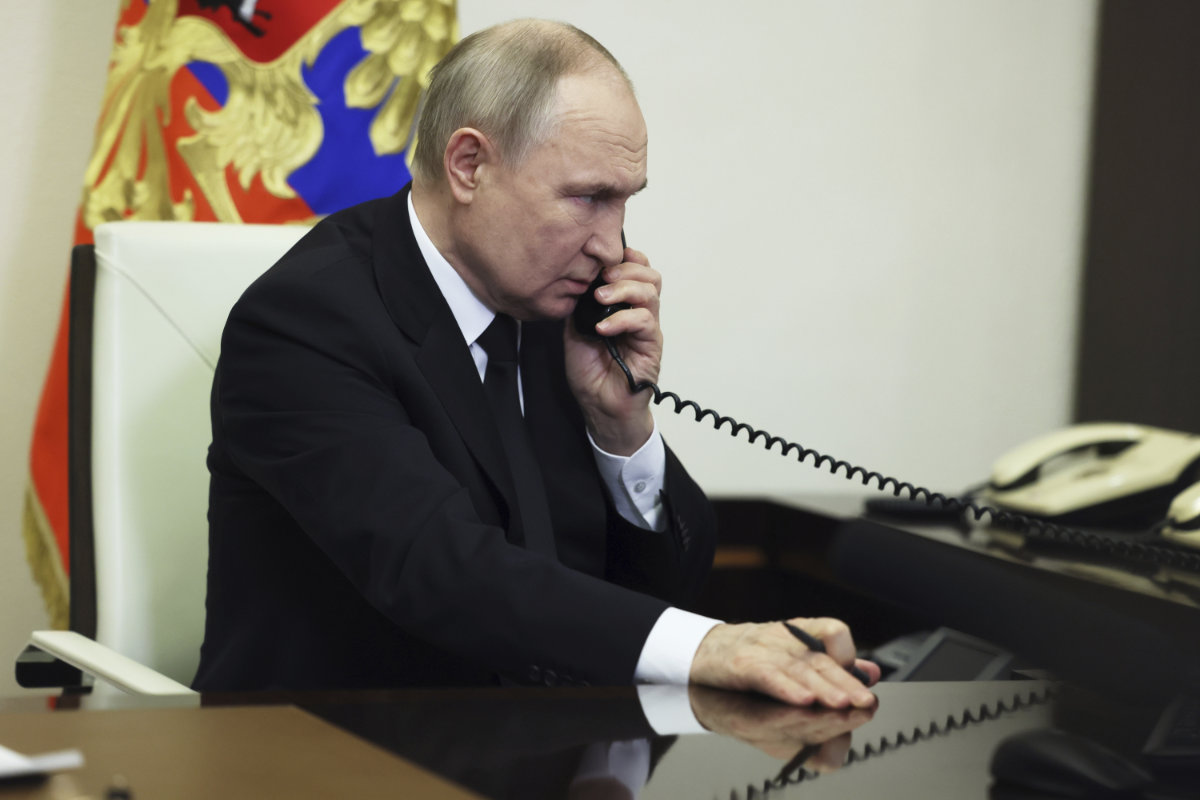
Russian President Vladimir Putin on Saturday vowed to punish those behind the Moscow concert hall that killed more than 130, saying four gunmen trying to flee to Ukraine had been arrested. (Sputnik, Kremlin Pool Photo via AP)
“The war in Ukraine constituted the starting point for the recurrence of what happened in Afghanistan, with foreign fighters from around the world joining the war alongside Ukraine against Russia, especially since the war, for the Western camp, has turned into a war of attrition with which it aims to inflict maximum losses on Russia or repeat the phenomenon of ‘returnees’ after the war is over,” he said.
“Some of the extremists of Chechen descent are fighting Russia in Ukraine to remove the humiliating stain left by the men of Chechen President Ramzan Kadyrov, who support Russia and were described by Daesh’s members as ‘traitors and a disgrace to the Chechen nation’ because no true Chechen would fight in the ranks of Russian President Vladimir Putin.”
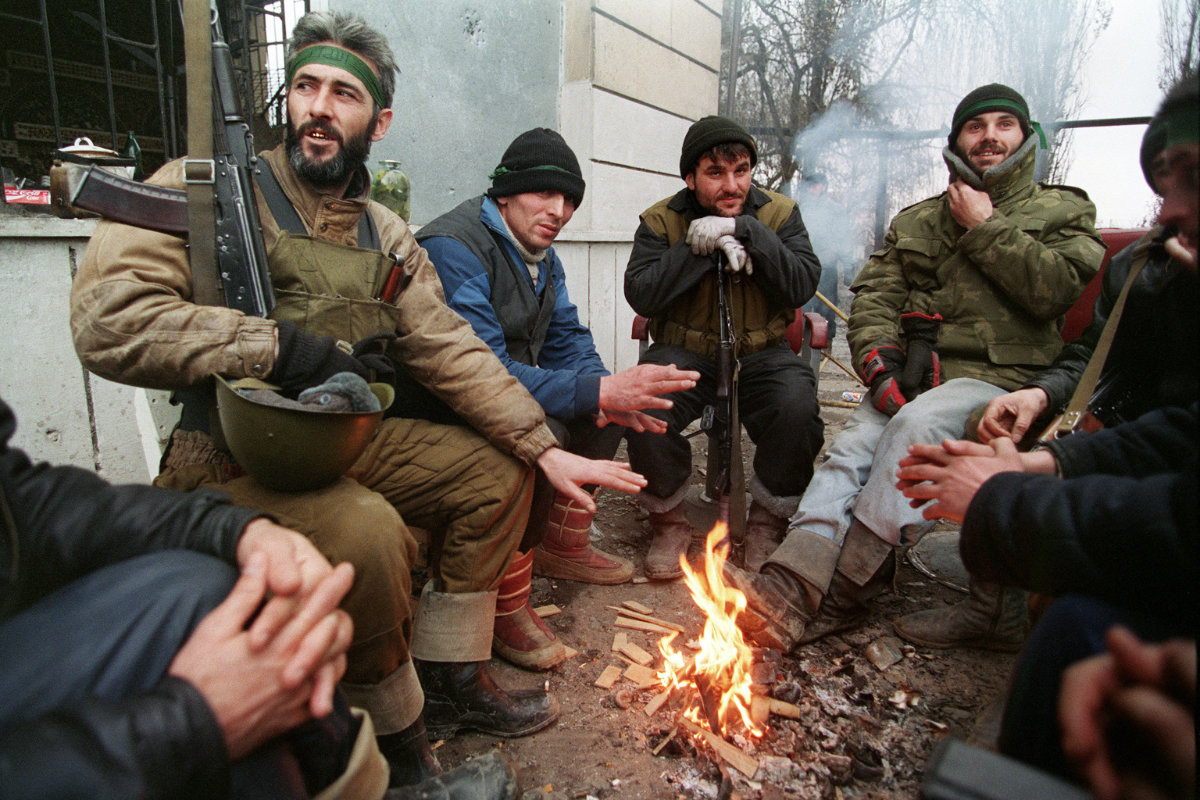
In this photo taken on January 09, 1995, Chechen fighters rest beside a fire during a break in the fighting in central Grozny, capital of Chechnya. After years of war, Russian government forces eventually overcame resistance. (AFP/File)
Russia also seems to be of particular interest to IS-K because, as it claims, the Russian military has a record of killing Muslims in Chechnya, Syria and Afghanistan.
Russia has been targeted by extremist groups numerous times over the past two decades — the Nord Ost theater siege in 2002 and the Beslan massacre in 2004 being the most notorious attacks.
For as long as the focus of its defense apparatus is dominated by the war in Ukraine, Russia may struggle to fend off further attacks by increasingly audacious extremist groups emerging from its restive south.