KARACHI: The United States on Friday expressed its interest in investing in renewable energy projects in Pakistan, only two days after a senior official in Washington said his country wanted to prevent the construction of a gas pipeline originating from Iran to the Pakistani port city of Gwadar.
Pakistan and Iran agreed to build the gas pipeline in 2009, but the project has been stalled due to American hostility to it along with international sanctions targeting the administration in Tehran.
However, Pakistan finds itself in a precarious situation since the bilateral agreement includes stipulations that can lead to financial penalties if either party fails to carry out the project.
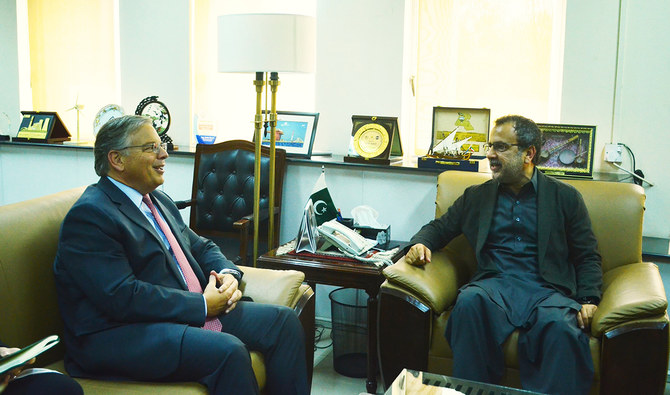
US Ambassador Donald Blome held a meeting with Pakistan’s power minister Sardar Awais Ahmad Khan Leghari to discuss clean energy options for the country.
“The US Ambassador expressed interest of US-based Companies and DFC [US International Development Finance Corporation] in investing in renewable energy projects, aligning with Pakistan’s goal to double the share of renewables in its energy mix over the next 8-10 years under Sustainable Development Goal 7,” said a statement issued by the power ministry after the meeting.
“In addition, the US Ambassador highlighted the importance of upcoming Economic Dialogue in USA and requested a strong presence from Pakistan side,” it added.
The dialogue provides a structured forum where government officials, business leaders and experts from the United States and a partner country meet regularly to discuss economic issues, trade, investment and other areas of economic cooperation.
The specific nature and frequency of such dialogues can vary depending on the countries involved and the agreements they have in place.
Ambassador Blome’s interaction with Pakistan’s power minister follows US Assistant Secretary of State Donald Lu’s Congressional testimony wherein he discussed the Iran-Pakistan pipeline and said the US administration wanted to have a conversation with the government in Islamabad over it.
“What are Pakistan’s other [energy] alternatives,” he said during the hearing. “How can we compete for that business? Where can they find other non-Iranian sources of natural gas and how can we help Pakistan?”
He pointed out that Pakistan was “very interested” in making a transition to clean energy while suggesting the US could constructively play a role over there.
The Pakistani minister mentioned his country’s energy efficiency initiatives to reduce electricity consumption and promote energy conservation in the country.
He also requested for US assistance in unlocking the Green Climate Fund, established under the United Nations framework in 2010, to help Pakistan equip itself for the impending environmental challenges.


![]()

US shows interest in investing in Pakistan renewable energy with eye to counter Iran pipeline
Short Url
https://arab.news/9ezt9
US shows interest in investing in Pakistan renewable energy with eye to counter Iran pipeline
- Pakistan’s power minister seeks US assistance in unlocking Green Climate Fund to prepare for environmental challenges
- The American envoy calls for a strong Pakistani presence at the upcoming economic dialogue over trade, investment in US
Latest updates


© 2026 SAUDI RESEARCH & PUBLISHING COMPANY, All Rights Reserved And subject to Terms of Use Agreement.