BANGKOK: A dramatic story of survival and rescue off the western coast of Indonesia’s Aceh province has put the spotlight again on the plight of ethnic Rohingya Muslim refugees from Myanmar who make extremely dangerous voyages across the Indian Ocean to seek better lives.
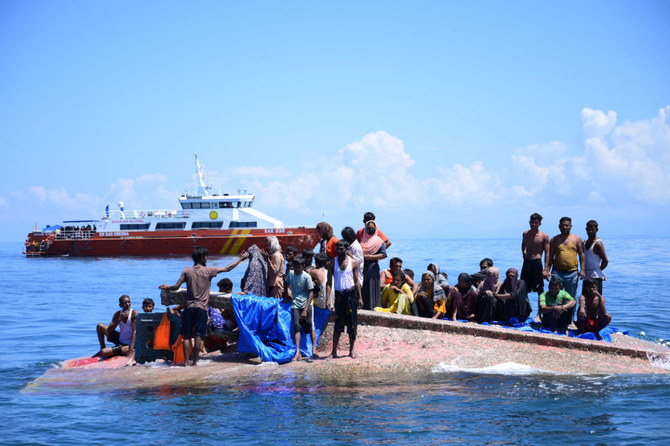
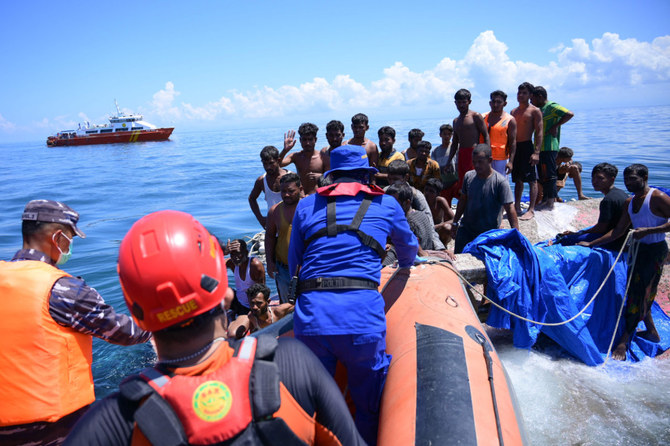
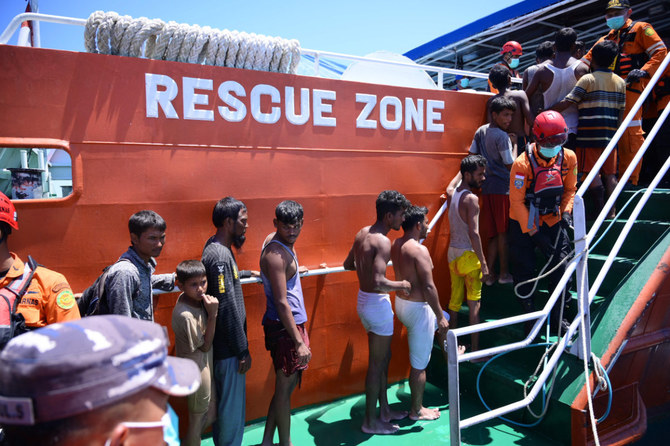
Desperate survivors were pulled to safety from their capsized boat by local fishermen on March 21, 2024, after a yet-unknown number perished.
For Rohingya refugees living in squalid refugee camps in Bangladesh, escaping across the seas might seem like a good option --- but it’s often a deadly one. The UN estimates that as many as one in eight people die or disappear in the attempt.
The UN refugee agency said in January that of 4,500 Rohingyas embarking on sea journeys last year in Southeast Asian waters, 569 were reported dead or missing.
Roots of displacement
Members of the Muslim Rohingya ethnic minority have long been considered by Myanmar’s Buddhist majority to be illegal settlers from Bangladesh, even though many of their families lived in Myanmar for generations. Aside from social discrimination, nearly all have been denied citizenship since 1982, effectively rendering them stateless, and have been denied freedom of movement and other basic rights.
In August 2017, Myanmar’s military launched what it called a clearance campaign in northern Rakhine State in response to attacks by a shadowy Rohingya insurgent group. The counterinsurgency action forced about 740,000 Rohingya to flee to neighboring Bangladesh and led to accusations that security forces committed mass rapes, killings and burned thousands of homes. International courts are now considering whether the campaign amounted to genocide.
There are now about 1 million Rohingya residing in refugee camps in Bangladesh, including those who fled previous waves of repression.
Most live in large open camps in Cox’s Bazar district, close to the border with Myanmar. There is inadequate water, sanitation, and health care in the overcrowded camps, which are susceptible to fire, flood and outbreaks of disease. There are few opportunities for meaningful work and violent criminal gangs operate unhindered,.
A second major camp set up on the remote island of Bhasan Char in the Bay of Bengal houses about 30,000 refugees. It was supposed to help ease the overcrowding at Cox’s Bazar, but critics say its housing resembles prison blocks, heightening an already dispiriting dead-end atmosphere, and it is vulnerable to flooding.
An estimated 600,000 Rohingya still live in Myanmar, most in camps for internally displaced people or tightly restricted ghettos.
Escape by sea
Social and economic pressures convince some Rohingya living in camps in Myanmar as well as Bangladesh to embark on the dangerous sea voyage to Malaysia or Indonesia, which have Muslim majority populations.
The suffer from a lack of economic opportunity, as well as unhealthy physical and psychological conditions in the camps. Because the majority of Rohingya refugees are stateless, they have no legal hope of resettlement.
The modest job opportunities they believe await them elsewhere are a strong attraction, and in some cases they can get help from relatives who have already started new lives abroad.
But they are often exploited by human traffickers who charge extortionate amounts — anywhere from a few hundred to a few thousand dollars — to make the crossing on ramshackle boats with little concern for safety. In some cases, the traffickers deliver the refugees to confederates who trap them into jobs of virtual slavery.
The voyages can take weeks or even months on vessels without adequate supplies of food, water, and safety equipment.
Some never complete the journey. “In a single deadly incident in November 2023, it is feared that some 200 Rohingya lost their lives when their boat was reported to have sunk in the Andaman Sea,” the UN High Commissioner for Refugees said in January.
Destinations
If they are not turned back or lost, the Rohingya refugees usually end up in Thailand, Malaysia or Indonesia.
Thailand tries to discourage refugee landings by offering food, fuel and repairs to send the boats on their way, though if the refugees make landfall they are detained.
Malaysia is relatively more welcoming, allowing thousands of Rohingya refugees to disembark over the years. Like Thailand, it is a middle income country and needs low cost labor. Thailand, however, has a bottomless supply of low cost workers from immediate neighbors such as Myanmar and Cambodia, which Malaysia does not, so in Malaysia the Rohingya arrivals can help fill that gap.
Indonesia has for many years welcomed Rohingya refugees, providing them with temporary accommodation and allowing them to register for resettlement in third countries, a process that can take years
In the past year, however, there have been signs of resentment in Aceh, where several hundred refugees have occasionally arrived in a single day, sparking protests about them taking advantage of local resources and other complaints. The negative sentiment has been egged on by apparently coordinated online hate speech campaigns whose origins are unclear.
Funding plea
While crises elsewhere around the world garner more attention, the UN continues to seek funds to ease the burdens of the Rohingya refugees and their hosts in Bangladesh.
The UN last week launched an appeal to member nations to fund a $852.4 million plan to provide “food, shelter, health care, access to drinkable water, protection services, education and livelihood opportunities and skills development” to the Rohingya refugees and the communities where their camps are.


![]()
![]()
![]()

Indonesia’s rescue of Rohingya refugees at sea is a reminder of an ordeal that began in Myanmar
Short Url
https://arab.news/yvpyf
Indonesia’s rescue of Rohingya refugees at sea is a reminder of an ordeal that began in Myanmar


Latest updates





© 2026 SAUDI RESEARCH & PUBLISHING COMPANY, All Rights Reserved And subject to Terms of Use Agreement.