

For foreign students in Islamabad, Ramadan comes with longing for families and food back home

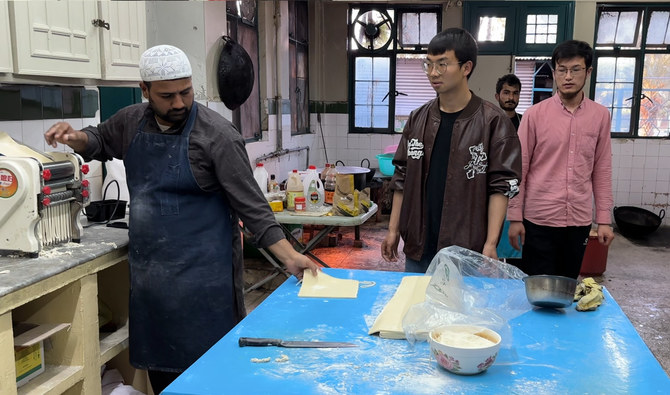
Foreign students prepare food at a private hostel in Islamabad, Pakistan on March 19, 2024. (AN Photo)
Short Url
Updated 21 March 2024
Follow

For foreign students in Islamabad, Ramadan comes with longing for families and food back home

  • Around 2,000 foreign students from 40 countries enrolled at International Islamic University
  • University makes special arrangements for sehri and iftar meals for international students

ISLAMABAD: Thousands of miles away from home, foreign students enrolled at Pakistan’s International Islamic University Islamabad (IIUI) said the holy month of Ramadan brought with it a yearning to be with friends and family members back home, and of course, a longing to relish their local food. 

Around 2,000 foreign students from some 40 countries, from the Middle East to Africa, are enrolled in various courses at the IIUI, as per the university’s management, which makes special arrangements for the pre-dawn and evening sehri and iftar meals for international students. The meals can be purchased daily at subsidized rates throughout Ramadan. 

Around 700 male foreign students live at the university’s hostels and come from various countries such as Saudi Arabia, UAE, Thailand, China, Egypt, Jordan, Yemen, Somalia, Nigeria, Indonesia, and Afghanistan. Others are day scholars who live off campus, often with their families, in rental units.
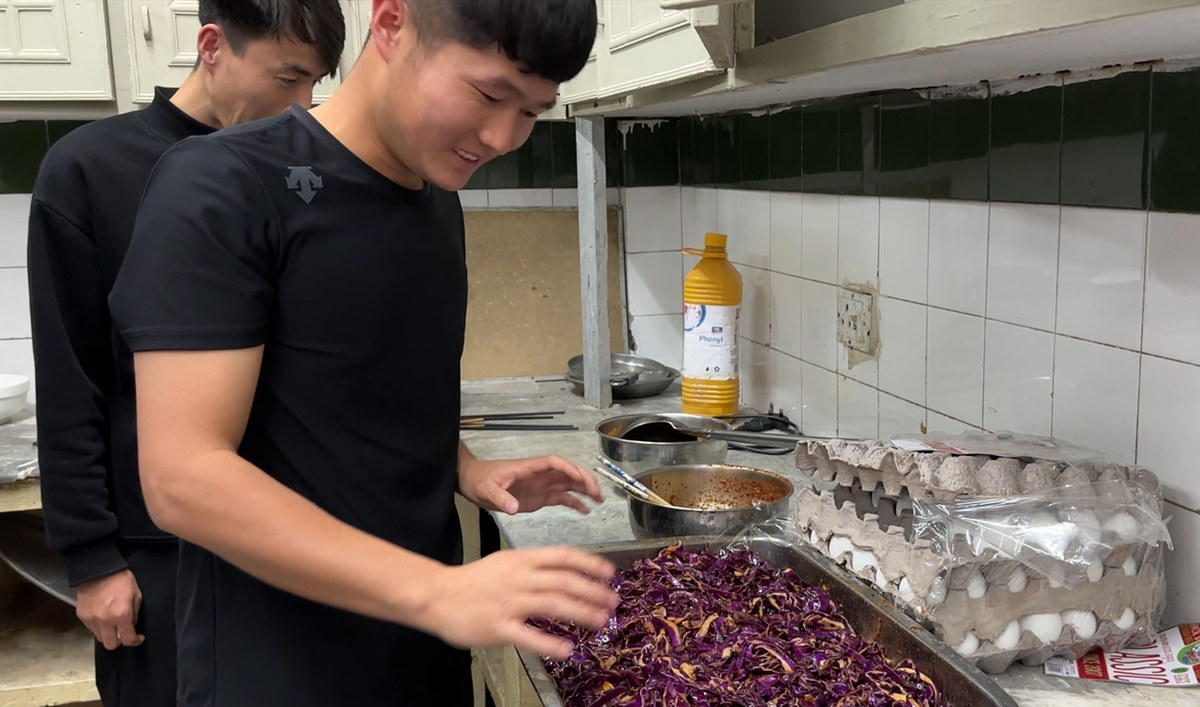


Foreign students prepare food at a private hostel in Islamabad, Pakistan on March 19, 2024. (AN Photo)

Foreign students often pooled money for iftar and sehri meals, Dr. Abdur Rehman, a visiting faculty member at IIUI and a representative of international students, told Arab News, saying they enjoyed breaking their fasts in the expansive, lush green lawns of the campus during evenings. 

“In Ramadan, every foreign student, they miss their families first of all and their culture, their food and their friends,” Rehman, who hails from Uzbekistan andhas lived in Pakistan for the past 28 years, said. 

Food items in the IIUI iftar spread include Rooh Afza, a popular rose-flavored drink, fritters, fried pastries known as samosas, and fruit and chana salads. But the special ingredient was eating together, which made international students feel at home, many told Arab News.

“We don’t feel too much that we are in a foreign country, we feel that we are in our own country,” Rehman said. 

Abdulahi Iman Hassen, a 21-year-old student from Ethiopia who studies economics, echoed the sentiment. 

“We live as a family and there are a lot of foreign students living here at IIUI,” Hassen told Arab News. “Mostly the foreign students eat their iftar as a common [activity], it feels like home.”

Haseen said he enjoyed traditional Pakistani foods such as biryani, minced meat, vegetables, aloo gosht, a meat and potato curry, and lentils.

But for Bahar Ahmad, an Afghan student of environmental sciences at the university, Ramadan brought with it the longing for Kabuli Pulao, a traditional Afghan dish made from steamed rice, spices, raisins and tender chunks of lamb or beef. 

“Afghanistan has a first-class food culture” Ahmad said. “Sometimes we miss a little bit of Kabuli Pulao in Ramadan.”


At UNSC, Pakistan warns competition for critical minerals could fuel global conflict

Updated 6 sec ago
Follow

At UNSC, Pakistan warns competition for critical minerals could fuel global conflict

  • The demand for critical minerals has surged worldwide due to rapid expansion of electric vehicles, advanced electronics and clean energy technologies
  • Pakistan’s representative says all partnerships in critical minerals sector must be ‘cooperative and not exploitative’ and respect national ownership

ISLAMABAD: Ambassador Asim Iftikhar Ahmad, Pakistan’s permanent representative to the United Nations (UN), has warned that intensifying global competition over critical minerals could become a new driver of global conflict, urging stronger international cooperation and equitable access to resources vital for the world’s energy transition.

The warning comes as demand for critical minerals and rare earth elements surges worldwide due to the rapid expansion of electric vehicles, advanced electronics and clean energy technologies, with governments and companies increasingly competing to secure supply chains while raising concerns that this may lead to geopolitical rivalries in the coming years.

Speaking at a Security Council briefing on ‘Energy, Critical Minerals, and Security,’ Ahmad said experience showed that the risks of instability increased where mineral wealth intersected with weak governance, entrenched poverty and external interference.

“Access to affordable, reliable and sustainable energy is essential for development, stability and prosperity. The global transition toward renewable energy, electric mobility, battery storage and digital infrastructure has sharply increased the demand for critical minerals,” he said.

“This upsurge has generated new geopolitical and geo-economic pressures. If not managed responsibly, competition over natural resources can affect supply chains, aggravate tensions, undermine sovereignty and contribute to instability.”

In several conflict-affected settings, he noted, illicit extraction, trafficking networks and opaque financial flows have fueled armed conflict and violence, weakened state institutions and deprived populations of legitimate revenues.

“The scramble for natural resources and its linkage to conflict and instability is therefore not new,” Ahmad told UNSC members at the briefing. “Pakistan believes that natural resources must serve as instruments of economic development and shared prosperity, and not coercion or conflict.”

He urged the world to reaffirm the right of peoples to permanent sovereignty over their natural resources, saying all partnerships in the critical minerals sector must be cooperative and not exploitative, respect national ownership, ensure transparent contractual arrangements and align with host countries’ development strategies.

“In order to prevent the exploitation of mineral-producing countries and regions, particularly in fragile and conflict-affected settings, support their capacity-building for strengthening domestic regulatory institutions, combating illicit financial flows, ensuring environmental safeguards, and promoting equitable benefit-sharing with local communities,” he asked member states.

“Promote equitable participation in global value chains. Developing countries must be enabled to move beyond extraction toward processing, refining and downstream manufacturing. Technology transfer, skills development and responsible investment are essential to avoid perpetuating structural imbalances.”