

Karachi mosque keeps decades-old tradition alive with grand iftar

1 / 3
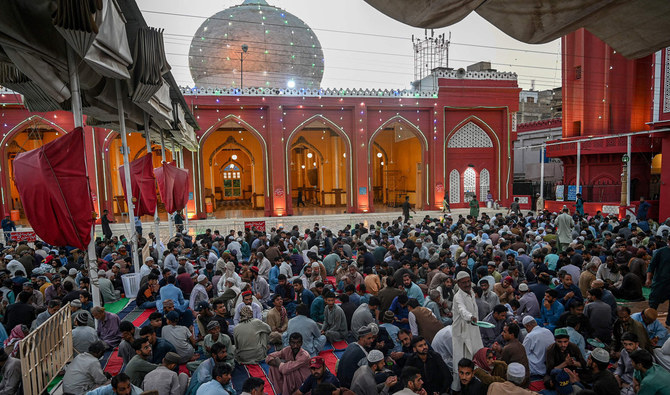
People gather to break fast together at New Memon Mosque in Karachi during Ramadan. (AFP)
2 / 3
People gather for iftar at the Memon Masjid in Karachi. (AFP)
3 / 3
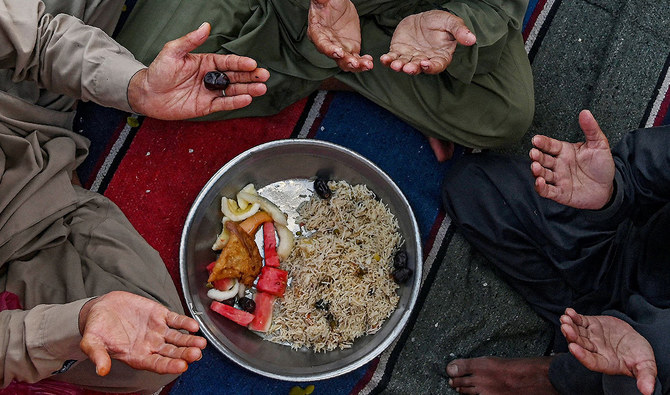
People pray before breaking their fast at Memon Masjid in Karachi. (AFP)
Short Url
Updated 21 March 2024
Follow

Karachi mosque keeps decades-old tradition alive with grand iftar

  • The meal is arranged by a group of volunteers for almost 3,000 people daily

KARACHI, Pakistan: The tradition began 76 years ago.

Since then, every year during the holy month of Ramadan, hundreds gather at sunset for a grand communal iftar dinner at the New Memon Mosque in Karachi. The meal is arranged by a group of volunteers for almost 3,000 people daily.

Riaz Ali Qadri, who is part of the management team that arranges the iftar, told Arab News the feast was attended by local shopkeepers, customers, laborers and other passers-by.


People gather to break fast together at New Memon Mosque in Karachi during Ramadan. (AFP)

The tradition was started decades ago by worshippers at the mosque, which is situated in the Bolton Market area, now a popular shopping area, he said.

“Some people, who came here to offer their salat (prayers), conceived the idea of collective iftar soon after independence (1947). They started offering food to others as well,” Qadri said,

The gathering had grown over time, and more than 450 platters were now prepared and served to people every day, he added.
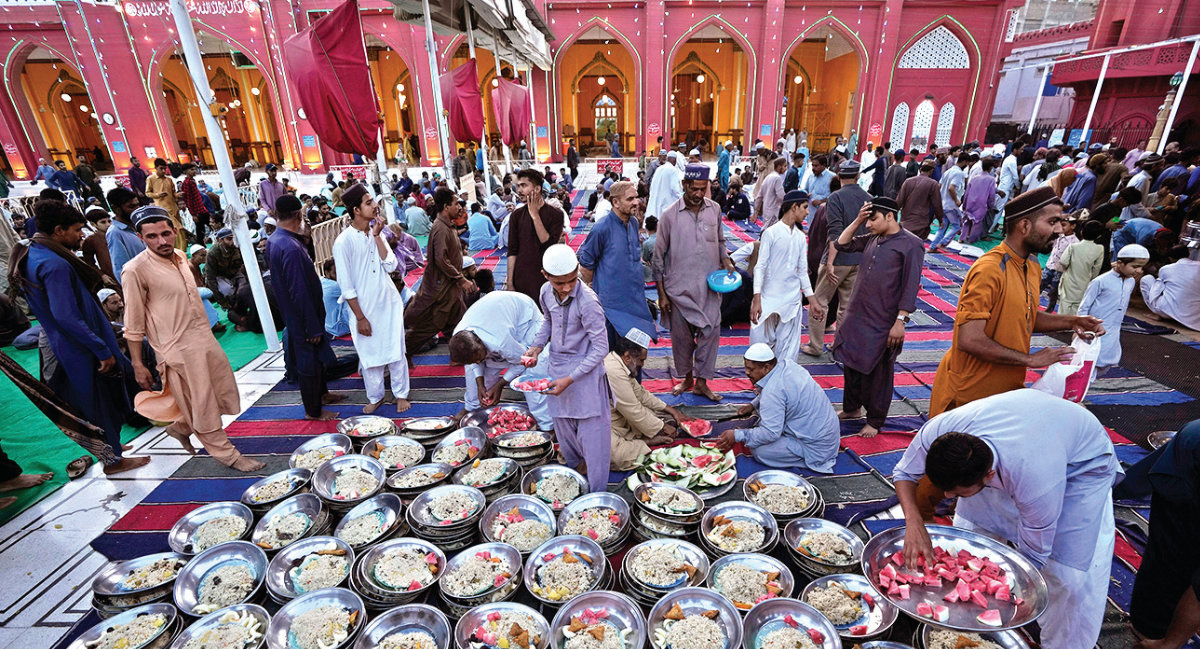


People gather to break fast together at New Memon Mosque in Karachi during Ramadan. (AFP)

“One platter contains dates, fruits, samosas, chicken rolls and pakoras. Water and soft drinks are also served to people, who can choose from different rice dishes as well.”

Around a dozen people were involved in the arrangement, Qadri said.

“Initially, the management used to do it from its own pocket. However, when we need donors now, we ask them to pay the vendors directly,” he said, adding that the mosque did not accept donations for the iftar.
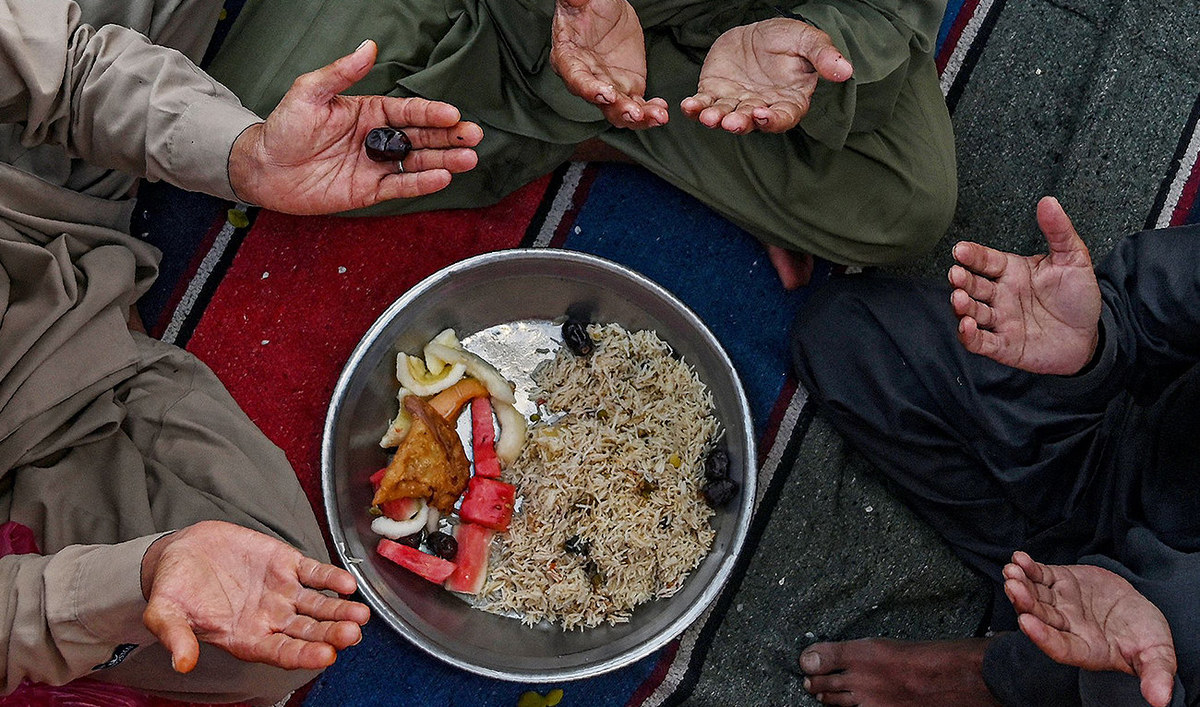


People pray before breaking their fast at Memon Masjid in Karachi. (AFP)

“Today is my first iftar at this place,” said Dost Muhammad, a resident of Baldia Town visiting the area for Eid shopping.

“The arrangement was good and I felt totally at home.”


Writers boycott Adelaide Festival after Randa Abdel-Fattah is dropped

Updated 09 January 2026
Follow

Writers boycott Adelaide Festival after Randa Abdel-Fattah is dropped

DUBAI: A wave of writers have withdrawn from the Adelaide Festival’s Writers’ Week, prompting organizers to take down a section of the event’s website as the backlash continues over the removal of Palestinian Australian author Randa Abdel-Fattah from the 2026 program.

The festival confirmed on Friday that it had temporarily removed the online schedule listing authors, journalists, academics and commentators after participants began pulling out in protest of the board’s decision, which cited “cultural sensitivity” concerns following the Bondi terror attack.

In a statement posted online, the festival said the listings had been unpublished while changes were made to reflect the growing number of withdrawals.

By Friday afternoon, 47 speakers had already exited the program, with more believed to be coordinating their departures with fellow writers.

High-profile figures stepping away include Helen Garner, Chloe Hooper, Sarah Krasnostein, Miles Franklin Prize winner Michelle de Kretser, Drusilla Modjeska, Melissa Lucashenko and Stella Prize-winning poet Evelyn Araluen.

Best-selling novelist Trent Dalton also withdrew from the event. He had been scheduled to deliver a paid keynote at Adelaide Town Hall, one of the few Writers’ Week sessions requiring a ticket.