

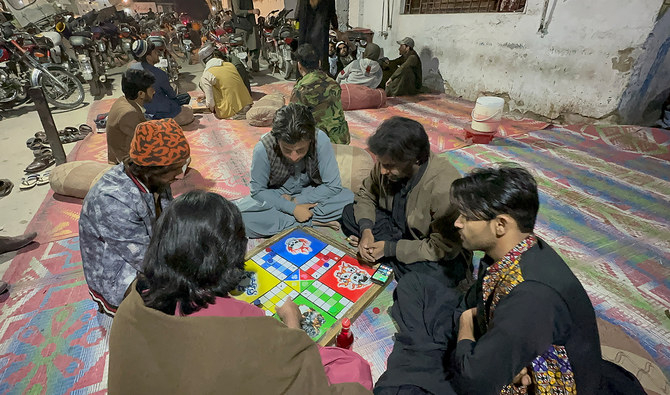

QUETTA: The Muslim fasting month of Ramadan consistently transforms the night into a festive spectacle of recreation in Quetta, the provincial capital of Pakistan’s southwestern Balochistan, with the youth engaging in games like snooker and ludo at roadside cafes and clubs.
Despite the recent downpours and ensuing chilly weather, the vibrant night culture of the city remains unshaken in Ramadan, with people gathering in large numbers post-Iftar to partake in friendly competitions until the pre-dawn Suhoor, marking the beginning of the fast.
Undeterred by the cold, locals continue to frequent popular spots like the Quetta Railway Station, known for the flavorful tea, French fries and oily flat paratha bread, where café owners prepare makeshift playing areas for nightly ludo tournaments.
Small groups of four to six people gather at local cafes around the city to play and watch ludo with double dice. Sipping tea continuously keeps them warm and engaged in the game until it is time to begin the daily fast.
Ali Muhammad Rind, a 24-year-old who regularly plays ludo with three friends at the Shalimar Hotel, says that after a day of fasting, playing ludo with friends helps him unwind.
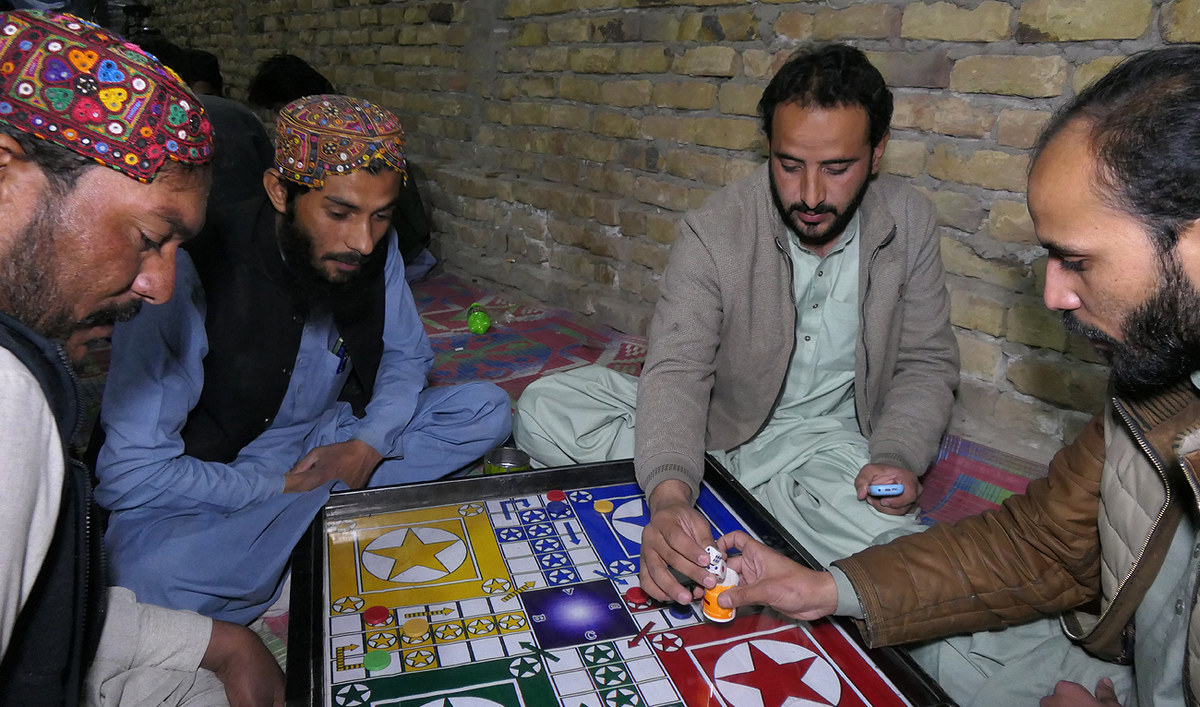
Ali Muhammad Rind (2R) plays Ludo with friends in Quetta Pakistan on March 19, 2024. (AN Photo)
“After the [special] Taraweeh [night] prayers, we play 15 to 20 games till Suhoor with sips of tea, French fries and parathas,” he said.
“We have developed our local Baloch and Pashtun version of the game, using double dice,” he continued. “After Iftar, ludo has become a cultural sport in Quetta due to the lack of quality playgrounds in the city, especially during Ramadan.”
Rind mentioned he has been playing ludo post-Iftar for many years near the Quetta Railway Station, though it is not the only game popular in the city.
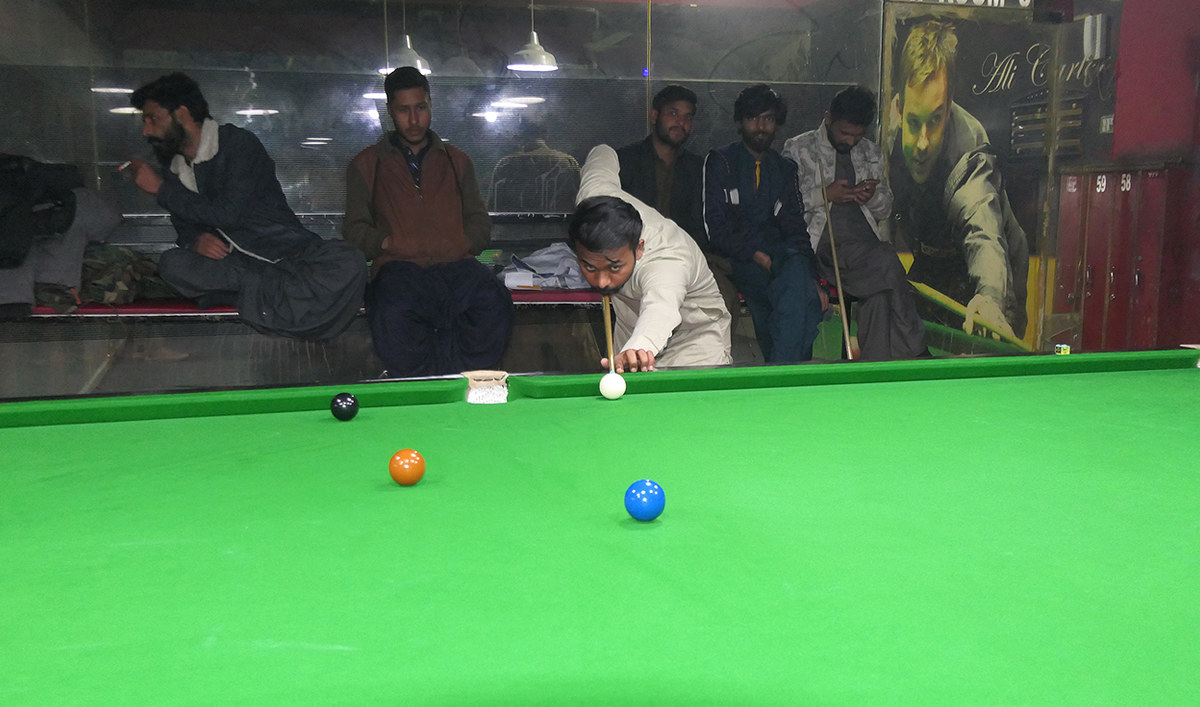
A snooker player aims to hit cue-ball at a local snooker club in Quetta Pakistan on March 17, 2024. (AN Photo)
Thirty-year-old Sheeraz Khan, who runs a well-known snooker club, has been hosting daily snooker tournaments for senior and junior players during Ramadan for the last seven years.
“We change the carpets for our 12 large snooker tables ahead of Ramadan, which helps attract players who come at 9pm to play century and full frames with their friends and stay till about 3am before Suhoor,” he told Arab News.
Muhammad Imran, a senior snooker player with 20 years of experience at the famous cue-ball club, said people had little choice but to play indoor games particularly in cold weather.
“In Ramadan, senior and junior players enjoy snooker tournaments in various clubs which is a healthy activity after Iftar,” Imran told Arab News. “The activities in the cue-ball clubs increase during this month because a large number of players and spectators come here to enjoy snooker games.”
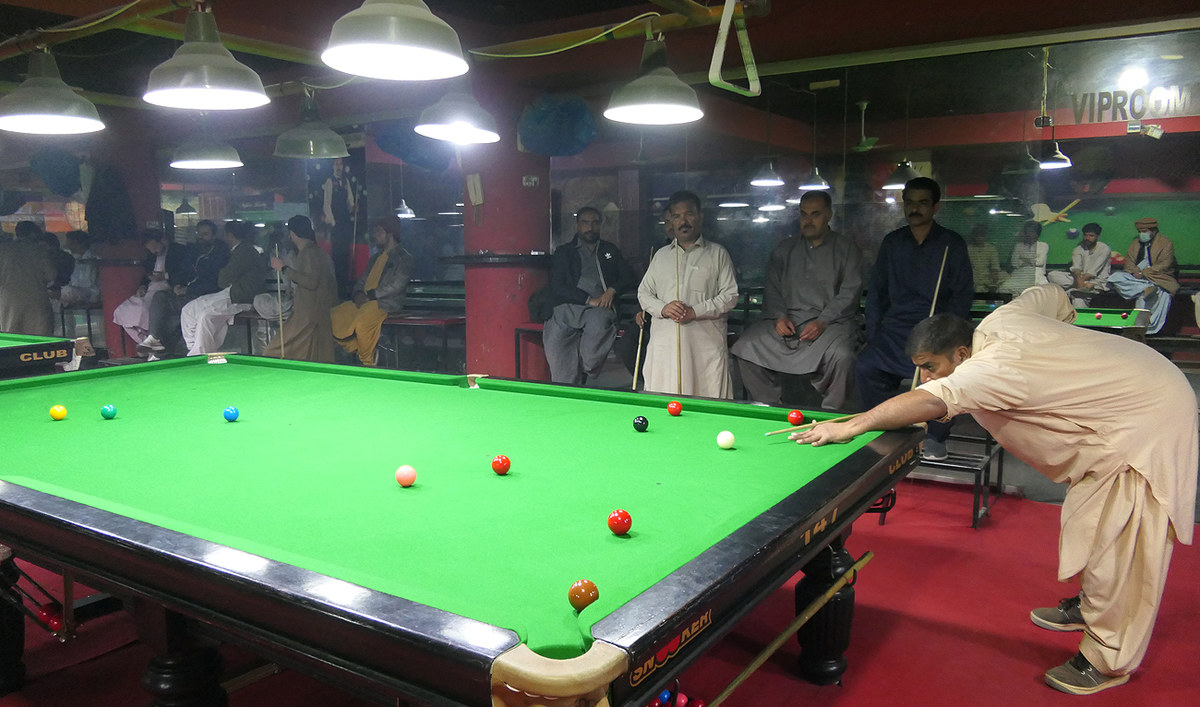
Snooker player Muhammad Imran aims to hit the cue ball during a daily Ramadan tournament in Quetta Pakistan on March 17, 2024. (AN Photo)


