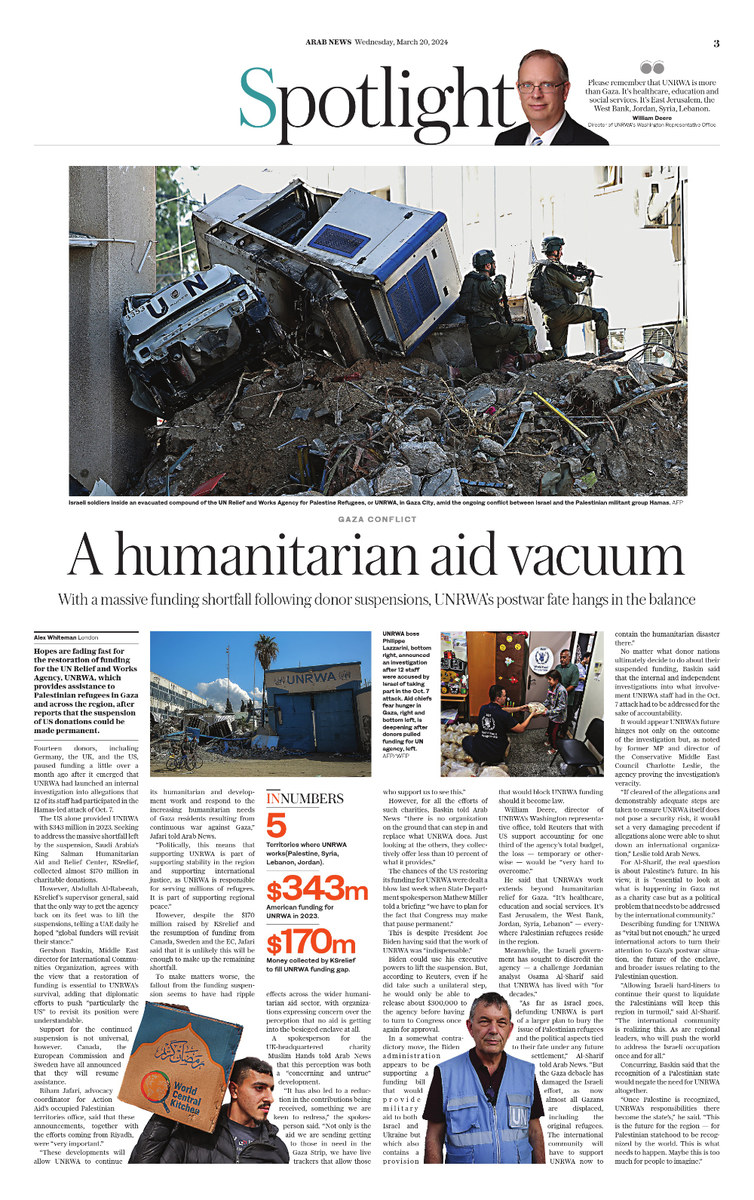
LONDON: Hopes are fading fast for the restoration of funding for the UN Relief and Works Agency, UNRWA, which provides assistance to Palestinian refugees in Gaza and across the region, after reports that the suspension of US donations could be made permanent.
Fourteen donors, including Germany, the UK, and the US, paused funding a little over a month ago after it emerged that UNRWA had launched an internal investigation into allegations that 12 of its staff had participated in the Hamas-led attack of Oct. 7.
The US alone provided UNRWA with $343 million in 2023. Seeking to address the massive shortfall left by the suspension, Saudi Arabia’s King Salman Humanitarian Aid and Relief Center, KSrelief, collected almost $170 million in charitable donations.
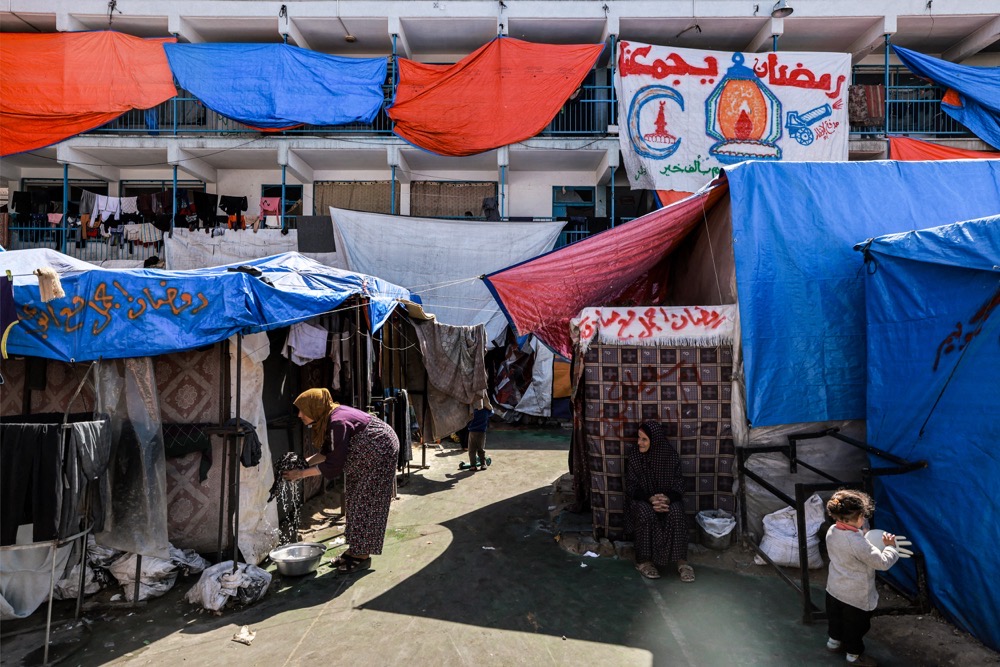
Support for the continued suspension is not universal, however. Canada, the European Commission and Sweden have all announced that they will resume assistance. (AFP)
However, Abdullah Al-Rabeeah, KSrelief’s supervisor general, said that the only way to get the agency back on its feet was to lift the suspensions, telling a UAE daily he hoped “global funders will revisit their stance.”
Gershon Baskin, Middle East director for International Communities Organization, agrees with the view that a restoration of funding is essential to UNRWA’s survival, adding that diplomatic efforts to push “particularly the US” to revisit its position were understandable.
Support for the continued suspension is not universal, however. Canada, the European Commission and Sweden have all announced that they will resume assistance.
INNUMBERS
• 5 Territories where UNRWA works (Palestine, Syria, Lebanon, Jordan).
• $343m American funding for UNRWA in 2023.
• $170m Money collected by KSrelief to fill UNRWA funding gap.
Riham Jafari, advocacy coordinator for Action Aid’s occupied Palestinian territories office, said that these announcements, together with the efforts coming from Riyadh, were “very important.”
“These developments will allow UNRWA to continue its humanitarian and development work and respond to the increasing humanitarian needs of Gaza residents resulting from continuous war against Gaza,” Jafari told Arab News.
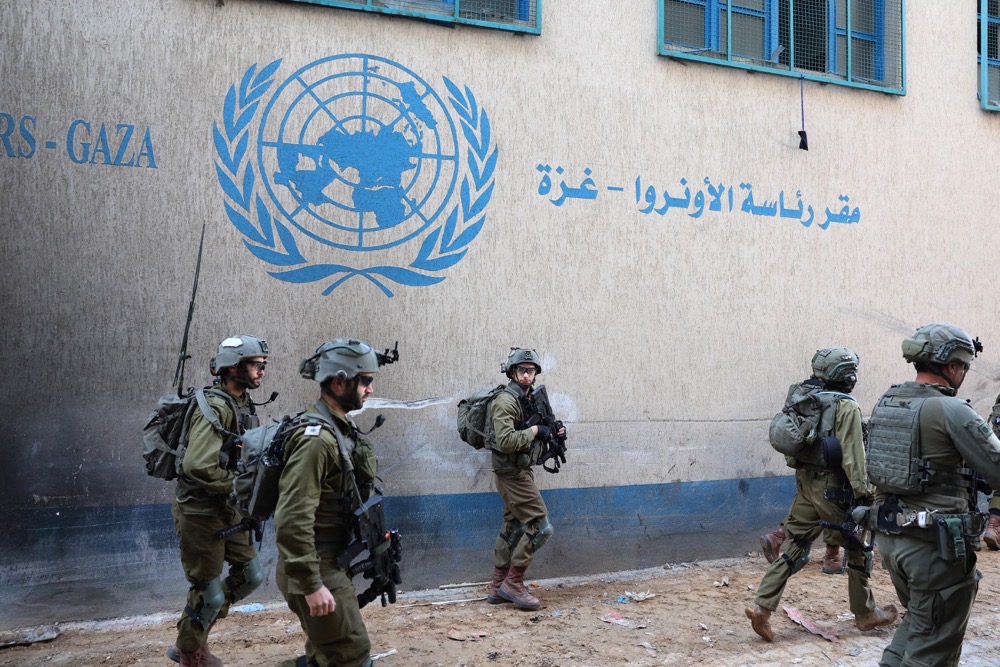
Israel alleged that 12 UNRWA staff participated in the Hamas-led attack of Oct. 7. (AFP)
“Politically, this means that supporting UNRWA is part of supporting stability in the region and supporting international justice, as UNRWA is responsible for serving millions of refugees. It is part of supporting regional peace.”
However, despite the $170 million raised by KSrelief and the resumption of funding from Canada, Sweden and the EC, Jafari said that it is unlikely this will be enough to make up the remaining shortfall.
To make matters worse, the fallout from the funding suspension seems to have had ripple effects across the wider humanitarian aid sector, with organizations expressing concern over the perception that no aid is getting into the besieged enclave at all.
A spokesperson for the UK-headquartered charity Muslim Hands told Arab News that this perception was both a “concerning and untrue” development.
“It has also led to a reduction in the contributions being received, something we are keen to redress,” the spokesperson said. “Not only is the aid we are sending getting to those in need in the Gaza Strip, we have live trackers that allow those who support us to see this.”
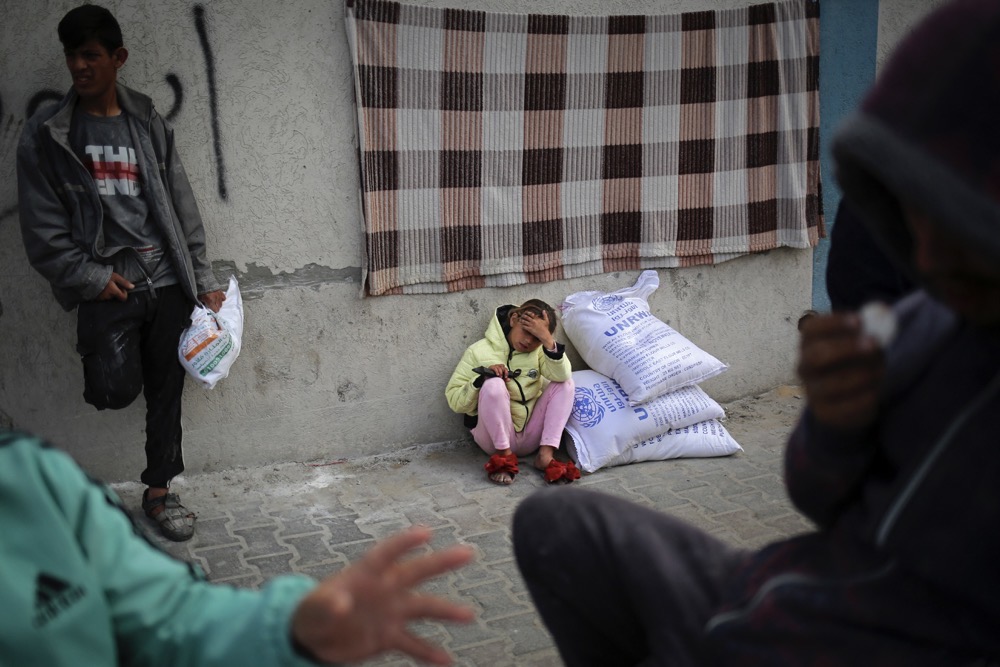
The US alone provided UNRWA with $343 million in 2023. (AFP)
However, for all the efforts of such charities, Baskin told Arab News “there is no organization on the ground that can step in and replace what UNRWA does. Just looking at the others, they collectively offer less than 10 percent of what it provides.”
The chances of the US restoring its funding for UNRWA were dealt a blow last week when State Department spokesperson Mathew Miller told a briefing “we have to plan for the fact that Congress may make that pause permanent.”

Fourteen donors, including Germany, the UK, and the US, paused funding for UNRWA a little over a month ago. (AFP)
This is despite President Joe Biden having said that the work of UNRWA was “indispensable.”
Biden could use his executive powers to lift the suspension. But, according to Reuters, even if he did take such a unilateral step, he would only be able to release about $300,000 to the agency before having to turn to Congress once again for approval.
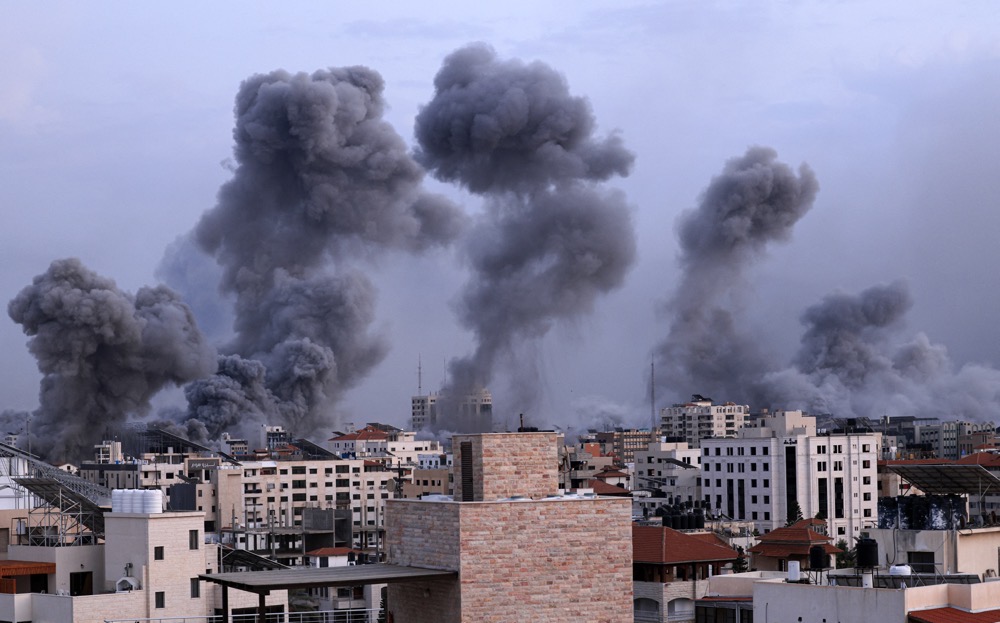
Israel is conducting a military campaign in Gaza in its war with Hamas. (AFP)
In a somewhat contradictory move, the Biden administration appears to be supporting a funding bill that would provide military aid to both Israel and Ukraine but which also contains a provision that would block UNRWA funding should it become law.
William Deere, director of UNRWA’s Washington representative office, told Reuters that with US support accounting for one third of the agency’s total budget, the loss — temporary or otherwise — would be “very hard to overcome.”
He said that UNRWA’s work extends beyond humanitarian relief for Gaza. “It’s health care, education and social services. It’s East Jerusalem, the West Bank, Jordan, Syria, Lebanon” — everywhere Palestinian refugees reside in the region.
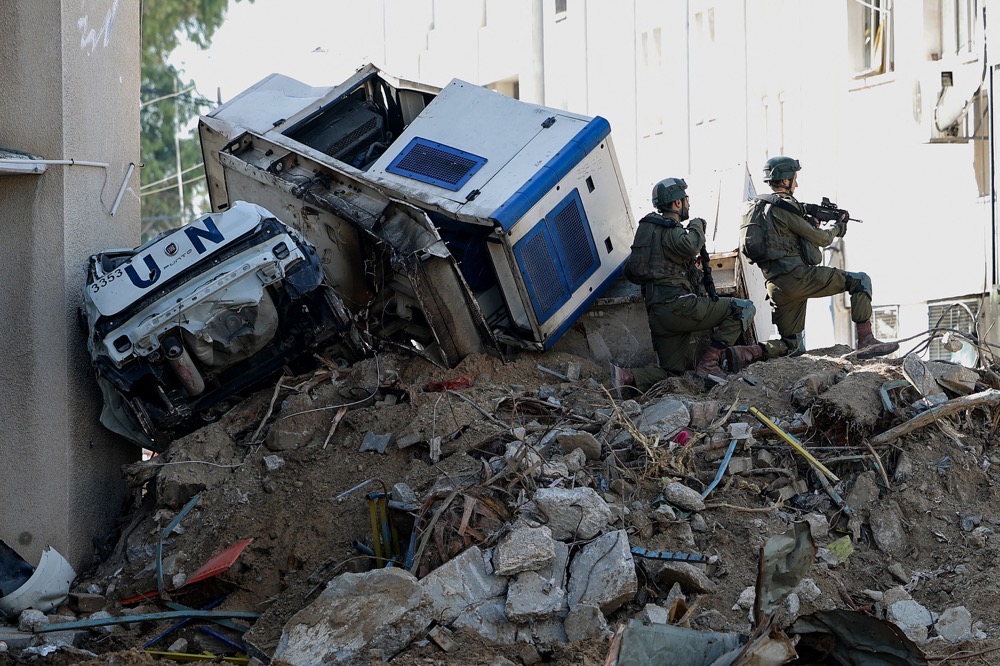
Israeli soldiers inside an evacuated compound. (AFP)
Meanwhile, the Israeli government has sought to discredit the agency — a challenge Jordanian analyst Osama Al-Sharif said that UNRWA has lived with “for decades.”
“As far as Israel goes, defunding UNRWA is part of a larger plan to bury the issue of Palestinian refugees and the political aspects tied to their fate under any future settlement,” Al-Sharif told Arab News.
“But the Gaza debacle has damaged the Israeli effort, as now almost all Gazans are displaced, including the original refugees. The international community will have to support UNRWA now to contain the humanitarian disaster there.”
Opinion
This section contains relevant reference points, placed in (Opinion field)
No matter what donor nations ultimately decide to do about their suspended funding, Baskin said that the internal and independent investigations into what involvement UNRWA staff had in the Oct. 7 attack had to be addressed for the sake of accountability.
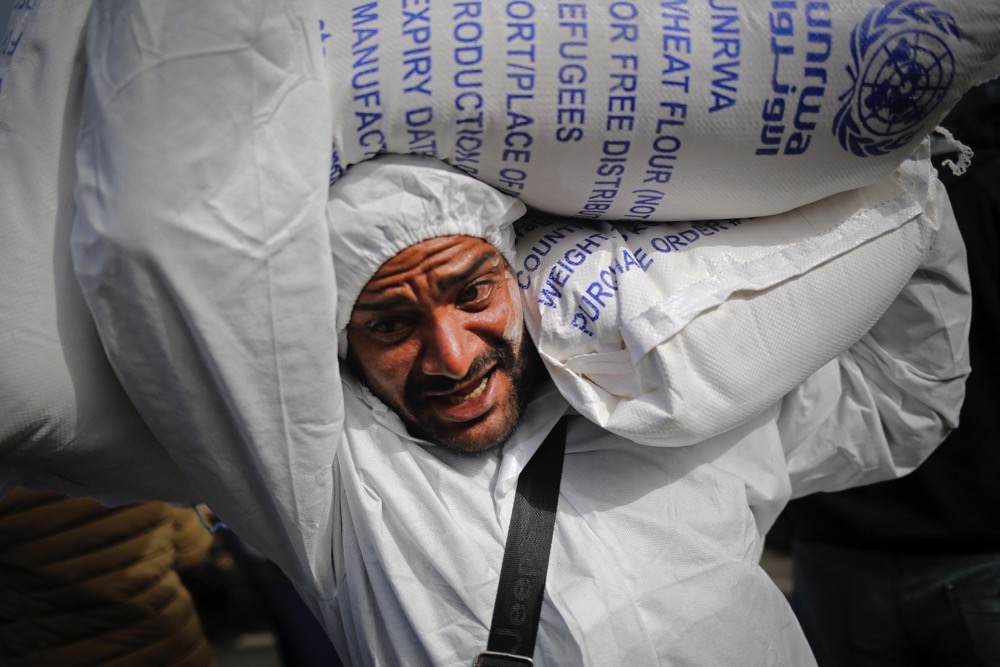
A Palestinian carries sacks of humanitarian aid at the distribution center of UNRWA. (AFP)
In practice, he said that this would improve transparency, ensuring staff were not co-opting aid, pointing to issues surrounding the purported use of UNRWA sites by Hamas’ militant wing.
It would appear UNRWA’s future hinges not only on the outcome of the investigation but, as noted by former MP and director of the Conservative Middle East Council Charlotte Leslie, the agency proving the investigation’s veracity.
“If cleared of the allegations and demonstrably adequate steps are taken to ensure UNRWA itself does not pose a security risk, it would set a very damaging precedent if allegations alone were able to shut down an international organization,” Leslie told Arab News.
For Al-Sharif, the real question is about Palestine’s future. In his view, it is “essential to look at what is happening in Gaza not as a charity case but as a political problem that needs to be addressed by the international community.”

URNWA employees clear a damaged street following an Israeli raid. (AFP)
Describing funding for UNRWA as “vital but not enough,” he urged international actors to turn their attention to Gaza’s postwar situation, the future of the enclave, and broader issues relating to the Palestinian question.
“Allowing Israeli hard-liners to continue their quest to liquidate the Palestinians will keep this region in turmoil,” said Al-Sharif. “The international community is realizing this. As are regional leaders, who will push the world to address the Israeli occupation once and for all.”
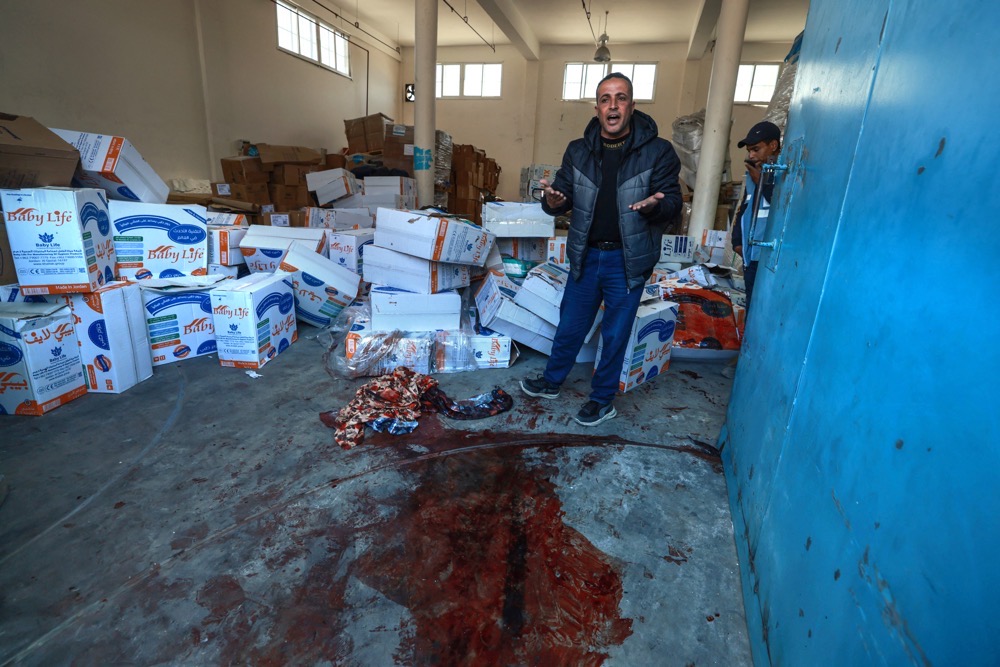
A man gestures near a pool of blood at an UNRWA warehouse and distribution centre in Rafah, in the southern Gaza Strip, following an Israeli strike. (AFP)
Concurring, Baskin said that the recognition of a Palestinian state would negate the need for UNRWA altogether.
“Once Palestine is recognized, UNRWA’s responsibilities there become the state’s,” he said. “This is the future for the region — for Palestinian statehood to be recognized by the world. This is what needs to happen. Maybe this is too much for people to imagine.”