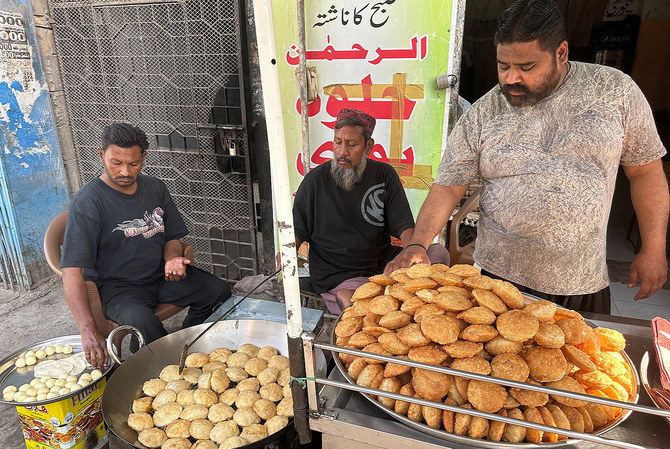

KARACHI: The sight and aroma of kachoris being fried in scalding oil in large woks at shops and roadside stalls across Karachi neighborhoods are hard to miss during Ramadan.
The deep-fried pastries are popular on Pakistani iftar menus during the holy month when Muslim families and friends worldwide gather after sunset to share sustaining meals after a long day of fasting.
Kachoris, golden brown, crispy, puffed dough pastries filled with vegetable, lentil, chicken and beef fillings, originated in India and are common in areas with Indian and other South Asian diaspora. In Pakistan, they are popularly served with a side of lentils or stewed chickpeas.
In Karachi, Pakistan’s bustling metropolis which is home to millions who migrated from neighboring India during the 1947 partition of the subcontinent, hundreds of street vendors sell the snacks. But a few shops stand out.
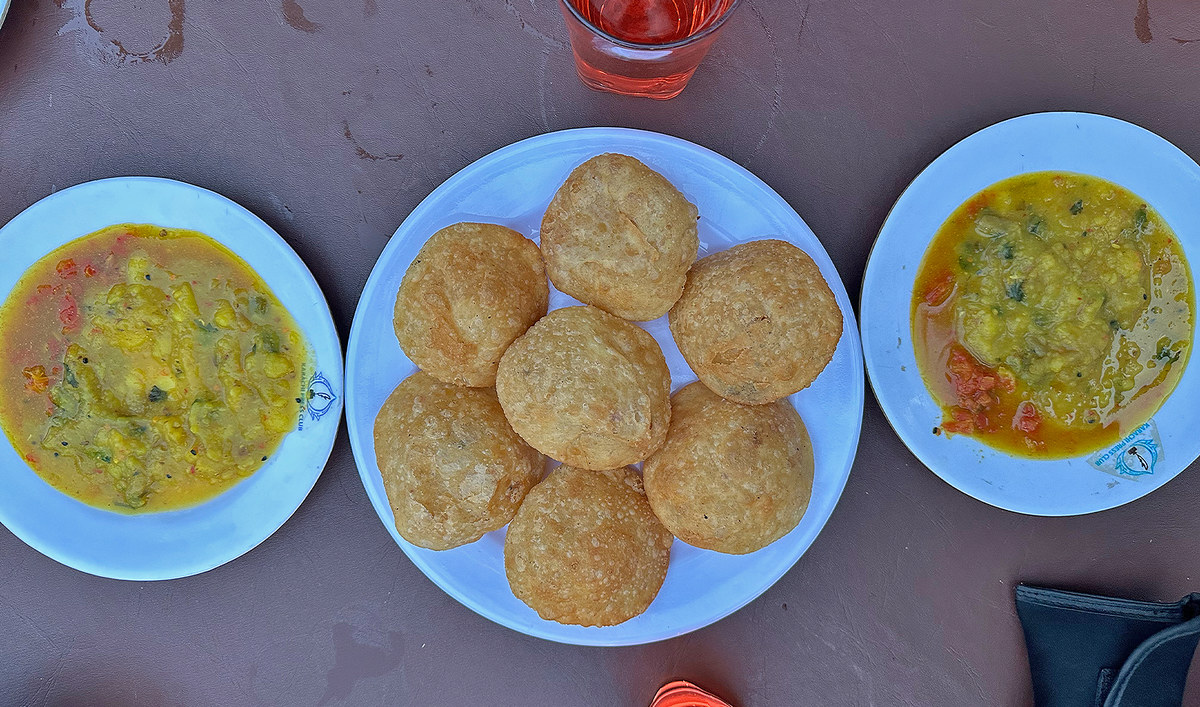
The picture taken on March 17, 2024, shows a plate of kachoris in Karachi, Pakistan. (AN photo)
Sadiq Kachori House
One is Sadiq Kachori House in Karachi’s Delhi Mercantile Society neighborhood, which offers crispy kachoris stuffed with lentils. A single kachori at Sadiq’s costs Rs. 25.
“It’s absolutely mandatory to have kachori on the iftar table during Ramadan. Without it, the iftar spread isn’t complete,” Farhan Sultan, a 54-year-old businessman, told Arab News as he received his parcel of piping hot kachoris at the Sadiq Kachori House.
Sultan said kachoris were popular among migrants like himself from India’s New Delhi.
“It’s our tradition, especially among the Delhiites, that this tradition continues,” he said. “Delhiites always prefer a spicy flavor in everything.”
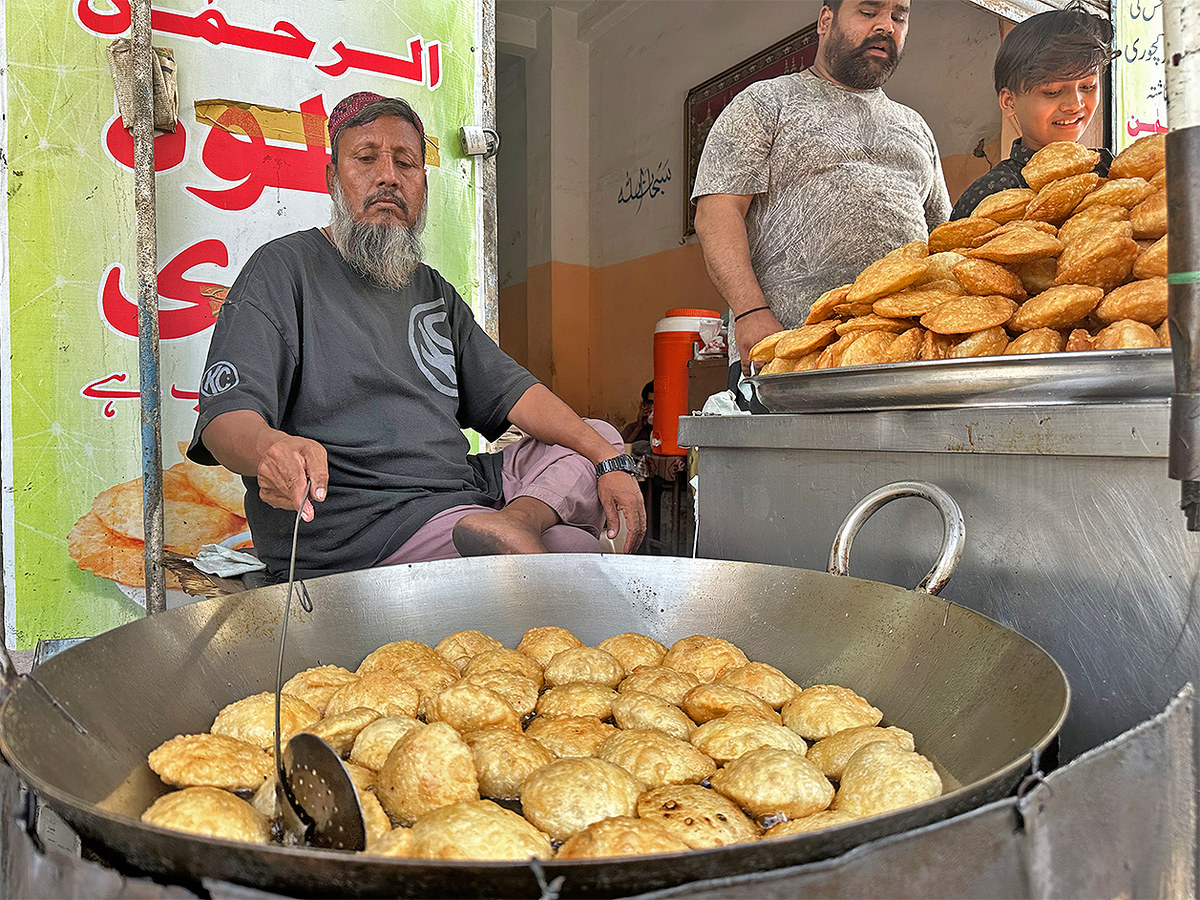
The picture taken on March 17, 2024, shows a man frying kachoris in Karachi, Pakistan. (AN photo)
Shahid Kachori
Another popular spot during Ramadan is Shahid Kachori, located near the Passport Office in Karachi’s busy Saddar area, and offering one of the cheapest kachoris in the city at Rs20 a piece.
The unique selling point here is that the kachoris are sold with a special curry and carrot pickles.
“We don’t compromise on our materials,” said Shahid Muhammad Ali, whose father set up the outlet after the family migrated from India. “It would be wrong if we say ourselves that our kachori is better, and our curry is better. But when a person eats something and finds it better, he keeps coming back.”
He said if the shop got 50 customers on a regular day of the year, in Ramadan the number could go up to 150.
Among the loyal customers are children, said housewife Nimra Ayub who was shopping at Shahid Kachori.
“Children also like kachoris,” she said. “Their taste is also very good, they are very famous here.”
Hajji Noor Kachori
Finally, Hajji Noor Kachori located in Karachi’s City Courts area is also famous for its kachoris, though the prices are almost double that at other outlets at Rs50 a piece.
“Since 1956, this has been our spot,” said Muhammad Irfan, the 50-year-old owner of the outlet whose father established the shop in 1956 and ran it until he passed away in 1986. His children now run the business.
But why are Hajji Noor kachoris so popular despite the steep price? Irfan says it’s because they are “rich in content.”
“Our ball of dough is heavy in weight and it is generously stuffed with filling,” he said.
“Other kachoris, if you lift them and shake them, you will feel as though the lentils are rolling inside. Ours is generous. If you eat two kachoris, your stomach will be full and your heart will also be happy.”