

Azerbaijan’s president says peace with Armenia is closer than ever

Azerbaijani President Ilham Aliyev (R) and NATO Secretary-General Jens Stoltenberg deliver press statements following their talks in Baku on March 17, 2024. (Azerbaijani presidency/handout via AFP)
Short Url
Updated 18 March 2024
Follow

Azerbaijan’s president says peace with Armenia is closer than ever

  • Christian Armenia and mostly Muslim Azerbaijan first went to war over the breakaway region of Nagorno-Karabakh in 1988
  • Azerbaijan recaptured Karabakh last year, prompting a mass exodus of ethnic Armenians

BAKU: Azeri President Ilham Aliyev said on Sunday his country is “closer than ever” to a peace deal with Armenia, half a year after Azerbaijan recaptured its Karabakh region from its ethnic Armenian majority, prompting a mass exodus of ethnic Armenians.
“Today, we are in an active phase of peace talks with Armenia,” Aliyev said in remarks after meeting NATO Secretary General Jens Stoltenberg in Baku, according to a transcript published on the Azeri leader’s website.
“We are now closer to peace than ever before.”
Stoltenberg said he welcomed the move toward peace between the two nations.
“I appreciate what you say about that you are closer to a peace agreement than ever before,” Stoltenberg said, according to a transcript published on NATO’s website.
“And I can just encourage you to seize this opportunity to reach a lasting peace agreement with Armenia.”
In December, the South Caucasus neighbors issued a joint statement saying they want to reach a peace deal and have since held numerous talks, including two days of negotiations in Berlin in February.
The press office of Armenian Prime Minister Nikol Pashinyan did not immediately respond to Reuters’ request to comment on Aliyev’s statement.
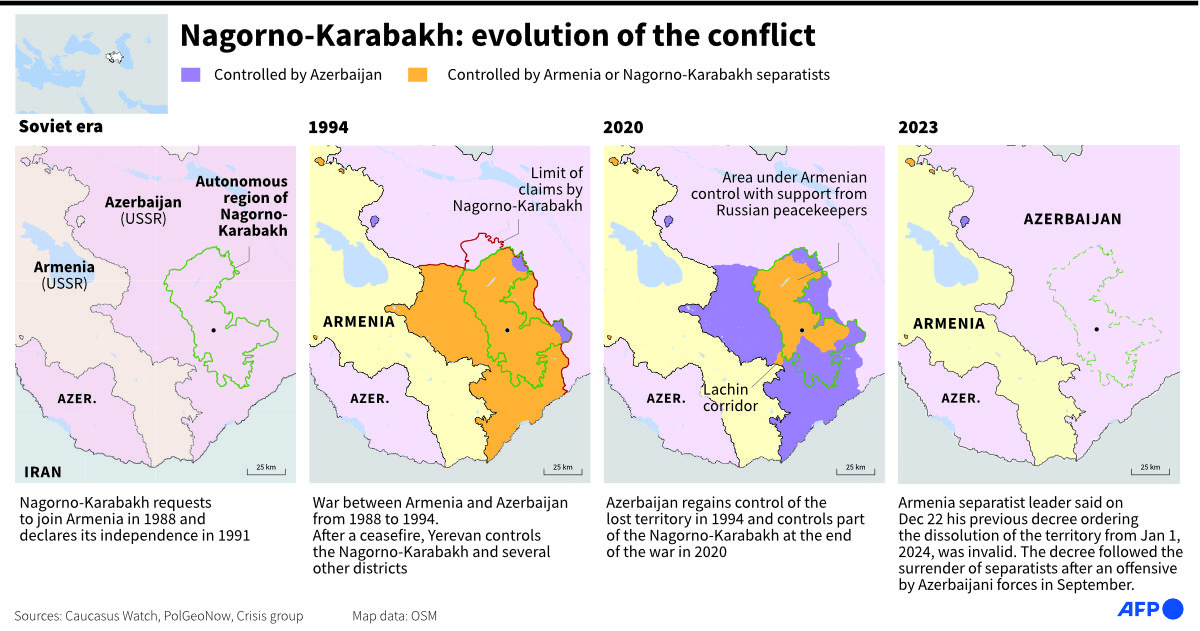
Christian Armenia and mostly Muslim Azerbaijan first went to war over the breakaway region of Nagorno-Karabakh in 1988. After decades of enmity, Azerbaijan in September recaptured Karabakh, controlled by its ethnic Armenian majority since the 1990s despite being internationally recognized as part of Azerbaijan.
The offensive prompted most of the region’s 120,000 ethnic Armenians to flee to neighboring Armenia.
Armenia described the offensive as ethnic cleansing. Azerbaijan denied that and said those who fled could have stayed on and been integrated into Azerbaijan.
Key elements in securing a treaty are the demarcation of borders and the establishment of regional transport corridors through each others’ territory.
Armenia has also raised the issue of determining control of ethnic enclaves on both sides of the border.


Vietnam urges factories to cut output as Hanoi chokes on smog

Updated 5 sec ago
Follow

Vietnam urges factories to cut output as Hanoi chokes on smog

HANOI: Industrial plants in the Vietnamese capital of Hanoi have come under renewed pressure to scale back their operations as authorities respond to a week of heavy and hazardous smog in the city.
Vietnam’s Ministry of Health earlier this week urged power, steel and chemical plants to cut output when the air quality index exceeds 200. The index gauges the volumes of hazardous small particles known as PM2.5 that are in the air.
The AQI hit 243 midday on Thursday, putting Hanoi fourth on the list of the world’s most-polluted cities, according to AirVisual, which provides independent global air pollution information via a phone app.
The city has topped the list on a number of occasions this week, according to the app, a position it also held in January.
The Southeast Asian country, a regional manufacturing hub which is urbanizing rapidly, has been suffering from severe air pollution for years, especially in Hanoi.
“My eyes are itchy, and there’s always a blanket of smog that blocks my vision,” said Hanoi resident Pham Thu Giang, 30. “I have to wear a mask all the time.”
The authorities have identified transportation, industrial production, construction activities and the burning of garbage and agricultural residue as the main sources of air pollution in the city.
“Gasoline-powered motorbikes are used widely in Hanoi, making them a major source of air pollution,” Le Thanh Thuy, an official of the city’s department of agriculture and environment, told local media on Thursday.
The city will impose partial bans on gasoline-powered motorbikes in downtown areas from mid-2026 and will gradually expand the ban thereafter to fossil-fuel-powered cars.
“The current air conditions are very dangerous for the capital Hanoi,” said 75-year old resident Luong Van Toi. “I feel very tired.”
If Hanoi’s AQI is converted into actual PM2.5 concentrations, the pollution this week could be as much as 50 times the 5-microgram/cu m level recommended by the World Health Organization.