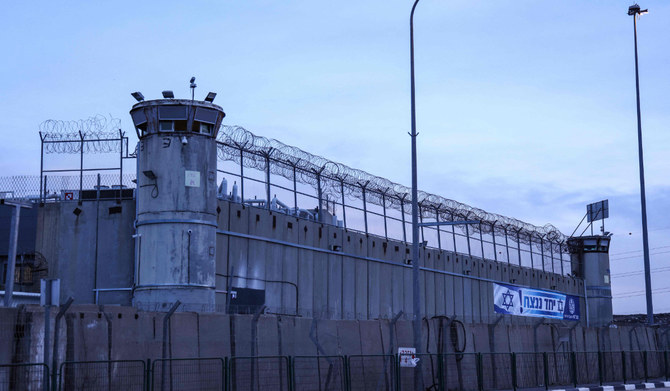

GENEVA: In the shadow of the war raging in Gaza, record numbers of Palestinian detainees are filling Israeli prisons, where they face “systemic abuse” and torture, rights advocates warn, calling for international action.
Members of several Israeli NGOs traveled to Geneva this week to raise concerns before the UN about a major “crisis” inside the country’s prisons.
“We are extremely, extremely concerned,” said Tal Steiner, the executive director of the Public Committee Against Torture in Israel. “What we’re looking at is a crisis,” she said.
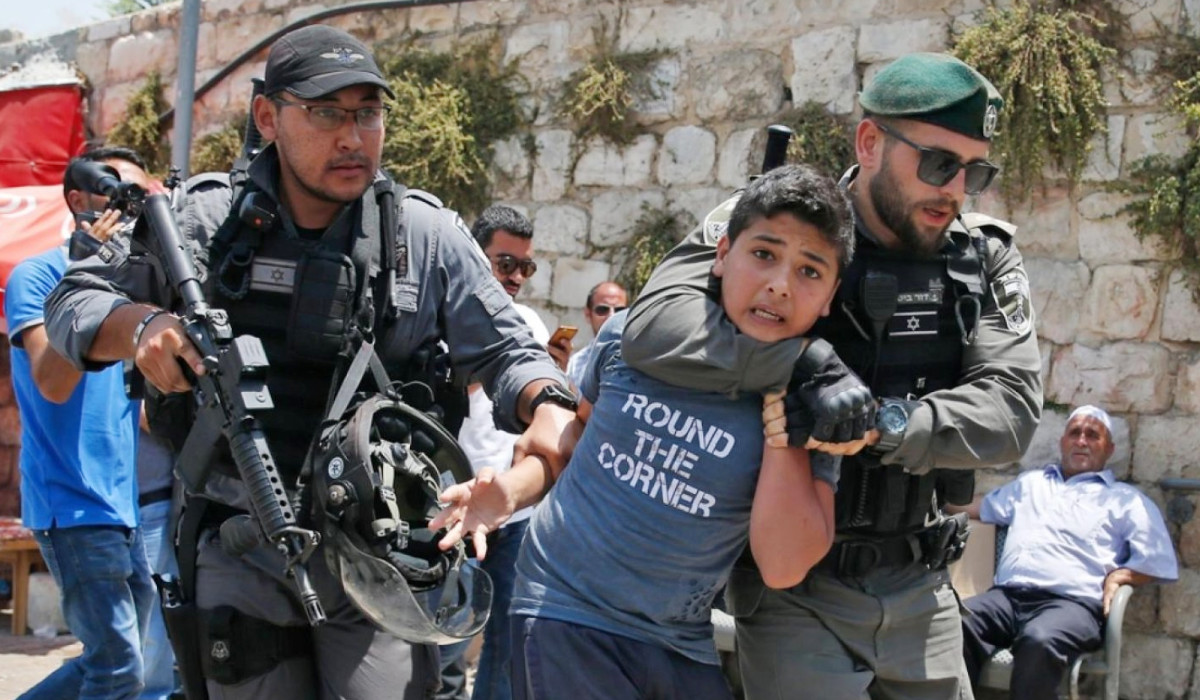
Prisoners reportedly have to sleep on the floor of the cages in the cold, are beaten, and deprived of medical care. AFP
She said nine people had allegedly died behind bars since Oct. 7, according to Israeli sources.
And “there are almost 10,000 Palestinians in Israeli custody right now ... a 200 percent increase from any normal year.”
FASTFACT
All those detained in Gaza, including children and reportedly even an 82-year-old woman, are being held under Israel’s unlawful combatants law.
While the UN and others have long raised concerns about conditions for Palestinian detainees in Israeli prisons, Steiner said the situation had worsened dramatically since war erupted in Gaza.
“During the military onslaught on Gaza, there’s been a crisis within Israeli detention facilities and prisons that has been really left ignored,” said Miriam Azem of the Adalah legal center. The center is dedicated to protecting the rights of Israel’s Palestinian citizens.
Her organization had managed to document “19 clear cases” of torture within the Israeli prison system just since Oct. 7, including sexual violence.
“We’re seeing really widespread and systemic use of many, many tools in order to inflict torture and ill-treatment on Palestinians.”
This crisis, she said, “requires the immediate intervention of the international community.”
Steiner agreed, warning that this was “an ongoing crisis.
“People are (suffering) in detention right now ... An urgent intervention is very much needed.”
The Israeli Prison Service said: “All prisoners are detained according to the law.”
The service was “not aware of the claims,” against it, a spokesperson said, but stressed that any complaints filed by detainees “will be fully examined and addressed by official authorities.”
The NGOs also voiced alarm at reported conditions inside the military camps holding those detained inside Gaza.
At least 27 Palestinians have reportedly died in such camps since October, Steiner said, adding that this was “unprecedented and extremely severe.” There was no access to the camps, nor had her organization, or foreign journalists, been permitted to enter Gaza to speak with those released, she said.
But reports relying on testimony from former camp inmates suggest that detainees are often held “in open-air cages,” where “they are handcuffed and blindfolded 24 hours a day.”
Prisoners reportedly had to sleep on the floor of the cages in the cold, were beaten, and deprived of medical care, she added.
The Israeli army said detainees are questioned in the facilities operating since the Oct. 7 attack and those “found to be unrelated to terrorist activity are released back to the Gaza Strip.”
Some of the detainees who died had injuries or complex medical conditions, it added, saying each death was investigated by the Military Advocate General’s Corps.
“At the end of the investigations, their findings will be forwarded to the Military Prosecution’s Office,” the army said. While there are no official numbers, NGOs estimate that around 1,000 people are currently detained in the camps.
Another 600 people from Gaza arrested on Israeli soil on Oct. 7 are being held in the Israeli prison system.
Steiner pointed out that all those detained in Gaza, including children and reportedly even an 82-year-old woman, were being held under Israel’s unlawful combatants law. That law denies protections typically granted to detainees and prisoners of war.
“The law in its current form is unconstitutional,” she said.
Steiner and Azem, both Israeli nationals, said defending Palestinians’ rights in Israel had become increasingly difficult since Oct. 7, and that they had faced threats and verbal abuse. “It’s not an easy place to be,” Steiner said.
The trauma caused by Hamas’s attack and the frantic concern over the fate of the hostages is understandable, she said, but “that does not give you an excuse to torture.”
“This is not just the question of us versus them. This is us versus us,” Steiner said. “If Israel can prove that it holds even the worst of its enemies in humane conditions, that will be a triumph.”