


MAKKAH: For pilgrims in Makkah, the holy month of Ramadan is a chance to explore the flavorful culinary culture of the Kingdom and experience Saudi hospitality.
A variety of dishes have become sought-after by pilgrims for their iftar and sahoor meals, from saleeg, mahrouse, mabroush, lokma and ruz bukhari, to manti, miro kebab, farmoza and kebda dishes.
Manal Mohammed, the catering manager at a hotel in central Makkah, told Arab News: “God has endowed Makkah with an important and distinctive cultural diversity, allowing it to be at the forefront of Saudi cities in offering meals that beautifully express the Saudi identity.”

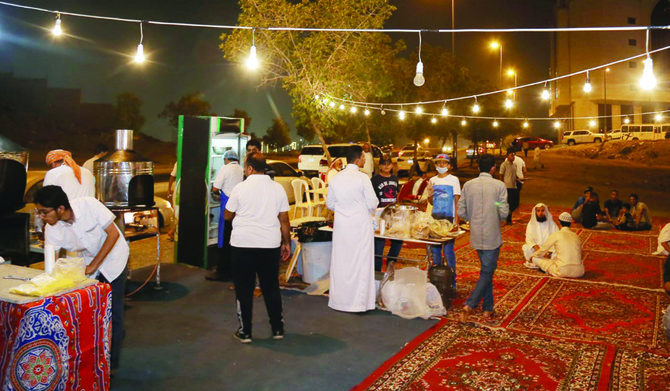
In Makkah during the holy month, kebda (liver) dish and soup stalls on sidewalks and streets, especially after Taraweeh prayers, and communal iftar spreads create a joyful atmosphere. (Supplied/SPA)
She added: “Makkah has become a gathering place for visitors from all over the world to participate in religious rituals and also learn about local heritage. It is important stage in their journey where they discover aspects of food that hold exceptional, special memories.”
Mohammed said that Hijazi cuisine is influenced by the influx of various Islamic and Arab regions over time, which has given a special flavor to traditional Hijazi dishes, and created a distinctive and diverse cuisine.
HIGHLIGHTS
• Communal iftars in old neighborhoods is a way to socialize in Makkah during Ramadan.
• A variety of dishes have become sought-after by pilgrims for their iftar and sahoor meals including saleeg, lokma and ruz bukhari.
She added that what distinguishes the original Hijazi dishes is their preservation of their traditional and popular elegance in presentation.
Kebda (liver) dishes and soups are exceptionally served, especially after Taraweeh prayers, on the sidewalks and streets in a joyful Ramadan atmosphere.

In Makkah during the holy month, kebda (liver) dish and soup stalls on sidewalks and streets, especially after Taraweeh prayers, and communal iftar spreads create a joyful atmosphere. (SPA)
Mohammed said that this has created a sense of joy among visitors and pilgrims, encouraging them to engage in conversations, and get to know the Saudi people’s kindness, generosity, morals and principles through sharing dishes.
They often seek the fava beans that the people of Hijaz make creative dishes with, the msabbak with spices, onions and ghee, served along with tamees, which is a type of bread that was introduced to Hijaz from Central Asia. Murtabak, which consists of thin sheets of light pastry stuffed with minced meat or eggs or sweet cheese and heated on a hot pan, is also a popular dish. Masoub, which consists of flour discs mixed with honey or sugar or ghee with bananas and cream, is another local dish that is popular during the holy month.
Makkah has become a gathering place for visitors from all over the world to participate in religious rituals and also learn about local heritage.
Manal Mohammed, Hotel catering manager in Makkah
She said that pilgrims seek dishes traditionally found on the Saudi iftar spread, such as kabsa consisting of rice cooked with chicken or meat broth and a special spice blend, as well as samosa, turumba, yaghmosh, balila and manti.
Nasser Bukhari, a chef at a Makkah restaurant, said that chefs in hotels offer various types of Saudi dishes side-by-side with famous international ones, ensuring to present them in a modern and distinctive way that preserves and renews the heritage. He added: “Visitors and pilgrims request Saudi dishes by name and many often note down the ingredients used so they can try making it when they return to their countries, thus beautifully spreading Saudi culture.”

In Makkah during the holy month, kebda (liver) dish and soup stalls on sidewalks and streets, especially after Taraweeh prayers, and communal iftar spreads create a joyful atmosphere. (SPA)
Bukhari said that Makkah’s neighborhoods annually compete to invite pilgrims to join their Ramadan table, especially for the iftar meal: “Locals are very keen that pilgrims do not spend their visits only eating at central hotels. They share dishes with them by inviting them into their homes or to Ramadan gatherings celebrated in neighborhoods and designated places.”
Ramadan is a time for people to get to know Saudi culture intimately, he said. “The simplicity that characterizes Saudi people has a charm and direct impact on the souls of visitors who see Saudis in their finest form through these iftar spreads. It serves as a strong bond between visitors and Saudi society, showcasing the generosity, warmth and hospitality of locals, and brings them close to the heart.”
Communal iftars in old neighborhoods is a way to socialize in Makkah during Ramadan, Bukhari said. “Locals enjoy the atmosphere and celebrate their inherited traditions. They enjoy spiritual and social moments reflecting their connection to the blessed month. Additionally, the values of cooperation, solidarity, and unity among family members and friends increase.”
The holy month brings joy in the communities and a festive atmosphere, he said. “Old neighborhoods and home entrances are decorated, and respect is paid to the elderly, ensuring their participation and preparing tables with popular dishes and sweets such as sobia, chrik, ka’ak, smoked beans, and fruit dishes. All these things distinguish the Saudi society, eager to honor visitors and pilgrims every year, even competing to do so.”


