


BEIRUT: Hezbollah risks taking Lebanon to a “perilous place,” a senior US official said on Friday, though hopes remain for a peaceful solution to the country’s conflict with Israel.
Barbara Leaf, assistant secretary of state for Near Eastern affairs, said in a statement that Lebanon was facing “great instability.”
“We have seen how Hezbollah has taken a lot of risks and this is something that could move the scene to a perilous place and put Lebanon itself in a perilous position,” she said.
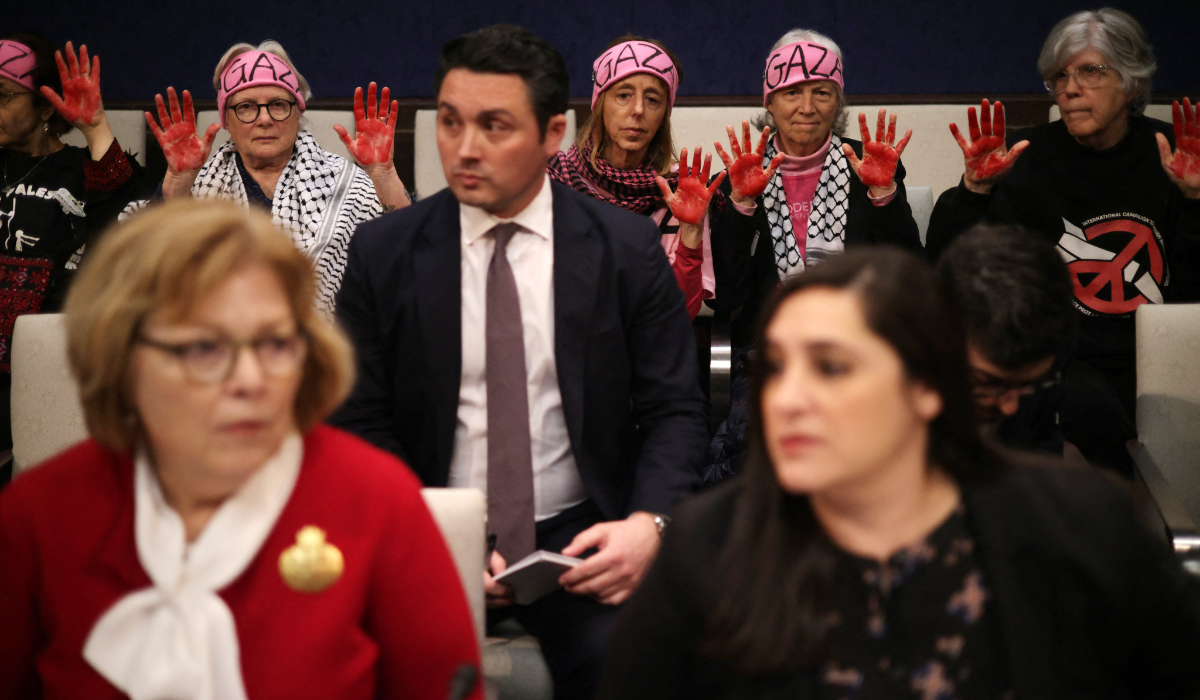
Members of CodePink, a women's anti-war organization, protest as US Assistant Secretary of State for Near Eastern Affairs Barbara Leaf (L) and Deputy Assistant Defense Secretary for the Middle East Dana Stroul (R) testify during a hearing before the House Foreign Affairs Committee at the US Capitol on November 8, 2023 in Washington, DC. (AFP)
However, there remains hope, with US special envoy Amos Hochstein in talks with Lebanon on reaching a diplomatic resolution to the border fighting.
“We believe it will happen when the humanitarian truce begins (in the Gaza Strip). We are actively working on this front,” Leaf said.
“In the meantime, a dangerous game is being played and Hezbollah may misunderstand the rules of the game or Hezbollah may misunderstand the risk limits.”
She continued: “The Israeli government and the Israeli army will not take a risk by launching a large-scale offensive in the north without knowing what will happen and whether they will be embarrassed.”
Leaf’s statement came as caretaker Foreign Minister Abdallah Bou Habib on Friday met French Ambassador Herve Magro to present Lebanon’s response to a French proposal submitted last month aimed at ending hostilities with Israel.
The plan outlines three phases: military operations would cease, Lebanese armed groups would withdraw combat forces and Lebanese regular army troops would be deployed in the south.
In its letter to the French Embassy, the Foreign Ministry said Beirut “believes that the French initiative could be a significant step” toward peace and security in Lebanon and the broader region.
It did not address the specific steps outlined in the proposal but said UN Security Council Resolution 1701 — which ended the last big war between Hezbollah and Israel in 2006 — was the “cornerstone to realizing enduring stability.”
That resolution calls for non-state armed actors to quit south Lebanon and for Lebanese army troops to deploy there. Lebanon has said it would need logistical assistance to deploy 15,000 soldiers to the area.
Friday’s letter said that “Lebanon does not seek war” but wanted a halt to what it called Israeli violations of its territorial sovereignty by land, air and sea.
Once the violations had stopped, it said, Lebanon would commit to resuming tripartite meetings with UN peacekeepers and Israel “to discuss all disputes and reach an agreement on a full and comprehensive implementation of UNSC 1701.”
Those meetings have been on hold since hostilities in southern Lebanon resumed in October.
Bou Habib said the French plan had many “excellent points,” while others needed further discussion.
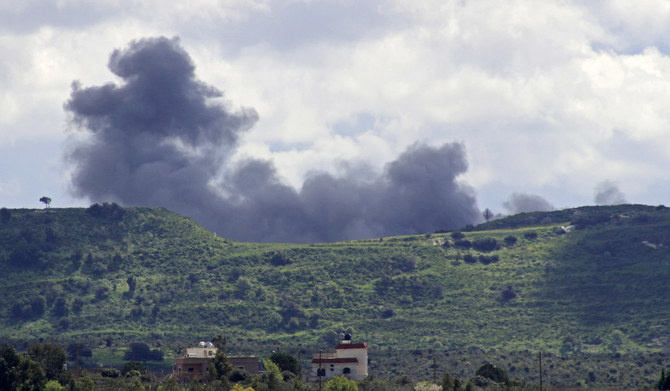
On the ground, hostilities resumed on the southern front on Friday, with Israel conducting airstrikes on residential neighborhoods already mostly devoid of their inhabitants.
Israeli media reported that two rockets were fired from Lebanon toward the Margaliot Israeli military site in the Galilee panhandle.


