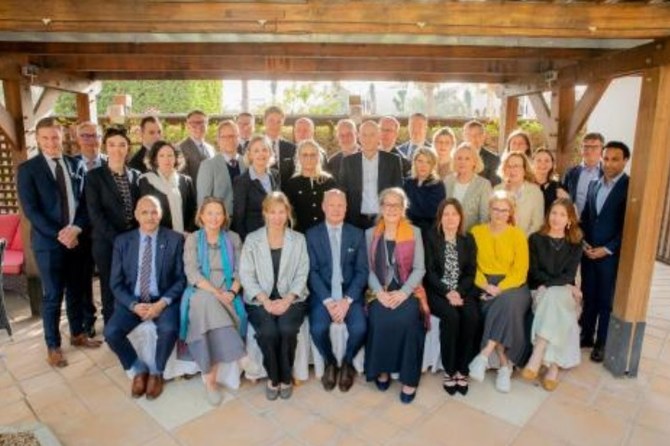
RIYADH: Over 30 government officials from Sweden traveled to Riyadh this week for the country’s annual meeting of regional ambassadors.
Every year, a delegation from Sweden gathers in a pre-selected city to discuss regional developments and shared experiences.
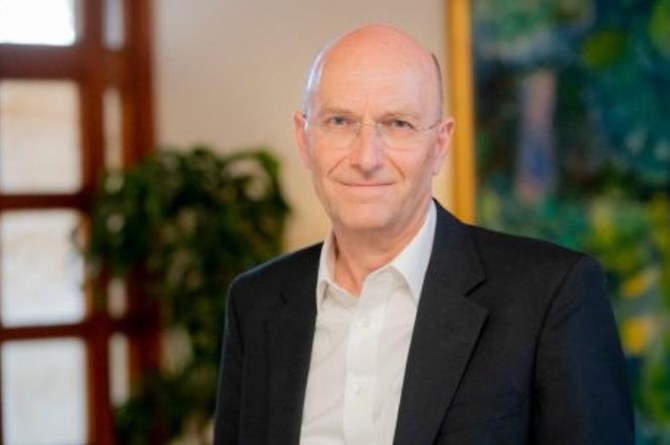
“Essentially, we chose Riyadh this year because there is so much happening in the Kingdom,” Sweden’s state secretary for foreign affairs, Jan Knutsson, told Arab News.
The meeting began on March 12 and ends on March 14.
“We try to arrange these meetings on an annual basis and do the same in all regions of the world,” Knutsson explained.
“This time in Riyadh we have two state secretaries present, including myself, along with roughly 15 ambassadors and 15 senior management officials from Stockholm,” he said.
The delegation consisted of about 30 government officials including the State Secretary to the Minister of Justice Charlotte Kugelberg, Director-General for Trade, Ministry for Foreign Affairs Per-Arne Hjelmborn, and the Foreign Ministry’s Director-General for Administrative Affairs Klas Molin.
Also in attendance were some of Sweden’s ambassadors to other nations including Algeria, Egypt, Jordan, Morocco, Qatar, Lebanon, the UAE, and Tunisia.
“Meeting regularly between ambassadors and senior management from our capital is important to always have an up-to-date collective understanding of the developments in the Middle East and North Africa,” Knutsson said.
He highlighted that various topics have been discussed during the meeting including politics, trade, consular matters, administration, and international cooperation.
“The MENA region sees a lot of rapid changes and our intention is to build a good joint understanding of these developments and how we should approach these as representatives of the Swedish government,” Knutsson said.
He said the Kingdom is a key international player and an important partner for Sweden.
“This is shown not least by the steady stream of bilateral visits in both directions that we have had over the past few years, and the Swedish participation in international events that take place here, such as the Future Investment Initiative, Future Minerals Forum and LEAP,” he explained.
“Our foreign minister as well as our minister for International Development and Trade have both been here during the past six months. I was here myself in June last year for an important international meeting,” he added.
He said trade between the two countries has been increasing steadily.
“We see a strong demand for deeper cooperation around Swedish innovation and green and sustainable technology. We believe Sweden has a lot to offer in realizing Vision 2030 and a green transition in the Kingdom.”
He highlighted that the regional meeting also served as an opportunity to meet with key counterparts in Saudi Arabia.
On the sidelines of the meeting on Tuesday, Saudi Arabia’s Deputy Minister of Foreign Affairs Waleed bin Abdulkarim Al-Khuraiji met with Knutsson and the ambassador of Sweden Petra Menander.
During the meeting, they reviewed relations between the two countries and discussed other issues.
Knutsson also met with Saudi Arabia’s Assistant Minister of Defense for Executive Affairs Dr. Khalid bin Hussein Al-Bayari during his visit.
Knutsson recalled that he once served as ambassador of Sweden to Saudi Arabia.
“Yes indeed, I was Sweden’s ambassador in Riyadh from 2016 to 2019. It is nice to return to a place where I spent some very interesting years.”
“It is clear that the Kingdom is on a very fast journey of change. In the more physical way, you can see it very concretely from all the construction going on. Our group is also planning to visit Diriyah, where the setting has completely changed from my time here.”


![]()
![]()

Sweden embassy hosts regional ambassadors meeting in Riyadh
Short Url
https://arab.news/5mnm9
Sweden embassy hosts regional ambassadors meeting in Riyadh
- Riyadh chosen for annual meeting because ‘so much happening in the Kingdom,’ says Sweden’s state secretary for foreign affairs
- The meeting began on March 12 and ends on March 14


Latest updates


© 2026 SAUDI RESEARCH & PUBLISHING COMPANY, All Rights Reserved And subject to Terms of Use Agreement.