China says will help Pakistan overcome foreign debt challenges

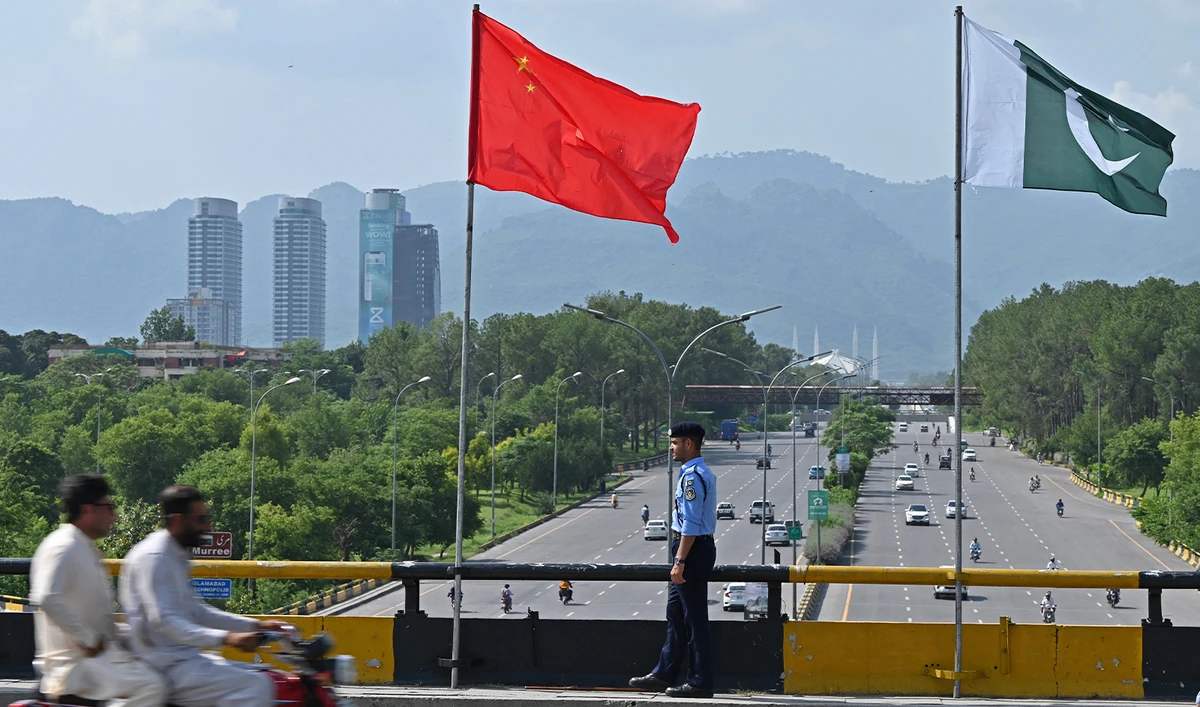
A policeman stands guard under the national flags of China and Pakistan along a road ahead of the visit of Chinese Vice Premier He Lifeng, in Islamabad on July 30, 2023. (AFP/File)
Short Url
Updated 14 March 2024
Follow

China says will help Pakistan overcome foreign debt challenges

  • Chinese diplomat says Beijing’s debt only a fraction of Pakistan’s total external loans
  • Says China never pressured Pakistan for loan payments, recently rolled over $2 billion deposit

KARACHI: A senior Chinese diplomat this week said Beijing had never pressured Islamabad to repay loans and had recently rolled over $2 billion in debt as the payment date neared, adding that China would help Pakistan overcome its foreign debt challenges. 

International financial institutions and China’s rivals like the US have raised concerns that the large-scale borrowing required for massive energy and infrastructure projects undertaken in Pakistan by Chinese authorities could potentially put the South Asian nation in a debt trap.

There are also concerns about the transparency and terms of the loans, including interest rates and repayment schedules, and their long-term impact on Pakistan. 

Since 2013, CPEC, a flagship project under China’s Belt and Road Initiative, has seen Beijing pledge more than $65 billion for road, rail and other infrastructure developments in the South Asian nation of 241 million people.

“Chinese debt is only 13 percent of the total foreign payable debt and its basic objective is to drag out Pakistan from the debt trap by extending necessary financial assistance,” Chinese Consul General Zhao Shiren told business leaders while addressing the Faisalabad Chamber of Commerce and Industry (FCCI) this week.

“China is helping Pakistan to overcome its financial constraints,” he added.

The Chinese diplomat said Pakistan could easily enhance its exports to Saudi Arabia, the United Arab Emirates and China, adding that Beijing had recently allowed the import of red chili and beef from Pakistan.

“China is providing technology for the production of hybrid rice and corporate farming,” he said, adding that Pakistan work to bridge its trade deficit.

Zhao said Pakistani exports to China had recorded a reasonable increase in recent years, though commercial exchanges between the two countries were still nominal against the backdrop of Beijing’s overall $6 trillion trade.
Pakistani students recount perilous journey home from Iran as Middle East conflict escalates

Updated 13 sec ago
Follow

Pakistani students recount perilous journey home from Iran as Middle East conflict escalates

  • 792 Pakistanis repatriated via land and air corridors, officials say
  • Many evacuees are students enrolled in Iranian universities

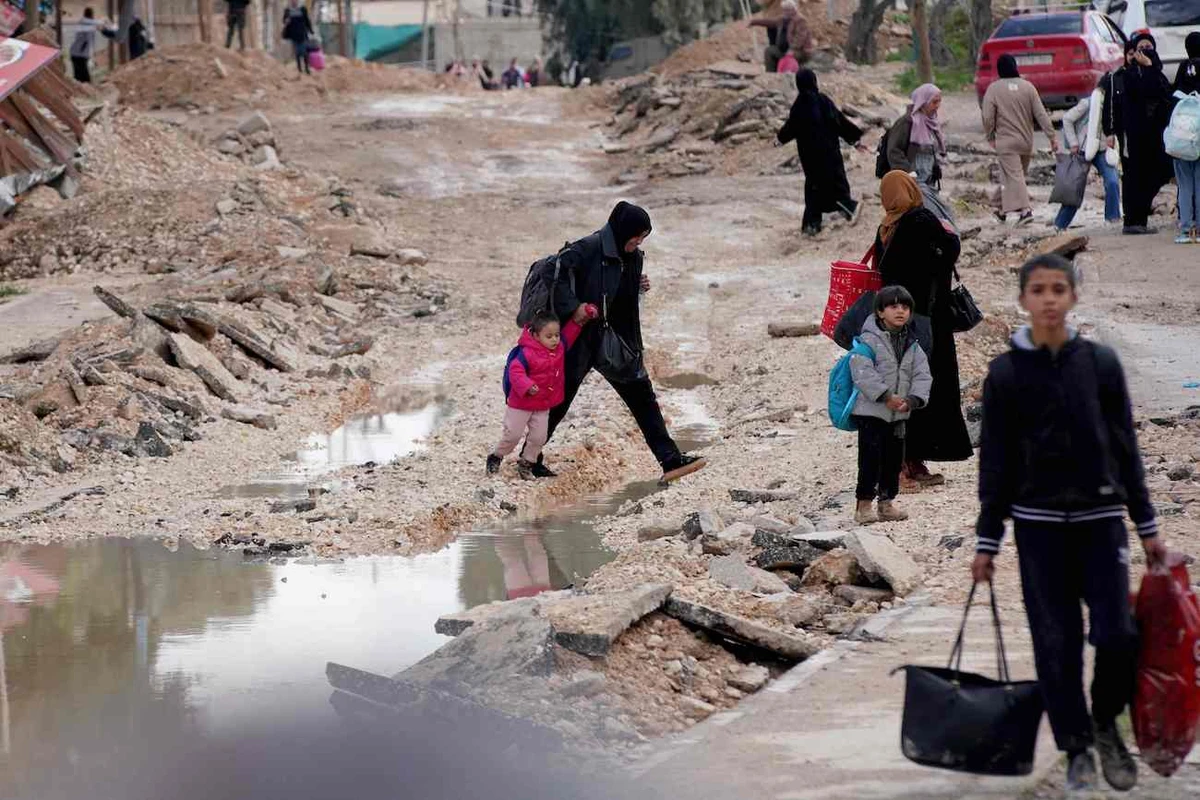
ISLAMABAD: Hundreds of Pakistani students are fleeing Iran this week as escalating hostilities in the Middle East spill across key population centers, forcing them to abandon studies and undertake perilous overland journeys back home.

Iran has been rocked since last week by joint US and Israeli strikes that killed Supreme Leader Ayatollah Ali Khamenei, followed by retaliatory missile attacks targeting American military bases across the Gulf region. The escalation has disrupted air travel, heightened military activity along Iran’s southern coastline and turned strategic locations such as Bandar Abbas, near the Strait of Hormuz through which roughly 20 percent of global oil supplies pass, into flashpoints.

Among those returning is Misbah Hussain, a 22-year-old medical student from Pakistan’s coastal district of Badin in Sindh province. Her education in Iran’s Hormozgan province, which borders the Strait of Hormuz, was abruptly cut short by missile strikes near her university hostel.

“I cannot put those scenes into words,” said Hussain, describing the attacks near her hostel at the Hormozgan University of Medical Sciences in the Iranian coastal city of Bandar Abbas.

She said she had traveled by road from Bandar Abbas to the Pakistan-Iran border, changing three to four different cabs along the way as the security situation deteriorated. After crossing into Pakistan, she continued her journey to Karachi via the coastal highway in a vehicle arranged by the local administration, before heading onward to her hometown of Badin, where, she said, her family would witness her “second life.”

“Missiles landed a short distance from where we were staying,” she said, “and continued during our journey back. We could see missiles hitting along the way. There were moments when we felt we might not survive.”

Bandar Abbas, Iran’s main southern port, has seen intensified military activity in recent days as regional airspace remains largely restricted. Students described sirens, outgoing missile launches and the constant fear of further escalation.

“I had gone there 13 days ago, and the conditions worsened,” Hussain added, noting that examinations were abruptly canceled as students fled the city.

The students’ journey home has proved arduous. From Bandar Abbas, they traveled east through Iran’s Sistan-Baluchestan province toward the Gabd-Rimdan border crossing into Pakistan’s southwestern province of Balochistan. The route, normally a commercial corridor, has become a critical evacuation pathway for the roughly 35,000 Pakistanis currently residing in Iran, according to officials.

Nazir Hussain, another student at the university, described a chaotic departure marked by transport shortages and inflated fares.

“We left Iran under extreme fear,” Nazir told Arab News over the phone as he neared his home city of Hyderabad. “Transport was unreliable, drivers exploited the situation by charging excessive fares. At every stage, we felt uncertain and unsafe.”

The overland journey to the Gabd border spans nearly 800 kilometers (about 497 miles) from Bandar Abbas. Students said they could not wait for formal evacuation arrangements.

“We couldn’t wait for the government help to arrive. We just left a warzone, and this is what we could do, but the journey was extremely painful,” Nazir said.

After crossing into Pakistan, many students were assisted by local authorities in Gwadar before undertaking another nearly 700-kilometer (435-mile) journey to major cities such as Karachi and Hyderabad.

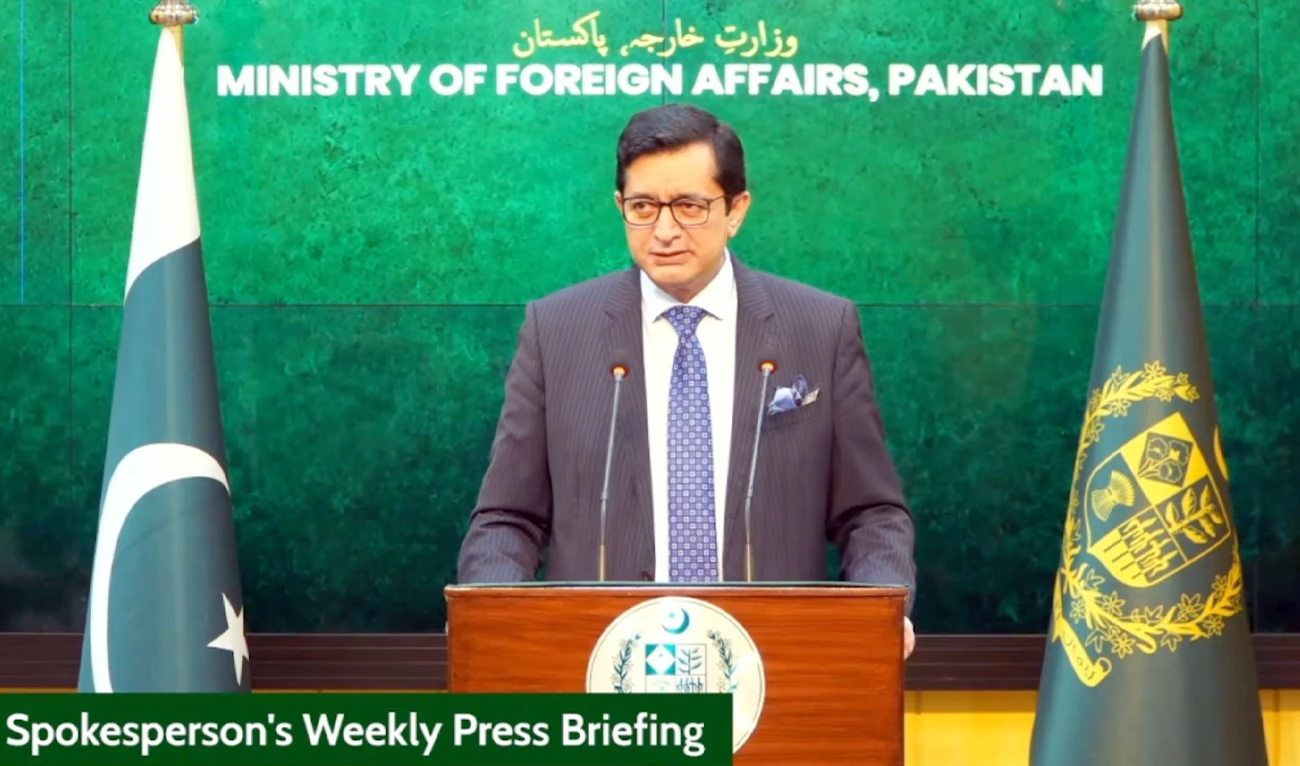
Speaking at a press conference, Pakistan’s Deputy Prime Minister and Foreign Minister Ishaq Dar said on Tuesday a 24-hour crisis management unit has been activated to assist Pakistani nationals across the Gulf, where an estimated 4.5 million Pakistanis live and work.

According to government figures, 792 Pakistanis have been repatriated from Iran so far, including 650 who crossed through the Gabd-Rimdan and Taftan border crossings in the past 48 hours. A significant number of those returning are students enrolled in Iranian universities.

“The safety of Pakistanis abroad and the sovereignty of Pakistan remain our foremost priorities,” Dar told reporters in Islamabad, adding that Azerbaijan has been designated as an additional evacuation base for Pakistanis in northern Iran.

Despite official assurances that authorities are working “round the clock,” some students say support on the ground has been limited.

“Assistance with transport and communication could make an enormous difference for students stranded in dangerous situations,” Nazir said. “But, unfortunately, in our case it didn’t exist.”

Officials estimate that around 3,000 Pakistani students remain in Iran. With airspace disruptions and ongoing hostilities, many face the difficult decision of staying in a volatile environment or risking long overland travel to reach safety.

“We had only heard about death before,” student Misbah Hussain said. “This time we saw it with our own eyes.”