ISLAMABAD: The Peshawar High Court on Thursday ruled that a party aligned with candidates backed by former premier Imran Khan was not eligible for extra reserved seats in the legislature, local media widely reported, another blow to the embattled group’s governing prospects.
The decision represents a further setback for Khan, who is in jail following a string of convictions, despite his candidates winning the most seats overall, 93, in the Feb. 8 national election.
Khan’s Pakistan Tehreek-e-Insaf (PTI) party couldn’t contest the election under its traditional electoral symbol, a cricket bat, which was denied on technical grounds. The PTI subsequently struck an alliance with another party, the Sunni Ittehad Council (SIC), in a bid to secure reserved seats.
On Mar. 4, the Election Commission had ruled that the SIC was not eligible for reserved seats, a decision the alliance had appealed in the Peshawar High Court.
“Petitions are unanimously rejected,” the court said on Thursday.
The Election Commission and Peshawar court decisions will bolster the parliamentary strength of the fragile coalition that has taken oath office, led by Prime Minister Shehbaz Sharif’s Pakistan Muslim League-Nawaz (PML-N), with support from the Pakistan People’s Party (PPP).
Under Pakistan’s election rules, parties are allocated 70 reserved seats — 60 for women, 10 for non-Muslims — in proportion to the number of seats they win. This completes the National Assembly’s total strength of 336 seats.
Khan-backed candidates had to run as independents after the election commission stripped his party its famous cricket bat symbol on ballot papers on grounds that it failed to conduct an intra-party election, a prerequisite for any party to take part in polls.

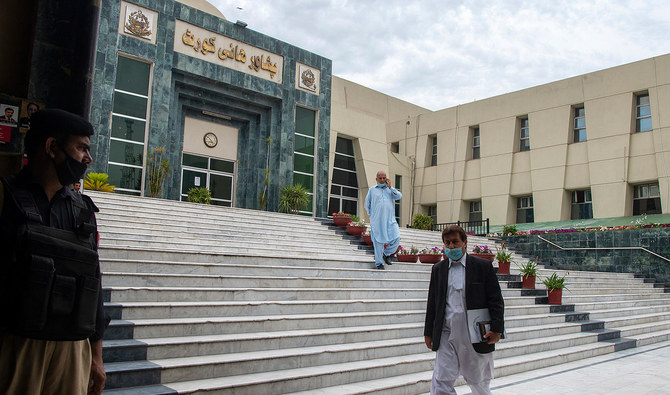
In fresh blow, Peshawar court declines reserved parliamentary seats to Imran Khan-backed party
https://arab.news/93xxg
In fresh blow, Peshawar court declines reserved parliamentary seats to Imran Khan-backed party
- Decision represents a further setback to Khan who is in jail following a string of convictions
- Peshawar court’s decision will bolster the parliamentary strength of nation’s fragile ruling coalition
IMF hails Pakistan privatization drive, calls PIA sale a ‘milestone’
- Fund backs sale of national airline as key step in divesting loss-making state firms
- IMF has long urged Islamabad to reduce fiscal burden posed by state-owned entities
KARACHI: The International Monetary Fund (IMF) on Saturday welcomed Pakistan’s privatization efforts, describing the sale of the country’s national airline to a private consortium last month as a milestone that could help advance the divestment of loss-making state-owned enterprises (SOEs).
The comments follow the government’s sale of a 75 percent stake in Pakistan International Airlines (PIA) to a consortium led by the Arif Habib Group for Rs 135 billion ($486 million) after several rounds of bidding in a competitive process, marking Islamabad’s second attempt to privatize the carrier after a failed effort a year earlier.
Between the two privatization attempts, PIA resumed flight operations to several international destinations after aviation authorities in the European Union and Britain lifted restrictions nearly five years after the airline was grounded following a deadly Airbus A320 crash in Karachi in 2020 that killed 97 people.
“We welcome the authorities’ privatization efforts and the completion of the PIA privatization process, which was a commitment under the EFF,” Mahir Binici, the IMF’s resident representative in Pakistan, said in response to an Arab News query, referring to the $7 billion Extended Fund Facility.
“This privatization represents a milestone within the authorities’ reform agenda, aimed at decreasing governmental involvement in commercial sectors and attracting investments to promote economic growth in Pakistan,” he added.
The IMF has long urged Islamabad to reduce the fiscal burden posed by loss-making state firms, which have weighed public finances for years and required repeated government bailouts. Beyond PIA, the government has signaled plans to restructure or sell stakes in additional SOEs as part of broader reforms under the IMF program.
Privatization also remains politically sensitive in Pakistan, with critics warning of job losses and concerns over national assets, while supporters argue private sector management could improve efficiency and service delivery in chronically underperforming entities.
Pakistan’s Cabinet Committee on State-Owned Enterprises said on Friday that SOEs recorded a net loss of Rs 122.9 billion ($442 million) in the 2024–25 fiscal year, compared with a net loss of Rs 30.6 billion ($110 million) in the previous year.


