DUBAI: Elie El-Semaan says being a director is physically exhausting, but that’s what fuels his love for filmmaking. The Lebanese director gained international acclaim with his breakout work, the TV show “Shatti Ya Beirut” (Rain Over Beirut), which won him a Murex D’or (the annual Lebanese awards for achievements in the arts) for Best Drama Director in 2022.
Now, El-Semaan is ready to bring his expertise to the silver screen with his feature-film debut, “Honeymoonish”, a romantic comedy that will come to Netflix later this year.

El-Semaan is ready to bring his expertise to the silver screen. (Supplied)
The project, as the first Kuwaiti film to be shot in Lebanon, comes with a nuanced take on the Arab world and the cultures that make it unique.
“I think the film will change the perception of Arabs,” El-Semaan says to Arab News. “Once people watch it, they’ll understand what I mean.”
The film, written by Egyptian author and director Eiad Saleh, stars Kuwaiti-born Egyptian actress Nour Al-Ghandour as Noor and Kuwaiti actor Mahmoud Boushahri as Hamad. In it, the couple navigate a web of misunderstandings and unexpected truths to discover love and the possibility of redemption, inviting viewers on an emotionally resonant journey.
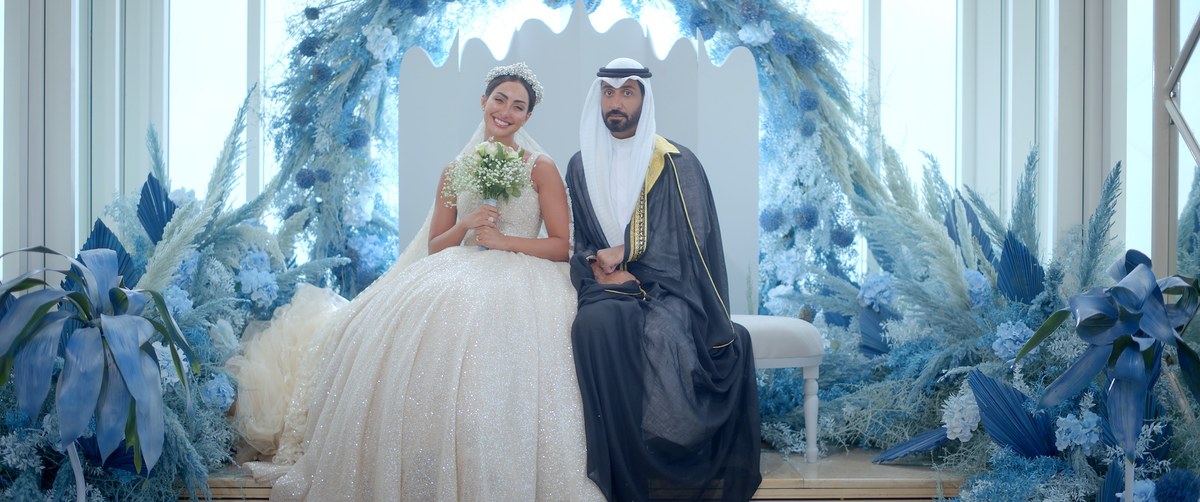
The project, as the first Kuwaiti film to be shot in Lebanon, comes with a nuanced take on the Arab world and the cultures that make it unique. (Supplied)
Though the pressure of making his debut feature for a powerhouse like Netflix may have been daunting, El-Semaan says that the raising of the bar for pan-Arab television in recent years had given him confidence.
“I think series are now being treated as films,” he says. “The quality of our series is up to the level where each episode is like a film. In terms of quality, in terms of responsibility, in terms of everything, it was quite similar. You cannot give (audiences) what they used to watch in the past because the world has so much to offer.
“The main difference between series and film is the amount of time you have — in a series you have, let’s say, three days to shoot an episode,” El-Semaan continues. “Whereas for a 90-minute film, you have 30 to 40 days to shoot.”

Elie El-Semaan on the set of 'Honeymoonish.' (Supplied)
With this added time came the opportunity to refine and understand the cultural subtleties of cast and crew.
“One of the most difficult things for me as the director was the different dialects — Lebanese and Kuwaiti Arabic. That’s why I had a Kuwaiti on set with me who could explain different things. It was very diverse,” El-Semaan says.
Bringing pan-Arab stories to the world stage is something El-Semaan often thinks about. It is important to the director to break down misconceptions and authentically represent his people.

The film is written by Egyptian author and director Eiad Saleh. (Supplied)
“It’s a fine line, not shifting to a story that doesn’t look like our society and that doesn’t look like us,” he says. “You have to maintain the authenticity of the project, but, at the same time, take things up a notch and build on the story to do something that people haven’t seen before.”
To do that, El-Semaan says he tried to foster an on-set environment that offered his actors and crew the freedom to collaborate in the filmmaking process. While he acknowledges his role as the final decision-maker, El-Semaan’s approach hinges on mutual involvement, with actors and crew members encouraged to contribute their insights and creativity. He shuns the notion of a director versus crew dynamic, instead fostering an environment where every individual is a valued partner in the project.
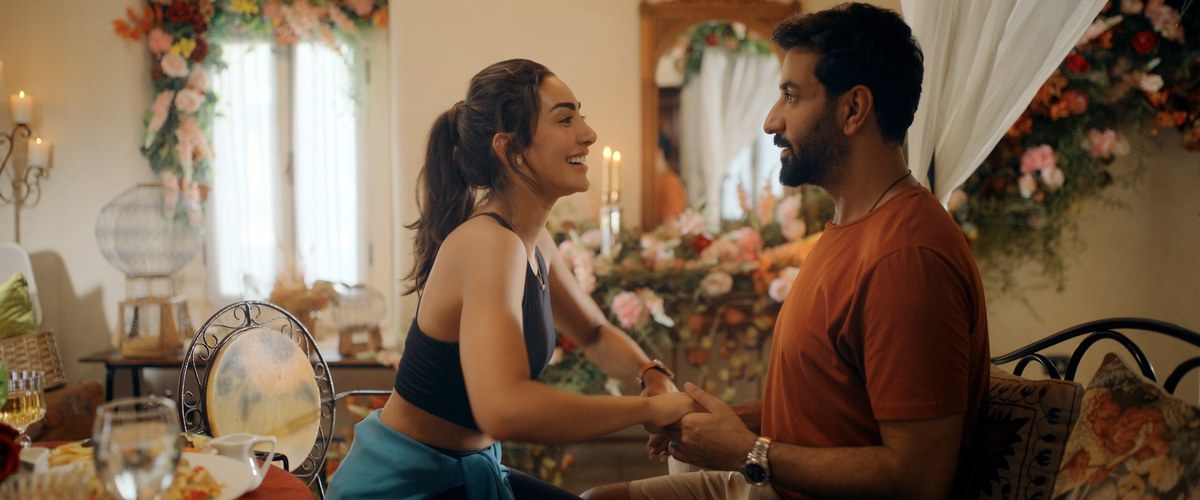
The film stars Kuwaiti-born Egyptian actress Nour Al-Ghandour as Noor and Kuwaiti actor Mahmoud Boushahri as Hamad. (Supplied)
“I do not work with people who are not partners, I want people involved,” he says. “I want them to help build my vision, change my vision, and surprise me at times.” It is then his job to know how best to handle those surprises.
“There are always things you need to know how to deal with on the spot. That’s what we do for a living: make decisions,” El-Semaan says.
His championing of the idea of collective dreaming and dialogue, he believes, gives him a greater chance of creating the best possible film from the material. In his words, “That’s how you come up with a better project.”
As he eagerly awaits the film’s launch, El-Semaan reflects on the transformative power of cinema and the joy of bringing diverse voices together to create something truly special. To him, it’s not just about entertaining audiences, but also about sparking conversations, challenging stereotypes, and fostering a deeper understanding of the human experience.
“I’m sure there’s always room for improvement,” he says. “There’s always more we can do.”