

Ramadan — a time to strengthen family bonds

1 / 4
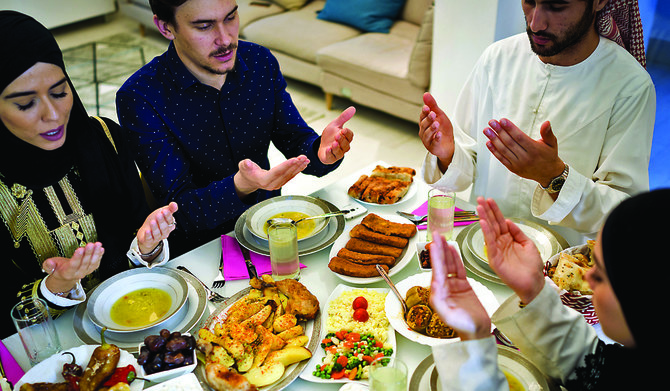
In Ramadan, families around Saudi Arabia make efforts to undertake activities together and meet for iftar under one roof. (Visit Saudi/Supplied)
2 / 4
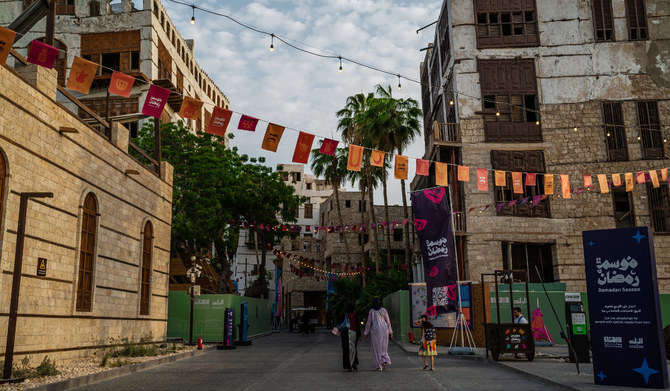
Preparations for Ramadan at Albalad (old town) in Jeddah. (AN photo by Huda Bashatah)
3 / 4
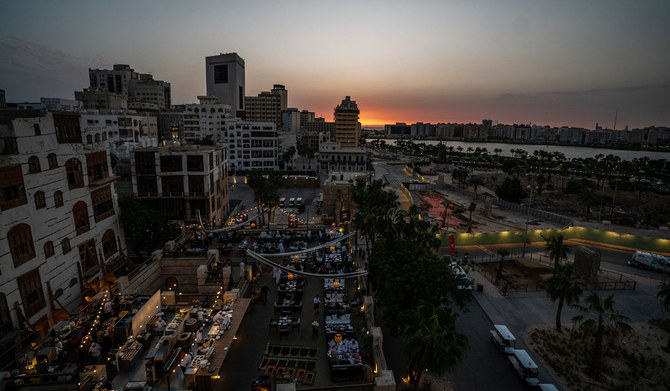
A view of a community gathering at Albalad (old town) in Jeddah. (AN photo by Huda Bashatah)
4 / 4
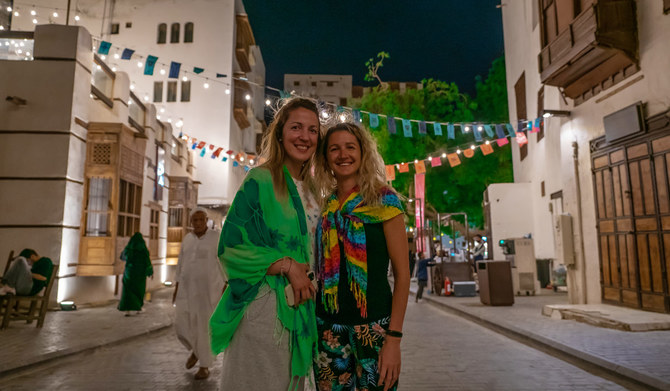
Ramadan provides plenty of opportunities for people to spend quality time, reflect on blessings, and nurture relationships. (AN photo by Huda Bashatah)
Short Url
Updated 12 March 2024
Follow

Ramadan — a time to strengthen family bonds

  • Families around the Kingdom partake in rich traditions and activities to connect during the holy month

RIYADH: Ramadan in Saudi Arabia is a time when families come together to strengthen their family bonds, celebrate the holy month, and rekindle their spirituality.

Family is an important cornerstone of culture in Saudi Arabia, and during the holy month, various activities exclusive to Ramadan are embraced.


In Ramadan, families around Saudi Arabia make efforts to undertake activities together and meet for iftar under one roof. (Visit Saudi/Supplied)

Traditionally they maintained multi-generational households, but this has changed in recent times. Many people take advantage of Ramadan to visit their families and gather everyone for iftar under one roof.

Hind Khalid, a Saudi woman from Riyadh, expressed her excitement while grocery shopping in preparation for the holy month.  “Family gatherings are the spirit of the month of Ramadan,” she said.

HIGHLIGHTS

• Some families schedule a day to gather and collect donations for the less fortunate or contribute to local charity organizations.

• People also like to recite the Qur’an and gather for storytelling with older members of the family.

The emotional bond that develops during Ramadan gatherings creates a closeness among people and reinforces the significance of family ties.

Khalid added: “It represents so many things to me. It is a chance for me to connect with people I have not seen for a long time due to work and busy lifestyle.”


In Ramadan, families around Saudi Arabia make efforts to undertake activities together and meet for iftar under one roof. (Visit Saudi/Supplied)

People enjoy sharing simple acts, like the joy of breaking the fast and expressing gratitude for the blessings they have received. Gatherings also offer the chance to connect over meaningful conversations.

In addition, people also share experiences in acts of worship, fostering a deeper sense of empathy and understanding among family members. Many families perform nighttime taraweeh prayer in groups or visit their neighborhood mosque together. These prayers cultivate a sense of spirituality and unity at the same time.


Ramadan provides plenty of opportunities for people to spend quality time, reflect on blessings, and nurture relationships. (AN photo by Huda Bashatah)

People also like to recite the Qur’an and gather for storytelling with older members of the family. These activities allow older generations to share wisdom and knowledge with younger family members, strengthening intergenerational bonds and preserving cultural and family heritage.

Speaking about the traditions in her family, Khalid said: “Some of the activities that we enjoy with the family during Ramadan are family games and religious competitions with motivating rewards. For example, there is a prize for the person who completes reciting the entire Qur’an during the month or the person who participates the most in the kitchen.”

Some of the activities that we enjoy with the family during Ramadan are family games and religious competitions with motivating rewards.

Hind Khalid, Riyadh local

Hanan Hammad, another Saudi woman, shared some of her family traditions. “Sometimes we play card games or online group games. Or, we organize a Qur’an memorizing competition for children, to encourage them to read the Qur’an,” she said.


Ramadan provides plenty of opportunities for people to spend quality time, reflect on blessings, and nurture relationships. (AN photo by Huda Bashatah)

Charitable activities are also valued by many during Ramadan. Some families schedule a day to gather and collect donations for the less fortunate or contribute to local charity organizations. Others prepare and pack meals to distribute to neighbors and those in need.

These acts of kindness and generosity show the value of compassion in the community, and set an example for younger generations.

Ramadan is also a chance to enjoy traditional Saudi dishes like jareesh, saleeg, and tharid with the family. Cooking and enjoying traditional dishes together not only enhances the bonds of family and community, but also celebrates the rich culinary heritage of the Kingdom.


Wellness culture makes its way into Saudi Arabia’s workplace

Haraakah provides corporations with workshops and activities including cycling, padel tournaments, and in-office yoga. Haraakah
Updated 12 sec ago
Follow

Wellness culture makes its way into Saudi Arabia’s workplace

  • Key to productivity and long-term sustainability
  • Prevents worker burnout, experts tell Arab News

RIYADH: Saudi Arabia’s fast-paced economic transformation has placed a new-age emphasis on wellness as foundational to productivity, long-term sustainability, and human capital development.

According to a recent report from Corporate Wellness Magazine: “Workplace wellness programs represent a holistic approach to employee well-being.

“These initiatives are designed to enhance the physical, mental, and emotional health of employees, thereby fostering a harmonious work environment and facilitating individual growth.”

The report adds that workplace wellness programs “play a pivotal role in boosting engagement levels by creating a sense of belonging, camaraderie, and shared goals among employees.

“Engaged employees are more likely to go the extra mile, demonstrate loyalty, and become staunch advocates for their organizations.”

Globally, wellness culture has been associated with individual self-care and development, yet its influence has increasingly made its way into community spaces.

In societies where family and community are essential components of culture like in the Kingdom, the rise in emphasis on wellness is making its way into future-building for all.

As the Kingdom’s Vision 2030 unfolds, transformative productivity has been intentionally paired with physical wellness.

Serene Ziadeh, a mental health coach focused on emotional intelligence, told Arab News the importance of physical wellness in workspaces has long been a relevant tool to help professionals deal with burnout.

Ziadeh elaborated on the importance of prioritizing resources and workshops, especially in the era of digitization within career spheres.

“Generation Z is currently facing the stress of speed in change, the fear (of) missing out, comparison of lifestyles, digitalized interactions … which definitely have a negative impact.”

While underscoring the importance of personal inner work to identify triggers for stress, Ziadeh emphasized that workplace wellness initiatives bring constructive results.

“We do not expect these activities to change our mentality or our mindset (overnight) but at least they make us look at work as an enjoyable place ... bonding between employees increases, there’s social engagement which breaks the ice between employees, and creates a lot of laughter.”

Ziadeh said physical activity plays a huge role in regulating the nervous system, ultimately improving one’s relationship with work and potentially increasing productivity.

The Saudi Sports Federation, for example, has outlined its wellness goals for the Kingdom.

“By designing innovative programs and initiatives, the federation aims to increase physical activity rates across Saudi Arabia, thereby contributing to the development of a healthier and more productive community,” it states on its website.

The federation underscored workspace initiatives for those aged 25 to 50. “Providing innovative sports solutions that facilitate engagement in physical activity at work or home, with a focus on activities that can be adapted to busy schedules.”

Talal Arnous, CEO of Haraakah, a Saudi sports and wellness agency, spoke to Arab News recently on the ways his company has helped facilitate that goal for workers.

“I think we’re 100 percent aligned with the (Kingdom’s) Quality of Life Program ... in making employees more productive through sports, making them more energetic.”

He added: “I think we’re building awareness that having corporate wellness is not just a part of entertainment programs, it’s 100 percent crucial.”

Haraakah provides corporations with workshops and activities including cycling, padel tournaments, and in-office yoga. Arnous said demand has come from workers in the construction, banking, insurance, and startup industries.

He pointed to Red Sea Global as an example of a company that has dedicated a department to corporate wellness. There has been “fantastic” feedback to Haraakah’s programs, he added.

According to a recent report from Bonafide Research, the wellness market is here to stay. “As workplace stress levels rise … companies are realizing the necessity of investing in corporate wellness programs to support their employees’ physical and mental health.

“This awareness is further amplified by the Saudi government’s Vision 2030, which emphasizes the development of a healthy and productive workforce as a key component of economic diversification and social progress.”