

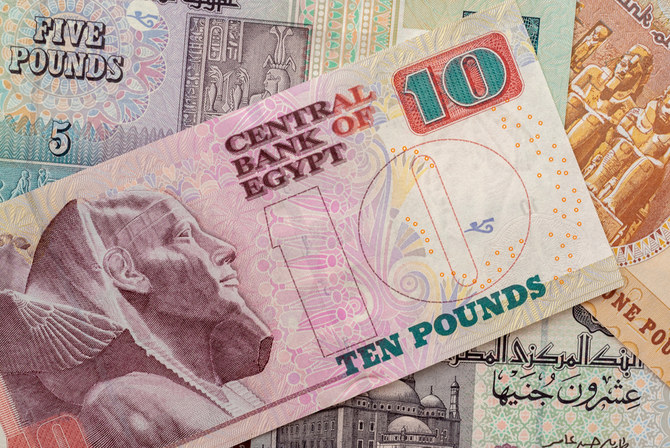
Egypt expects primary budget surplus of no less than 3.5% next year 

Egypt was aiming to keep its debt ratio at under 90 percent of gross domestic product. Shutterstock
Short Url
Updated 10 March 2024
Follow

Egypt expects primary budget surplus of no less than 3.5% next year 

CAIRO: Egypt expects a primary surplus of no less than 3.5 percent in the fiscal year beginning on July 1, Finance Minister Mohamed Maait told a news conference on Sunday. 

Egypt was aiming to keep its debt ratio at under 90 percent of gross domestic product, Maait said. 

He was speaking four days after Egypt devalued its currency to around 50 Egyptian pounds to the dollar from 30.85 pounds, raised its key overnight interest rates by 600 basis points and announced an expanded, $8 billion financial support agreement with the International Monetary Fund. 


BYD Americas CEO hails Middle East as ‘homeland for innovation’

Updated 7 sec ago
Follow

BYD Americas CEO hails Middle East as ‘homeland for innovation’

  • In an interview on the sidelines of Davos, Stella Li highlighted the region’s openness to new technologies and opportunities for growth

DAVOS: BYD Americas CEO Stella Li described the Middle East as a “homeland for innovation” during an interview with Arab News on the sidelines of the World Economic Forum.

The executive of the Chinese electric vehicle giant highlighted the region’s openness to new technologies and opportunities for growth.

“The people (are) very open. And then from the government, from everybody there, they are open to enjoy the technology,” she said.

BYD has accelerated its expansion of battery electric vehicles and plug-in hybrids across the Middle East and North Africa region, with a strong focus on Gulf Cooperation Council countries like the UAE and Saudi Arabia.

GCC EV markets, led by the UAE and Saudi Arabia, rank among the world’s fastest-growing. Saudi Arabia’s Public Investment Fund has been aggressively investing in the EV sector, backing Lucid Motors, launching its brand Ceer, and supporting charging infrastructure development.

However, EVs still account for just over 1 percent of total car sales, as high costs, limited charging infrastructure, and extreme weather remain challenges.

In summer 2025, BYD announced it was aiming to triple its Saudi footprint following Tesla’s entry, targeting 5,000 EV sales and 10 showrooms by late 2026.

“We commit a lot of investment there (in the region),” Li noted, adding that the company is building a robust dealer network and introducing cutting-edge technology.

Discussing growth plans, she envisioned Saudi Arabia and the wider Middle East as a potential “dreamland” for innovation — what she described as a regional “Silicon Valley.” 

Talking about the EV ambitions of the Saudi government, she said: “If they set up (a) target, they will make (it) happen. Then they need a technology company like us to support their … 2030 Vision.”