Sports alliance calls for end to hijab ban in French basketball

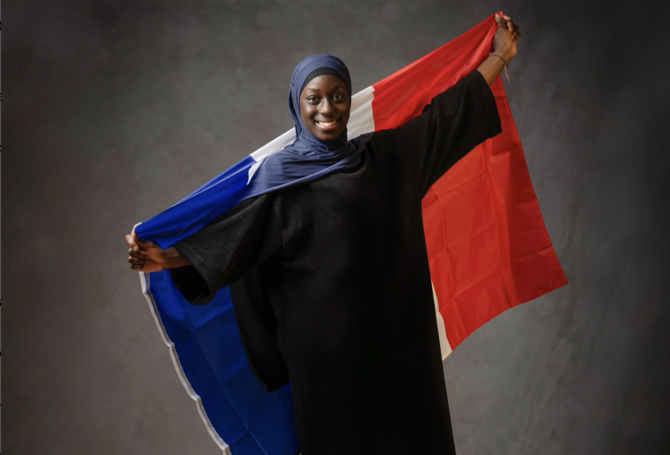
Diaba Konate, a former French youth basketball player now based in the US (Instagram/@diaba.23)
Short Url
Updated 09 March 2024
Follow

Sports alliance calls for end to hijab ban in French basketball

  • Global ban on religious headwear lifted in 2017 but French federation has strengthened its rules
  • Sport and Rights Alliance: ‘Muslim women and girls in France are being denied the ability to play simply because of who they are’

London: France’s basketball authorities should overturn a ban on the hijab to allow equal access to women, the Sport and Rights Alliance has said.

In a letter signed by over 80 athletes and published on Friday, the alliance said restrictions on religious headwear in France are not in line with international standards.

Signatories of the letter, released on International Women’s Day, include US Women’s National Basketball Association star Breanna Stewart and US Olympic medal-winning fencer Ibitihaj Muhammad.

In 2017, international pressure by activists and groups — including the alliance and Human Rights Watch — led to the International Basketball Federation overturning a global ban on religious headwear, including the hijab.

However, the French Federation of Basketball ignored the move and reinforced the strength of its own ban in 2022 by introducing Article 9.3 to its regulations, prohibiting the wearing of “any equipment with a religious or political connotation.”

The alliance said since the tightening of the ban, “young players are facing uncertainty, anxiety, and even public humiliation as they are sidelined on game days.”

Diaba Konate, a former French youth basketball player now based in the US, said: “I love basketball, my family, and my faith. It would break my heart to give up any one of those, and yet that is what the current FFBB guidelines are forcing me to do.”

Layshia Clarendon, who plays for the Los Angeles Sparks, said: “My faith and my sport are both critical parts of who I am. No one should have to choose between honoring their faith and playing the sport they love, and it’s heartbreaking and unacceptable that Muslim women in France are being forced to make that choice. 

“I’m proud to be in solidarity with Diaba and with all athletes targeted by the French Federation of Basketball’s discriminatory policy.”

Terri Jackson, executive director of the Women’s National Basketball Players Association, said: “Basketball has long been a powerful vehicle for inclusion and equality. All athletes should be able to both practice their faith and the sport they love, and we will continue to fight until they have the opportunity to do so.”

In September last year, the UN high commissioner for human rights criticized the French government for upholding a ban on religious headwear for its athletes at the upcoming Olympic Games in Paris.

And in October, six independent experts wrote to the government to complain about the large numbers of Muslim women and girls being excluded from education, culture and sports as a result of its policies, which they said violate international human rights laws.

The alliance’s director, Andrea Florence, said it “supports athletes’ calls to end the discrimination of Muslim women and girls in France who are being denied the ability to play simply because of who they are.

“We’re only months away from the Paris 2024 Olympics and Paralympics, and it is about time the FFBB catches up with the principles of Olympism.”

Monica Costa Riba, senior campaigner for women’s rights at Amnesty International, said: “Rules that penalize women and girls who wish to wear the hijab undermine efforts to make women’s sport more inclusive and violate their human rights.

“Global and national sporting authorities must ensure their policies do not exclude entire groups of women and girls from sport and are free from racism and all forms of discrimination.”

Minky Worden, global initiatives director at HRW, said: “The French federation should act now to ensure that all women and girls can experience the community-building, education, and economic advancement opportunities that sport provides.”


‘Papaya’s not going anywhere’: How McLaren banished the wilderness years on and off the track

Updated 16 December 2025
Follow

‘Papaya’s not going anywhere’: How McLaren banished the wilderness years on and off the track

  • On-track success of 2 constructors’ championships and Lando Norris’s title win matched by a rebrand attracting a new generation of fans to the British F1 team

ABU DHABI: It’s been just over a week since Lando Norris claimed his first Formula One championship title, but for McLaren’s growing army of supporters the party continues.

When the British driver crossed the finish line at Abu Dhabi’s Yas Marina Circuit in third place to confirm his title victory, you could be forgiven for thinking the post-race celebrations had a familiar look to others in recent years at the season-closing Grand Prix in the UAE’s capital.

This time however, the celebrating fans were sporting the orange of McLaren’s distinctive “papaya” livery, rather than the orange of Max Verstappen’s native Netherlands.

The resurgence of the British team in recent years has been nothing short of remarkable. On the track, their overwhelming supremacy has been secured by a superior car and two gifted drivers in Norris and Australia’s Oscar Piastri. Off it, they deployed one of motor sport’s most successful rebranding campaigns, as a result of which McLaren’s main color now rivals Ferrari’s red as the most iconic in F1.

“You know, it was the fans’ choice to bring papaya back,” Matt Dennington, co-chief commercial officer at McLaren, told Arab News.

“Back in, I think it was 2016, we went out to our fans and it was an overwhelming ‘yes’ that they wanted to see our heritage come back into the team. It’s a key brand asset for us.”

Speaking during a “Live Your Fandom” event at Yas Island in Abu Dhabi, co-hosted with Velo, a team sponsor since 2019, he said: “For us, the fans are the lifeblood of our sport. We don’t go racing without them, and to be able to celebrate our fans and our partners together has been awesome.”

Norris’s success in Abu Dhabi was a crowning moment for the team, but the development on the track has been clear and dramatic for several years.

In 2017, the team finished a lowly ninth out of 10 in the constructors’ championship. Improvements to the car, particularly after switching to a Mercedes engine, helped the team move up to become a fixture in the “mid-field” F1 grid. Then, in 2024, came the giant leap forward as McLaren won the team title and then retained it this year.

In tandem with those successes, the commercial work that has taken place off the track has helped McLaren, in large part thanks to return of its papaya colors, develop one of the strongest brand identities in all of sports.

“Obviously, the on-track performance has been a great boost for that,” Dennington said. “You know, the other areas that have helped progress our fandom, and the sport, is the work that Liberty Media have done in the schedule.”

Liberty, an American mass media company, acquired Formula One Group from CVC Partners in 2017 for $4.4 billion. The popularity of the sport has skyrocketed since then thanks to huge engagement across media channels — including a certain Netflix show.

“More races, more races in the US, ‘Drive to Survive’ (on Netflix, and) we had the F1 movie,” Dennington said. “So there’s some great media platforms really driving the audience growth and the diversity of the audience.

“As a team, we’ve been pushing ourselves to be more sophisticated in the way in which we engage and communicate with our teams, but also looking at the partners we work with to give our fans the access to the McLaren brand and access to racing culture.”

The team’s portfolio now boasts more than 50 sponsors, among them Google, Mastercard and British American Tobacco. Dennington highlighted a number of campaigns that caught the public’s imagination.

“Some good examples of that is the work that we’ve done with Reiss and Abercrombie & Fitch — we bought our first women’s line of fashion through those organizations; the work we’re doing with Lego in capturing those sort of youth consumers into the brand; and also the work we’ve done with Tumi over the last few years in the luggage category.

“So we’re trying to extend the brand, we’re trying to create more access.”

In August, McLaren and Velo launched the “Live Your Fandom” campaign, offering nine superfans from the UK, Romania, the Czech Republic, Mexico and other places a “golden ticket” F1 experience in the form of a full day at the McLaren Technology Centre in Woking, England.

The chosen fans enjoyed a behind-the-scenes tour, shared their memories of the team directly with McLaren Racing CEO Zak Brown, and took part in a surprise Q&A session with Norris.

One high-profile result of their special day was the graphical contributions they made to the team’s 2025 Abu Dhabi livery design, unveiled just days before Norris claimed the title, which featured art they helped create inspired by their most defining McLaren moments.

The livery features a series of bespoke images, including the “Papaya Family” representing the community spirit among McLaren F1 fans around the world; a “Forever Forward” friendship bracelet; and “Home Wins,” symbolizing the team’s victories this season in its home country at the British Grand Prix at Silverstone, and at the Bahrain Grand Prix, which is considered the team’s second home.

Other images celebrated the back-to-back constructors’ championship victories; 200 race wins; 50 top-two race finishes; and the fastest pitstop of the 2025 season (1.91 seconds).

Louise McEwen, McLaren Racing’s chief marketing officer, said: “Our fans are at the heart of everything we do, and this special livery is another way of showing our appreciation.

“Through the ‘Live Your Fandom’ campaign with Velo we’ve been able to celebrate their passion and creativity in a way that truly brings the Papaya Family together.”

Such efforts by McLaren to bring more fans even closer to the action will continue, Dennington said.

“Less than 1 percent of all fans in Formula One over their lifetime get to go to a race,” he added. “So I think it’s up to us as a sport, as teams, to be able to create more opportunities for them (and) to connect with our fans.”

As for the image and identity of the team moving forward, he had a reassuring message for fans: “Papaya’s not going anywhere and you’ll continue to see that into the future.”