PARIS: Veteran aid worker Jean-Pierre Delomier said he has seen it all responding to conflicts and disasters worldwide over the decades, but the Gaza war is by far “the worst.”
Returning from an eight-day mission to the south of the besieged Palestinian territory, the deputy director of Handicap International — Humanity & Inclusion (HI) said he was still “stunned.”
He told AFP he had never seen such a combination of “bombardment of an extremely densely populated and closed-off area, and a near-complete lack of access for humanitarian aid.”
Deliveries into the Gaza Strip have been reduced substantially since the start of the latest Israeli military campaign in the territory, sparked by Palestinian militant group Hamas carrying out a deadly attack in Israel on October 7.
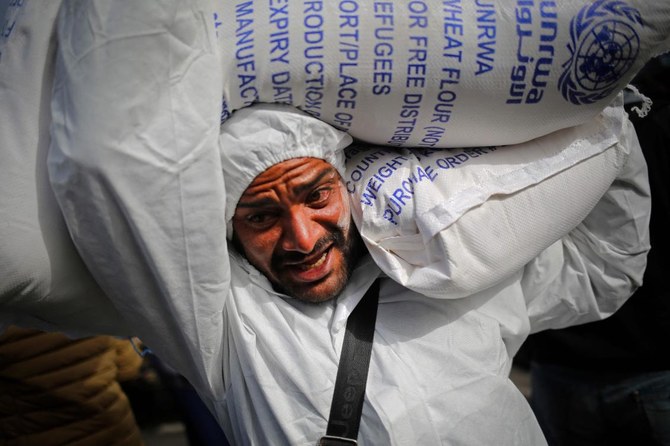
The United Nations has warned of looming famine, and calls have grown for the Israeli authorities to let in and ensure the safe delivery of desperately needed aid waiting in lorries on the Egyptian side of the border.
“I saw kilometers (miles) of trucks queueing on four lanes, all waiting to get into Gaza,” said 61-year-old Delomier.
Foreign governments have scrambled to parachute in pallets of supplies from airplanes in recent weeks, but aid workers have warned they only cover a tiny fraction of needs and the method is hugely expensive.
“Planes fly over to drop a few pallets, whereas just behind (the border) there are kilometers of pallets waiting that could just be let in,” he said, incensed.
The aid worker, who started his career in Bosnia and Herzegovina in the 1990s, said what he witnessed in Gaza’s southern city of Rafah was incomparable.
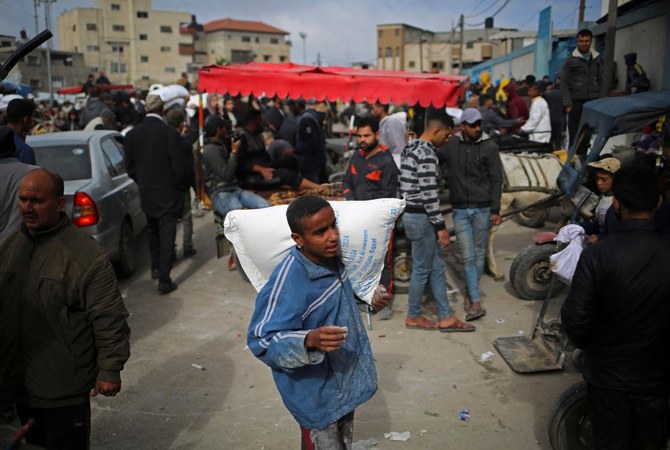
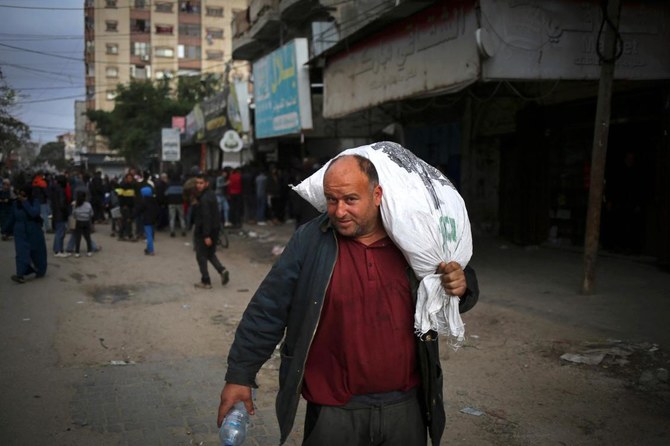
About 1.5 million of the territory’s 2.4 million residents have crammed into Rafah, squashed up against the closed Egyptian border, most after fleeing Israeli bombardment on other parts of the territory.
When food is available, restrictions make it extremely expensive.
And Israel air strikes have repeatedly hit the city.
Gazans, Delomier said, were caught in a “mousetrap, with only a trickle of aid — whereas all that is needed is right there next door — and bombardment.”
He said people sometimes tried to compare the situation in Gaza with the 1994 Rwanda genocide, the Syrian civil war since 2011, or even the ongoing conflict in Yemen.
But the crisis in Gaza “is the worst I have ever seen,” he said.
The territory has been under an Israeli blockade since 2007, when Hamas took control of it, prompting rights groups to say Gazans were trapped in an “open-air prison” even before the latest conflict.
Five months of war have ravaged the territory, and sparked unprecedented alarm among aid groups.
The latest Gaza war broke out after Hamas launched their attack on southern Israel, resulting in about 1,160 deaths, most of them civilians, according to an AFP tally based on Israeli official figures.
The militants also took around 250 hostages. Israel believes 99 of them remain alive in Gaza and that 31 have died.
Israel’s retaliatory offensive has killed at least 30,800 people, mostly women and children, according to the health ministry in the Hamas-ruled territory. HI says around 90 percent of those killed were civilians.
Delomier said he worked in Rafah with the constant buzz of Israeli drones overhead.
“There was artillery fire and then, especially the constant buzzing of drones. The whole time, day and night, a permanent background noise,” he said.
Further north, conditions are even more dire and some residents have been reduced to eating animal fodder.
The United Nations on Tuesday called on the international community to “flood” Gaza with aid, after reports children are dying of starvation there.
Delomier said he was still reeling from what he saw of the situation.
“In fact, I am outraged,” he said.


![]()
![]()
![]()

Veteran aid worker says Gaza crisis ‘worst’ of his career
Short Url
https://arab.news/mywed
Veteran aid worker says Gaza crisis ‘worst’ of his career
- Returning from an eight-day mission to the south of the besieged Palestinian territory, the deputy director of HI, said he was still “stunned”
- “I saw kilometers (miles) of trucks queueing on four lanes, all waiting to get into Gaza,” said 61-year-old Delomier


Latest updates


Recommended


© 2026 SAUDI RESEARCH & PUBLISHING COMPANY, All Rights Reserved And subject to Terms of Use Agreement.