KARACHI: A consortium of Pakistan’s three major fertilizer manufacturers is investing $300 million to enhance gas pressure and ensure its sustainable supply to their plants, a senior official of one of the companies said on Thursday, as the country reels from fast depleting gas resources.
Pakistan is currently grappling with rapidly depleting energy resources. The South Asian country of 241 million people produces 3,227 MMcf/d gas annually whereas its consumption stands at 4,100 MMcf/d.
One of Pakistan’s major gas utility companies, the Sui Southern Gas Company (SSGC) has warned the country’s gas reserves are likely to diminish by half by 2027 due as consumption increases and reserves decline.
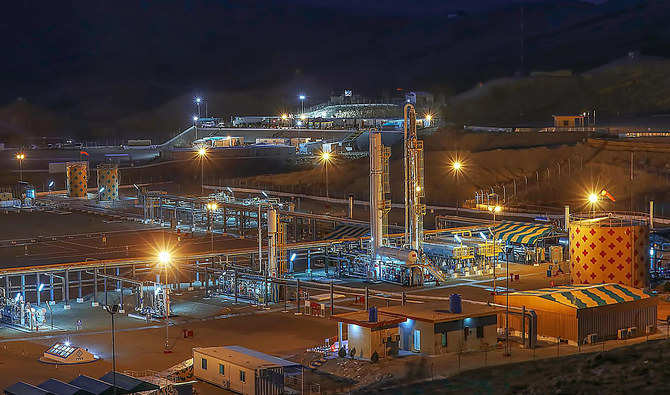
Ali Rathore, the chief financial officer (CFO) of Engro Fertilizers told a group of journalists that the consortium, comprising Engro Fertilizers, Fatima Fertilizer and Fauji Fertilizers were investing $300 million to a ensure sustainable flow of gas from Mari Petroleum’s network of gas fields to their manufacturing plants.
“Mari is constantly exploring and developing new fields, and on the existing fields, we are also investing together with other fertilizer manufacturers, on gas Pressure Enhancement Facilities (PEF) which is a $300 million project,” Rathore said.
Mari Petroleum is an integrated exploration and production company, currently managing and operating Pakistan’s largest gas reservoir at the Mari Gas Field at Daharki in the southern Sindh province.
Rathore said the investment would ensure a sustainable supply of gas to fertilizer companies’ plants from Mari Petroleum’s existing fields, where the gas pressure is low.
“Under this capital expenditure (CAPEX) remote gas fields will be equipped with gas compressors to sustain supply to the network, because the natural gas wellhead pressure is low,” he added.
He said the investment would be made by the consortium in 18 months, adding that his company is contributing $100 million. The process to procure the equipment has already begun, Rathore said.
Pakistan’s outgoing caretaker government last month increased gas prices between 175 percent to 714.8 percent for fertilizer companies that use gas as feed-stock, or raw material.
The Engro Fertilizer official said the prices of gas supplied from the Sui Southern Gas Company (SSGC) and Sui Northern Gas Pipelines (SNGPL) networks have been increased by around 200 percent.
However, he said fertilizer manufacturers deriving gas from the Mari Petroleum network are still receiving gas at subsidized rates of Rs580/MMBtu.
The others, who represent the country’s 60 percent fertilizer manufacturing capacity, are being charged at Rs1,597MMBtu, Rathore said.
He called for an end to discriminatory pricing, saying that by doing away with the practice, the government can facilitate new investments and promote efficiency to ensure sufficient urea availability for farmers.
He said discriminatory gas pricing has led to multiple prices in the market, warning that it would not help the government achieve its fiscal objectives.
The urea prices of Fauji Fertilizer Bin Qasim (FFBL), Engro Fertilizers and Fauji Fertilizer companies after the gas price hike, stand at Rs5,489 per bag, Rs4,649 per bag and Rs3,767 per bag, respectively.
Rathore said the price discrepancy has created an opportunity for middlemen to profiteer by Rs80-100 billion.
“A homogenous gas price will create a level-playing field for all fertilizer manufacturers in terms of input costs and help stabilize urea prices in the country,” he explained.
The Engro official said the complete removal of subsidies and unification of gas prices for the entire fertilizer industry can help the government earn an additional Rs80-100 billion. These funds, he said, could be used for targeted initiatives that uplift farmers.
Rathore said farmers’ input costs have increased from 8 percent to 11 percent due to the recent fertilizer price hike.


![]()

Pakistani consortium of fertilizer companies to invest $300 million for sustainable gas supply — official
Short Url
https://arab.news/4avcg
Pakistani consortium of fertilizer companies to invest $300 million for sustainable gas supply — official
- Consortium comprises leading Pakistani companies such as Engro Fertilizers, Fatima Fertilizer, Fauji Fertilizers
- Project to enhance gas flow from Mari Petroleum fields to fertilizer manufacturers’ plants, says Engro Fertilizers official
Latest updates





Recommended


© 2026 SAUDI RESEARCH & PUBLISHING COMPANY, All Rights Reserved And subject to Terms of Use Agreement.