GAZA STRIP, Palestinian Territories: Shell-shocked Palestinians who returned Thursday to part of Khan Yunis where Israeli soldiers have carried out extensive military operations took stock of the outcome: dead bodies, toppled buildings and destroyed landmarks.
Across the grey ruins of central Khan Yunis, southern Gaza’s largest city, the streets were filled with thousands of residents who piled whatever they could salvage onto cars, donkey-carts and even their own heads.
The authorities stressed that much had been lost for ever.
As of Thursday afternoon, six bodies had been retrieved and “dozens of missing citizens are still under the rubble,” the health ministry in Hamas-run Gaza said in a statement.
One municipal official in Khan Yunis offered a detailed rundown of the destruction.
“The occupation (Israel) destroyed thousands of residential units in Khan Yunis, causing massive destruction and damage,” the official said, speaking on condition of anonymity because he was not authorized to brief the media.
“It destroyed markets, stores, clinics, medical centers, dozens of restaurants and stalls,” he said.
“It destroyed hospitals, destroyed all roads, water networks, electricity, communications and the Internet. It dug up all the roads and changed the shape of the city.”
The war in the Gaza Strip was triggered by Hamas’s surprise attack on southern Israel on October 7 that resulted in the deaths of about 1,160 people, mostly civilians, according to an AFP tally of Israeli official figures.
Israel’s resulting military campaign to destroy the Islamist Hamas movement has killed at least 30,800 people, mostly women and children, according to the health ministry in the territory.
The Israeli military has yet to respond to an AFP request to confirm a withdrawal from central Khan Yunis, but both the army and Hamas authorities said military operations were continuing in the city’s west.
Israel’s military also did not immediately respond to AFP’s request to comment on the destruction reported in central Khan Yunis.
As residents picked through the rubble, some of them wearing surgical masks to try to keep out the dust, Wajih Abu Zarifa struck a defiant tone even though his own house was among those destroyed.
“Israeli warplanes... destroyed thousands of houses, toppling them and turning them into rubble, but they were unable and will be unable to defeat memory and recollections,” the 55-year-old said.
Jamil Agha, 49, said he would stay with his family in what remained of their house.
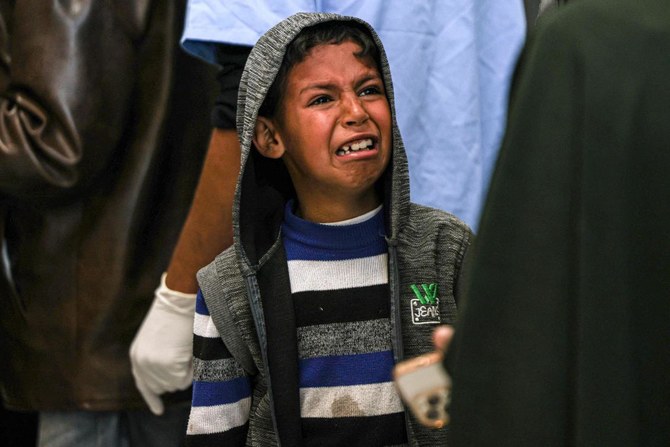
“What do we do? Crying is useless,” he said.
“Sadness covers our lives.”


![]()
![]()
![]()
![]()

‘Crying is useless’: Gazans take stock in battered Khan Yunis


Short Url
https://arab.news/c76ny
‘Crying is useless’: Gazans take stock in battered Khan Yunis
- The streets were filled with thousands of residents who piled whatever they could salvage
- The authorities stressed that much had been lost for ever


Latest updates


© 2026 SAUDI RESEARCH & PUBLISHING COMPANY, All Rights Reserved And subject to Terms of Use Agreement.